
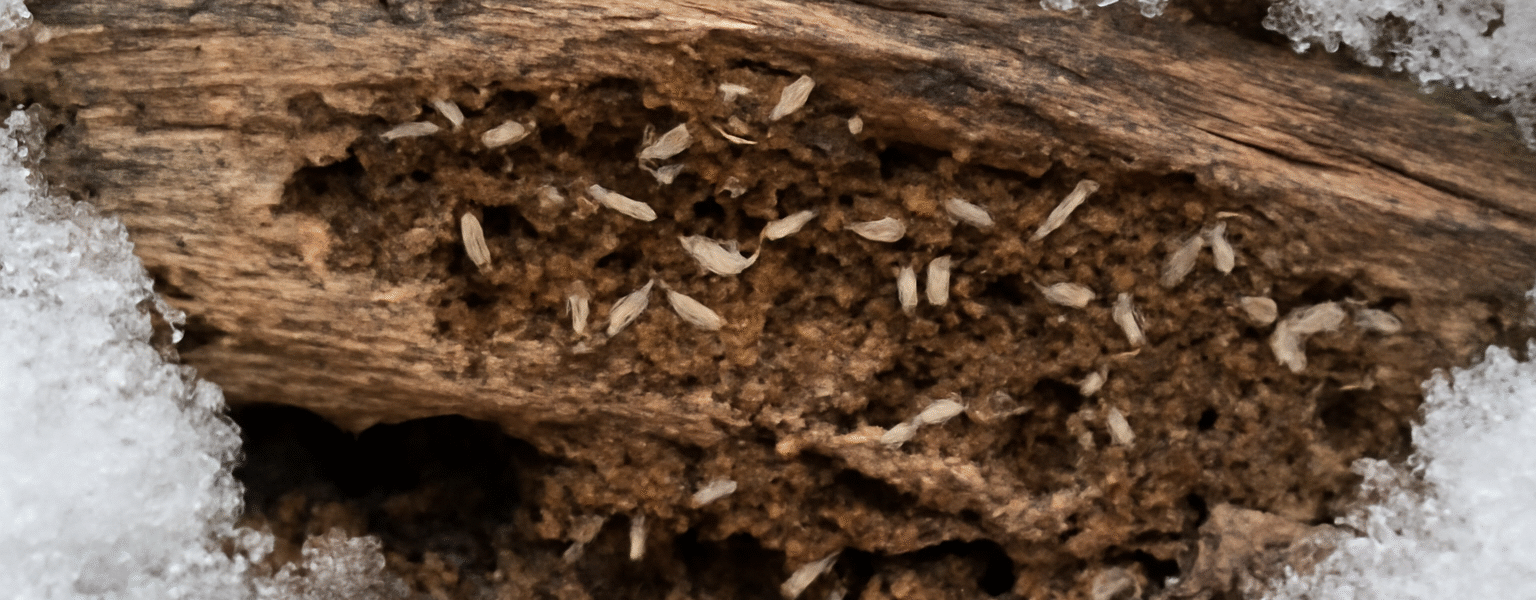
Why Are Termites Active in Winter?
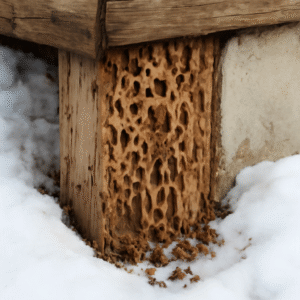
You might be wondering, “Don’t termites go dormant in the cold?” there are many insects that slow down or even go into hibernation in winter, termites on the other hand are different. They don’t stop eating wood or searching for food just because it’s cold. In fact, they’re often more difficult to detect in winter because they tend to stay out of sight.
Termites are cold-blooded creatures, meaning they need warmth to thrive. During the winter months, they often seek out areas that maintain a stable temperature, such as the warmth inside your home. Your house’s temperature is the perfect environment for termites to continue their destructive activity.
As an Amazon Associate I earn from qualifying purchases.
Need a fast solution to control termites this winter? Check out the top-rated termite control products on Amazon today!
Signs of Termite Damage in Winter
Even though termites remain active in winter, their damage can sometimes go unnoticed. By the time you spot signs of termite damage, it might be too late to prevent significant issues. Therefore it’s very important to identify termite damage.
1. Hollowed or Damaged Wood
The most common sign of termite damage is wood that feels hollow when tapped. If you knock on wooden beams, baseboards, or furniture and hear a hollow sound, termites may have been feeding on it. Given time, this damage can greatly weaken the structure of your home.
2. Mud Tubes on Walls
Termites, especially subterranean termites, build mud tubes to protect themselves while traveling between their colony and food sources. These tubes, often found on walls, ceilings, and foundations, are a clear indicator of an active infestation.
Looking for reliable termite bait systems? Explore these top sellers on Amazon.
3. Discarded Wings
During the spring and fall months, termite colonies send out swarms of winged termites (also called “alates”) to start new colonies. These discarded wings can be found near windowsills, doors, or other entry points during the winter months. If you see a pile of wings, it might indicate a nearby colony.
4. Bubbling or Peeling Paint
While bubbling or peeling paint is often associated with water damage, it could also be a sign of termites tunneling beneath the surface. As termites eat through the wood, they create moisture, which can cause the paint to bubble up.
Take action today—view effective pest control solutions on Amazon now.
5. Holes in Wooden Structures
Look for small holes or tiny pinpricks in your wooden structures, furniture, and floors. These can be the result of termites eating through the wood to create passageways. Often, you won’t see the holes until the wood has already been significantly damaged.
6. Quietly Sinking Floors
If you notice floors that seem to sink or sag in certain spots, it could be due to termite damage. This happens when termites eat away at the wood beneath the floorboards, weakening the structure and causing it to give way under pressure.
How to Control Termite Damage in Winter
Once you’ve identified termite damage, the next step is to control the situation before it worsens. Winter can make it harder to treat infestations, but it’s still possible to take action. Here are some steps to control termites in the colder months.
1. Professional Termite Inspection
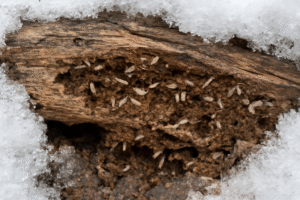
If you suspect termite activity, the first step is to call in a pest control professional. An expert will perform a thorough inspection to identify the extent of the damage and recommend the best treatment options. Professional inspections are especially important in winter, as termites can be more difficult to spot due to their hidden nature.
2. Liquid Termite Treatments
One common method of termite control is liquid termiticides. These are applied around the perimeter of your home to create a barrier that termites cannot cross. Liquid treatments are effective at preventing future infestations, even during the winter.
Shop for the best liquid termiticides on Amazon here.
3. Baiting Systems
Termite bait stations are another effective solution for controlling termite populations. These bait stations attract termites and poison the colony, gradually wiping out the entire infestation. They can be monitored year-round, including in the winter, and are an environmentally friendly option for termite control.
4. Direct Chemical Treatments
In cases where a termite infestation is already established, direct chemical treatments may be necessary. These involve injecting insecticides directly into the affected areas to kill termites on contact. It’s essential to hire a professional for this type of treatment, as it can be risky without proper knowledge.
5. Use of Heat Treatments
Heat treatments are a non-toxic way to kill termites. By raising the temperature of infested areas to around 130°F (54°C), heat treatments effectively kill termites without causing harm to your home. This method is typically used for localized infestations and can be done during the winter.
6. Preventive Measures
Taking steps to prevent future termite damage is crucial, especially after dealing with an infestation. In the winter, ensure that there are no cracks or gaps around your home where termites could enter. Seal up entry points and make sure your home is well-ventilated to reduce moisture buildup, which attracts termites.
Secure your home against future termite damage with preventive tools from Amazon here.
10 Frequently Asked Questions About Termite Damage in Winter
-
Can termites survive in cold weather?
Yes, termites can survive in cold weather by seeking out warmer areas inside buildings. Your home’s temperature provides the perfect environment for termites to remain active during winter. -
How can I tell if I have a termite problem in winter?
Look for signs like hollowed wood, mud tubes, discarded wings, and bubbling paint. A professional inspection is the best way to confirm a termite infestation. -
Are termite infestations worse in winter?
Not necessarily, but because termites are harder to detect in winter, the damage may go unnoticed for longer periods. This can lead to more extensive damage by the time it’s discovered. -
How do I prevent termites from entering my home in winter?
Seal cracks and gaps in windows, walls, and foundations. Keep wood piles away from your home, and ensure proper ventilation to reduce moisture buildup. -
What is the most effective way to treat a termite infestation in winter?
Liquid termiticides and baiting systems are effective during winter, as they create a barrier or poison the termites over time. Heat treatments can also be effective for localized infestations. -
Can I treat termites myself?
While there are DIY termite treatments available, it’s highly recommended to call a professional pest control service. They have the experience and tools needed to safely and effectively treat termite infestations. -
How long does it take to get rid of termites?
How long it takes to get rid of termites depends on how bad the infestation is and the treatment method. Sometimes, it can take anywhere from a few weeks to several months to completely eliminate them. -
Do termites only eat wood?
Termites primarily eat wood, but they can also feed on other cellulose-based materials, such as paper, cardboard, and some fabrics. -
What happens if termites are left untreated?
If termites are left untreated, they can cause significant structural damage to your home. The wood will weaken, leading to the potential collapse of floors, walls, or ceilings. -
How can I keep my home termite-free year-round?
Regular inspections, proper maintenance, and preventive measures like sealing gaps and reducing moisture are key to keeping termites at bay year-round.
Conclusion: Protect Your Home From Winter Termite Damage
Termites may be active all year long, and winter is no exception. While their activity may be less obvious, the damage they cause can be just as severe. Knowing how to identify the signs of termite damage and taking steps to control and prevent further infestations is essential to protecting your home.
If you suspect you have a termite problem, don’t wait—contact a professional to inspect your home. By staying proactive and taking preventive measures, you can keep termites from turning your winter into a nightmare.
Ready to protect your home from termites? shop for termite prevention products here on Amazon and ensure your home stays safe from these silent destroyers, no matter the season.







Reading this article, I can’t recall anyone in our area ever complaining about termites. Other pests yes, but never termites. I don’t know if this has something to do with the fact that we stay in a really warm climate both winter and summer, and our houses are predominantly bricks and not wood.
Termites don’t sound like a great problem to have, especially as they can do significant damage before they are discovered. I see you do recommend poison here, but do you get poison that is safe for cats and birds?
Termites can do lots of damage; treatments are based on the level of the infestation. When you’re not sure what to do, if you are considering DIY, it is best to call a professional pest control company. Remember, safety is always first!