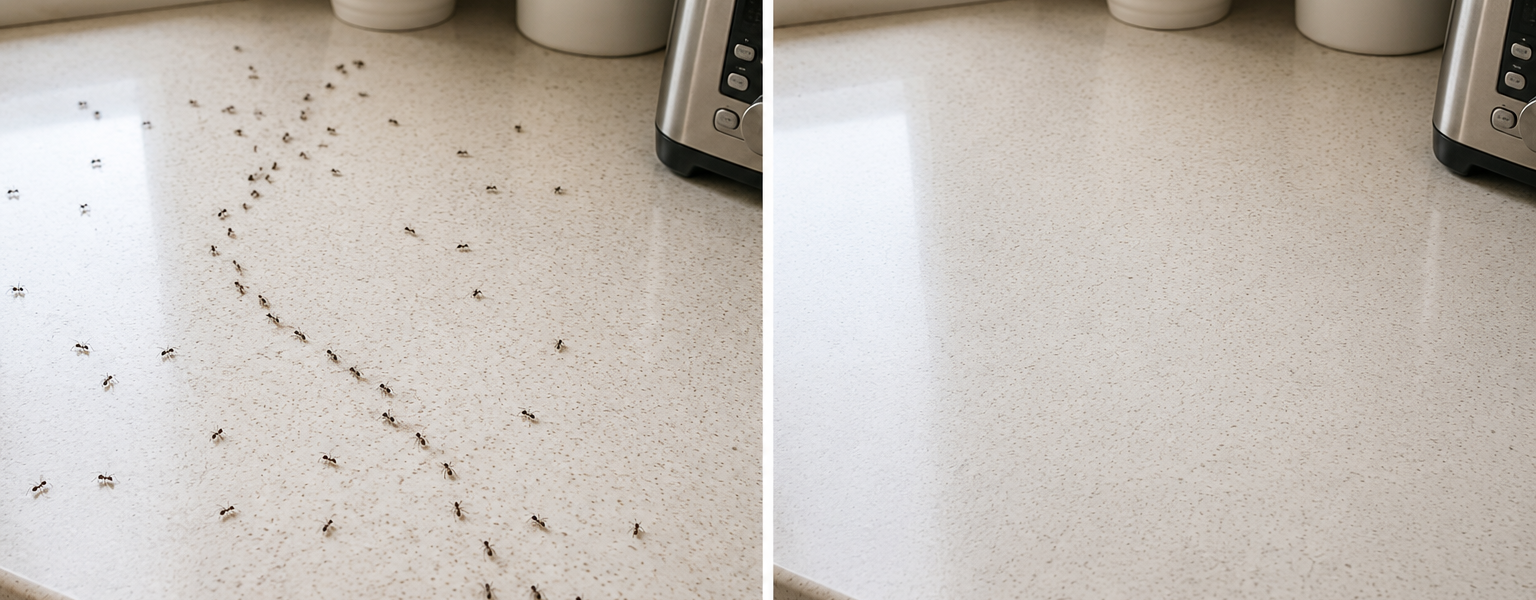
How to Get Rid of Ants in the Kitchen Naturally: 10 Fast & Safe Methods That Work
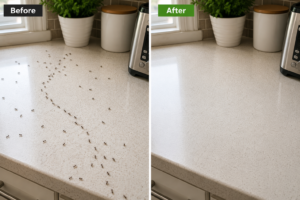
Why Ants Invade the Kitchen
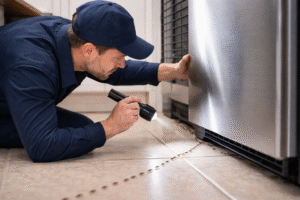
Ants aren’t here to annoy you; they’re on a mission for food and water. Your kitchen offers both in abundance, crumbs on the floor, sugary spills on the counter, or even a pet food bowl left out overnight, which can attract them.
According to university extension entomology programs, household ants enter kitchens primarily in search of food, water, and shelter. Once a worker ant finds a food source, it lays a pheromone trail that guides the rest of the colony to the same location.
What Attracts Ants to Your Kitchen?
A few crumbs on the counter aren’t always the only reason ants show up. Kitchens provide several things ants need to survive, which is why they often become a favorite destination for foraging worker ants.
Sweet Foods
Many ant species are attracted to sugary foods and drinks. Honey, syrup, fruit juice, soda, and even a small amount of spilled sugar can quickly attract scouts looking for an easy meal.
Greasy Foods
Not all ants have a sweet tooth. Some species are more interested in greasy foods such as cooking oils, butter, chips, and food residue left on stovetops or countertops.
Protein Sources
Proteins are especially important when ant colonies are growing and feeding developing larvae. Meat scraps, peanut butter, cheese, and other protein-rich foods can attract ants into your kitchen.
Pet Food Bowls
Pet food left out throughout the day can be an open invitation to ants. Both dry and wet pet food contain nutrients that many ant species readily consume.
Compost and Food Waste
Indoor compost containers, overflowing trash cans, and food scraps can provide a steady food source. Ants are excellent at detecting these resources and will often establish trails to them.
Moisture and Water Sources
Ants need water to survive. Leaky faucets, damp sponges, wet dishcloths, condensation under appliances, and water around sinks can attract ants even when food is limited.
Weather Changes
Heavy rain, drought, extreme heat, or sudden temperature shifts can drive ants indoors. During these conditions, kitchens often provide the food, water, and shelter they need.
Nearby Ant Nests
Sometimes the problem starts just outside your home. If an ant colony is nesting under a patio, near the foundation, beneath landscaping, or inside wall voids, worker ants may regularly enter your kitchen while searching for food.
Understanding what attracts ants is one of the most effective ways to stop an infestation. By removing food sources, reducing moisture, and sealing entry points, you can make your kitchen far less appealing to hungry ants.
Understanding why ants enter your kitchen is the first step to stopping them naturally.
How to Identify the Type of Kitchen Ant
Common Kitchen Ants You Might Find in Your Home

Not every ant species is drawn to the same types of food. While some are on the hunt for sugary treats, others are more interested in grease, protein, or even moisture, depending on their needs and the time of year. Identifying the type of ant in your kitchen can help you understand what they’re searching for and which control methods are likely to work best.
Argentine Ants
Argentine ants are among the most common household invaders. They are especially attracted to sugary foods such as honey, syrup, fruit juice, and soft drinks. During hot or dry weather, they may also enter kitchens looking for water around sinks, dishwashers, or leaky pipes.
Odorous House Ants
Often called “sugar ants,” odorous house ants enjoy sweets but will also feed on greasy foods, meats, and pet food. If you crush one, it gives off a distinctive odor that many people describe as similar to rotten coconut.
Pharaoh Ants
Pharaoh ants are tiny, light yellow ants that frequently infest homes, apartments, hospitals, and commercial buildings. Their diet is varied and includes sweets, proteins, oils, and greasy foods, making kitchens an ideal place for them to forage.
Pavement Ants
Pavement ants usually nest beneath sidewalks, driveways, and patios but often make their way indoors in search of food. They feed on a wide range of items, including crumbs, meats, grease, seeds, and sugary snacks commonly found in kitchens.
While these are some of the most common kitchen ants, they all share one thing in common—they’re looking for an easy source of food and water. Cleaning up spills promptly, storing food in airtight containers, and removing moisture can make your kitchen much less attractive, regardless of which species is visiting.
How To Get Rid Of Ants In The Kitchen Naturally
Let’s explore effective, chemical-free ways to deal with ants once and for all.
1. Keep the Kitchen Spotless
Ants follow food trails. Wipe counters after meals, sweep crumbs off the floor, and clean up spills immediately. Be extra attentive to sugary substances, which are some of ants’ favorites.
Ants follow food trails. Wipe counters after meals, sweep crumbs, and clean spills immediately.
Pro Tip: Pair cleaning with a natural ant spray for better results: View Natural Ant Spray on Amazon
2. Store Food in Airtight Containers
Dry goods like sugar, cereal, and flour should be stored in sealed containers. This makes it nearly impossible for ants to smell and access them.
Use sealed containers to block access to food.
Recommended: Durable airtight storage sets Check Todays Deal on Amazon
3. Use White Vinegar Spray
Vinegar disrupts the ants’ scent trails. Mix equal parts white vinegar and water in a 32-oz spray bottle. Spray along countertops, entry points, and wherever you see ants. It’s safe, natural, and effective.
Make it easier with a quality spray bottle: See Best Spray Bottles
4. Try Lemon Juice
Like vinegar, lemon juice masks scent trails. Spray it around doorways, windowsills, or cracks. Plus, the citrus scent leaves your kitchen smelling fresh.
5. Sprinkle Cinnamon or Cloves
Ants dislike the strong smell of cinnamon and cloves. Sprinkle these spices near entry points or set small bowls around problem areas. It acts as a natural barrier.
6. Use Diatomaceous Earth (Food-Grade)
This powder is harmless to humans and pets but will eliminate ants. It works by dehydrating them. Lightly dust it around cracks, baseboards, or under appliances where ants travel.
Highly effective option: Shop Food-Grade Diatomaceous Earth
7. Lay Down Cucumber or Citrus Peels
Ants avoid cucumbers and citrus. Place fresh peels around entry points or in corners where ants are active. Replace them every couple of days.
8. Create a Soap and Water Solution
A simple mix of dish soap and water can kill ants on contact. Fill a spray bottle and use it whenever you see active trails.
9. Seal Entry Points
Check walls, windows, and door frames for cracks. Seal them with caulk to block ants from sneaking in again.
Helpful tool: View Caulking Tools on Amazon
10. Remove Standing Water
Fix leaks, wipe down sinks, and empty pet water bowls overnight. Ants need moisture to survive, so removing it makes your kitchen less appealing.
How Long Do Natural Ant Remedies Take to Work?
| Natural Method | Typical Time to See Results |
|---|---|
| Soap and Water Spray | Immediate (kills ants on contact) |
| White Vinegar Spray | Same day (removes scent trails) |
| Lemon Juice | 1–2 days with repeated use |
| Cinnamon or Cloves | 2–3 days as a repellent |
| Food-Grade Diatomaceous Earth | 2–5 days |
| Ant Baits | 3–14 days to eliminate the colony |
Keep in mind that natural remedies often work best for small infestations and may need to be reapplied regularly. If ants continue returning after a week or two, the colony is likely nearby, and using an ant bait alongside your natural methods is usually the most effective long-term solution.
Which Natural Method Is Right for Your Situation?
Not every ant problem requires the same solution. Use the table below to find the method that best matches what you’re seeing in your kitchen.
| If You Notice… | Best Natural Solution | Why It Works |
|---|---|---|
| A few ants wandering across countertops | Clean surfaces and spray white vinegar on ant trails | Removes food residue and disrupts the scent trail that guides other ants. |
| A steady line of ants entering your kitchen | Follow the trail, seal entry points, and apply food-grade diatomaceous earth around cracks | Stops ants from re-entering while creating a protective barrier. |
| Ants around the pantry or food storage areas | Store food in airtight containers, clean spills immediately, and consider an indoor ant bait if activity continues | Removes food sources and helps eliminate the colony if ants keep returning. |
| Ants gathering around the sink or dishwasher | Fix leaks, dry wet areas, and remove standing water | Reduces the moisture that attracts many ant species. |
| Ants returning every day despite cleaning | Combine good sanitation with an indoor ant bait to target the colony | Addresses the source of the infestation instead of only the ants you can see. |
Quick Tip: Natural methods work best when used together. Cleaning your kitchen, removing food and water sources, sealing entry points, and treating the colony when necessary provides the most reliable long-term results.
Natural Prevention Tips
Once you’ve controlled ants, it’s time to prevent them from returning. Prevention is always easier than battling another full-blown invasion.
-
Take out trash daily.
-
Rinse recyclables before placing them in bins.
-
Keep pet food dishes clean.
-
Run the dishwasher promptly instead of letting dirty dishes sit.
-
Vacuum and mop floors regularly.
These small habits go a long way in keeping ants away naturally.
Common Mistakes to Avoid
- Spraying only visible ants while ignoring the colony.
- Leaving pet food out overnight.
- Forgetting to seal entry points.
- Mixing multiple repellents in the same area as bait, which can reduce bait effectiveness.
- Stopping treatment too soon after ant activity decreases.
When Natural Methods Aren’t Enough
Natural remedies work well for small infestations, but if ants continue returning after one to two weeks, the colony is likely hidden inside a wall, beneath the foundation, or outdoors near your home. In these cases, an indoor ant bait is often the most effective next step because worker ants carry it back to the nest, helping eliminate the colony.
Natural Remedies That Don’t Work Well
You’ll find plenty of home remedies online that promise to get rid of ants naturally. While some may discourage ants for a short time, others have little to no scientific evidence showing they can eliminate an infestation. If you’re dealing with persistent kitchen ants, it’s helpful to know which remedies are less reliable.
Coffee Grounds
Coffee grounds are often suggested as a natural ant repellent because of their strong smell. While they may temporarily discourage ants in certain areas, they won’t remove scent trails or eliminate the colony. At best, they provide only short-term results.
Baking Soda Alone
Baking soda by itself isn’t an effective way to control ants. Although it’s a popular DIY remedy, ants generally avoid eating plain baking soda, so it rarely affects the colony. More dependable methods, such as ant baits or food-grade diatomaceous earth, are usually much more effective.
Chalk Lines
Drawing chalk lines around doors or windows is another common home remedy. While some people believe chalk creates a barrier, there’s little evidence that it consistently prevents ants from crossing into your home. Sealing entry points offers a much more reliable solution.
Ultrasonic Pest Repellers
Ultrasonic devices claim to repel insects using high-frequency sound waves. However, research has shown mixed results, and these devices are generally not considered a dependable way to control ant infestations. If ants continue returning, it’s better to focus on removing food sources, blocking entry points, and treating the colony directly.
What Works Best?
Natural methods such as white vinegar, lemon juice, food-grade diatomaceous earth, regular cleaning, and sealing cracks can all help reduce ant activity. For larger or recurring infestations, combining these methods with a quality ant bait is often the most effective way to eliminate the entire colony and keep ants from coming back.
Essential Oils Alone
Peppermint and tea tree oils may temporarily discourage ants, but they rarely eliminate an established colony. They’re most effective when used alongside cleaning and exclusion.
Cornmeal
Cornmeal is sometimes claimed to kill ants after they eat it, but there is little scientific evidence to support this. It should not be relied upon as a primary control method.
Natural Ant Removal Methods
10 Natural Ways to Rid Your Kitchen of Ants
| Method | Natural Ingredient | How It Works |
|---|---|---|
| Vinegar Spray | White Vinegar | Disrupts scent trails |
| Lemon Juice | Lemon | Masks food trails, repels ants |
| Cinnamon & Cloves | Spices | Strong smell repels ants |
| Diatomaceous Earth | Food-grade DE | Dehydrates ants |
| Cucumber/Citrus Peels | Fresh produce | Natural repellent barrier |
| Soap & Water Solution | Dish Soap | Kills ants on contact |
| Airtight Containers | Jars & storage | Blocks food access |
| Spotless Kitchen | Cleaning routine | Removes food sources |
| Sealed Entry Points | Caulk | Blocks ant access |
| Remove Standing Water | Dry surfaces | Eliminates the moisture source |
Download Your Free PDF Checklist to Manage Ants
Want Faster Results? (Top Picks)
If ants keep coming back, natural DIY methods alone may not be enough.
Here are 3 proven solutions that work fast:
✔️ Best Overall: TERRO Liquid Ant Baits – eliminates the entire colony – Check Todays deal on Amazon
✔️ Best Natural Powder: Harris Diatomaceous Earth – long-lasting barrier – Check Todays deal on Amazon
✔️ Best Spray: Mighty Mint Ant Killer – safe & plant-based – Check Todays deal on Amazon
Using one of these alongside your DIY methods can completely stop infestations.
Why Kitchen Ant Problems Keep Coming Back
Most DIY methods only kill visible ants—not the colony.
That’s why infestations often return within days.
For long-term control, you need:
- A bait (kills colony)
- A barrier (prevents entry)
- A clean environment (removes attraction)
This is exactly where the products above become necessary.
If you’ve cleaned thoroughly, sealed entry points, and ants are still returning, the colony probably hasn’t been eliminated. A quality ant bait combined with good sanitation usually provides the most reliable long-term control.
Related Ant Guides
- Why Are Ants Attracted to My Laptop?
- Why Ants Are Attracted to Electronics
- Why Are Ants Attracted to Wall Outlets?
- Ant Life Cycle
- Best Indoor Bug Spray Safe for Pets
10 Frequently Asked Questions About Natural Ant Control
1. Why do ants always come back after I clean?
The habit of ants is to leave a scent trail for others to follow. Even after cleaning, if a small part of the trail remains, they return. That’s why vinegar or lemon spray is key—it erases the trail.
2. Is vinegar safe to spray on kitchen counters?
Yes. White vinegar can be used for most kitchen surfaces. Just avoid marble or natural stone since it can damage them.
3. How fast do natural methods work?
Some, like soap spray, kill ants instantly. Others, like diatomaceous earth or lemon juice, may take a few days to show full results.
4. Can I use essential oils against ants?
Yes. Peppermint, tea tree, and eucalyptus oils work well. Mix several drops of peppermint with water and spray around points of entry.
5. Are natural ant control methods safe for pets?
Most are safe. However, keep pets away from strong essential oils or large amounts of diatomaceous earth to avoid irritation.
6. Do ants cause harm in the kitchen?
Generally, ants don’t carry major diseases. But they can contaminate food, which makes them a nuisance and a hygiene issue.
7. What’s the difference between sugar ants and regular ants?
Sugar ants specifically hunt sweet foods, while other species may go after grease, protein, or moisture. The natural remedies in this guide work for both.
8. How to prevent ants from entering through cracks?
Seal gaps with caulk, weather stripping, or door sweeps. Pair that with natural repellents near entry points.
9. Can natural methods replace professional pest control?
For minor infestations, yes. But if you have a large colony inside your walls, calling a professional may be necessary.
10. Do natural methods last as long as chemical sprays?
Not always. Natural remedies often require reapplication. However, they’re safer, eco-friendly, and perfect for everyday kitchen use.
Natural Prevention Tips
- Take out trash daily
- Clean pet bowls
- Store food properly
- Keep surfaces dry
Conclusion
Most kitchen ant problems can be solved naturally with a few simple habits. Keeping your kitchen clean, removing food and water sources, wiping away ant trails, and sealing small cracks where ants enter can often stop an infestation before it gets worse.
When these steps are used consistently, they’re usually enough to keep your kitchen clean, comfortable, and much less inviting to ants.
Small infestations often respond well to vinegar, lemon juice, and food-grade diatomaceous earth when used consistently. However, if ants continue returning after several days, the colony is likely nearby, and adding a quality ant bait is usually the fastest way to eliminate the problem.
By combining good sanitation with the right treatment, you can keep your kitchen ant-free and reduce the chances of future infestations.