
How to Get Rid of Rats in Your Yard Fast and Keep Them Away
Based on common pest control practices, rats are best managed early, before they have a chance to multiply and settle into your yard
Noticed chewed plants, small holes in your lawn, or scratching sounds at night? You might be dealing with rats in your yard without even realizing it. And here’s the problem—once they settle in, they don’t leave quietly.”
Rats are highly adaptable pests that can quickly take over outdoor spaces if conditions are right.
The longer they stay, the more damage they can cause to your garden, property, and even your health.”
The good news? You can take control of the situation with the right steps.
In this guide, we’ll show you simple and effective ways to manage rats in your yard and garden. You’ll learn a mix of natural approaches and proven pest control methods that actually help keep these pests under control without unnecessary hassle.
Rats are a common problem in both urban and rural areas. They thrive in environments where food, water, and shelter are easily accessible.
If you suspect rats in your yard, it’s crucial to take immediate action before the problem escalates.
Keeping rats under control usually works best when you combine everyday preventive habits with specific, targeted solutions when needed.
Quick Answer: How to Control Rats in Your Yard
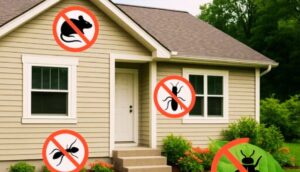
If you want fast, effective rat control in your yard, focus on these key steps:
- Remove all food and water sources that attract rats
- Seal up cracks, holes, and entry points around your home and yard
- Use snap traps or bait stations in active areas
- Keep grass, bushes, and garden areas trimmed and tidy
- Call a professional pest control service for severe or ongoing infestations
Following these steps together gives you the best chance of stopping rats quickly and preventing them from coming back.
Why You Need to Control Rats in Your Yard
The health risks posed by rats are serious and should not be underestimated. Rats are known carriers of numerous diseases that can be transmitted to humans and animals, including:
-
Leptospirosis: A bacterial infection that can lead to liver damage, kidney failure, meningitis, or respiratory distress.
-
Salmonella: A bacterial infection that causes food poisoning symptoms such as diarrhea, vomiting, and fever.
-
Hantavirus: A deadly virus transmitted through urine, feces, and saliva of infected rats, leading to severe respiratory illness.
-
Rat-bite fever: Is an infection caused by bacteria that can enter your body through a rat bite or even a scratch. It often starts with symptoms like fever and vomiting, and many people also experience aching or painful joints
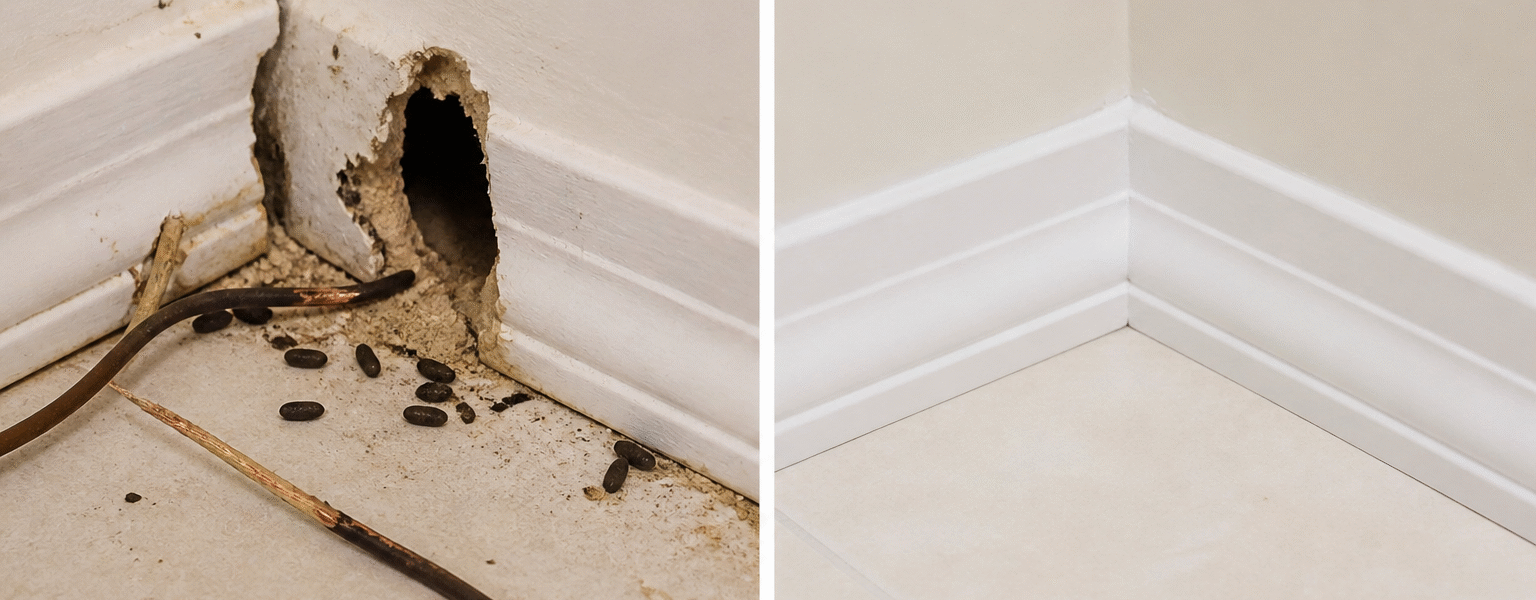
Additionally, rats can cause structural damage by gnawing on electrical wires, wooden beams, and insulation. This kind of damage can end up costing a lot to fix—and even worse, it can raise the chances of a fire starting.
Note: Rodenticide rules vary by location—check local regulations and always follow the label, so it’s important to check local guidelines and always follow the product label carefully
Signs of Rats in Your Yard
Detecting a rat problem early is key to controlling an infestation before it gets out of hand. Here are some common signs that rats have moved into your yard:
-
Visible sightings: Seeing or hearing rats during the day or night. Rats are nocturnal, but if their population is large enough, they may be active during daylight hours.
-
Rat droppings: You’ll often find piles of droppings near places where rats nest or search for food. New droppings tend to look dark and slightly wet, while older ones become lighter, dry, and easy to break apart.
-
Damaged crops: Rats can nibble on or completely ruin the fruits and vegetables growing in your garden or on your trees. Their preference for soft fruits, like berries and apples, makes fruit trees a prime target.
-
Unpleasant odors: The presence of rats often comes with strong, unpleasant smells, especially if they have died in hidden areas.
-
Flattened or dying plants: As rats travel the same routes again and again, they create visible trails through grass and garden beds. Over time, this repeated movement presses plants down and can cause them to wither or die.
-
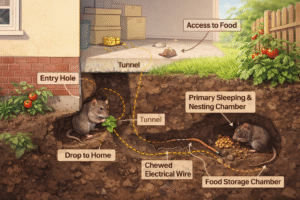
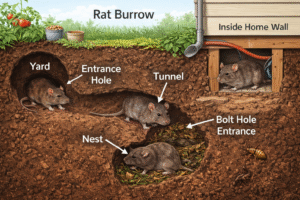
Holes and burrows: Rats dig holes or burrows in flower beds or under structures to create nests and raise their young. These burrows are typically located in areas with ample shelter and food sources.
-
Grease marks: Rats leave behind greasy smudges on walls, fences, or gates as they travel along the same paths. These marks are created by the oils from their fur.
How Fast Rats Multiply: Why Populations Get Out of Hand
Rats reproduce at an incredible rate. One female can have as many as 12 babies at a time and produce several litters each year. Because of this rapid breeding cycle, just a pair of rats can quickly turn into a huge infestation in a surprisingly short time in a single year. This rapid reproduction makes it even more critical to control rat populations before they spiral out of control.
Rats reach sexual maturity at just 5 weeks old, and their reproductive cycle can begin almost immediately. This means that an infestation can quickly go from a small problem to a full-scale rat invasion. As the rat population grows, so does the damage they cause to your property, garden, and health.
Natural Ways to Control Rats in Your Yard
If you’re looking for non-toxic, eco-friendly ways to deter rats, here are some natural methods that can help: While many homeowners try natural deterrents first, pest control experts generally consider these methods more effective as a prevention tool rather than a complete solution.
-
Keep your garden well-maintained: Trim shrubs, grass, and plants to reduce hiding spots for rats. When plants and shrubs grow too wild, they create perfect hiding spots for rats, which makes it much harder to notice them in your yard.
-
Clean up fallen debris: Remove fallen leaves, fruit, and other plant materials that rats can use for food or shelter. Keeping your yard clean will make it less inviting for rats.
-
Eliminate standing water: Rats need water to survive, so ensure there are no open containers or water sources in your yard. Fix leaking pipes or taps, and empty any containers that collect water, such as buckets or birdbaths.
-
Secure your garbage bins: Make sure your garbage containers have tightly sealed lids and are in good condition. Rats are scavengers and will search for food in garbage bins, so it’s essential to prevent easy access.
-
Put pet food away: At the end of the day, pick up any leftover pet food and empty water bowls if possible. This helps avoid drawing rats into your yard looking for an easy meal. Leaving food out overnight is an open invitation for rodents to invade.
-
Add rat-repellent plants: Certain plants, such as mint, citronella, and rosemary, can repel rats. Incorporating these into your garden may help keep them at bay. Rats dislike the strong odors emitted by these plants, which act as a natural deterrent.
Additional Natural Repellents
Try using natural repellents such as:
-
Essential oils: like peppermint, eucalyptus, and citronella can help keep rats away thanks to their strong scents that rodents tend to dislike. Soak cotton balls with essential oils and place them around your yard or garden.
-
Garlic and hot pepper: A mixture of garlic and hot pepper can be sprayed around your garden. The strong scent irritates rats and discourages them from entering the area.
Simple Home Remedies for Rat Control
Here are some DIY remedies you can try to control rats in your yard:
-
Yeast and Cheese Mix: Combine 3 tablespoons of white flour with 1-2 tablespoons of yeast, and add grated cheese. Make a paste with water and place it in areas where rat activity is seen. In some methods, yeast is said to react in a rat’s stomach and interfere with digestion, which can ultimately make it very hard for them to process food and may lead to serious internal distress.
-
Onions: Rats dislike the smell of onions. Placing sliced onions around your yard may help discourage rats from coming into your garden, as their strong smell can make the area less appealing to them.
Always follow local safety guidelines and product instructions when using rodent control products, especially in areas where children or pets are present.
Effective Rat Control Methods
If natural methods don’t work, or if you have a severe infestation, there are other options to control rats in your yard:
1. Rat Bait Stations
Rat bait stations are a safe and effective way to control rats. These stations are designed to hold rat bait blocks that are secure and prevent pets and children from accessing them. To use:
-
Place stations around the perimeter of your yard or near suspected rat activity areas.
-
2. Snap Traps and Baiting Stations
Snap traps can be placed inside secure, tamper-proof bait stations to ensure safety around children and pets. These traps are effective for killing rats, and should be checked regularly for trapped rats. Try setting traps where rats are most likely to travel, like along walls, fence lines, or other narrow paths they tend to follow. Make sure that snap traps are out of sight and reach of children and pets
3. Peanut Butter on Rat Baits
A simple and effective method for attracting rats to traps is to coat rat bait with peanut butter. This draws rats in, and they consume the bait, leading to their elimination.This approach needs extra care in homes with children or pets, since it can be harmful if anything other than the target pest accidentally gets into it.
4. Electronic Rat Repellents
Electronic rat repellents emit ultrasonic sound waves that irritate rats and make the environment uncomfortable for them.These devices can simply be plugged in around your home or garden, where they send out high-frequency sound waves that are unpleasant for rats and encourage them to stay away.
Natural Methods
Best Rat Bait Stations for Outdoor Use
Top Snap Traps That Actually Work
Snap traps are still one of the most reliable and straightforward ways to deal with rodents—especially when you want fast results without complicated setups.
When reviewing or recommending snap traps, focus on what matters most:
What to Look For
- Fast kill performance: The trap should trigger quickly and effectively on contact
- Ease of use: Easy to set up and use, with no confusing steps or complicated parts to figure out.
- Reusable design: Many modern traps can be reset multiple times
- Clean disposal: No-touch or minimal-contact removal is a big plus for hygiene
Example Product Breakdown
- Top feature: A powerful spring action designed to deliver a quick and humane result.
- Who it’s for: Homeowners dealing with recurring rodent problems in garages, sheds, or basements
- Quick verdict: A solid, no-nonsense option for fast rodent control
- Best feature: Covered design for safer, more hygienic disposal
- Who it’s for: Families who want a cleaner, touch-free experience
- Quick verdict: Great balance of safety and convenience
- Best feature: Weather-resistant materials for outdoor placement
- Who it’s for: Yards, gardens, and perimeter rodent control
- Quick verdict: Best choice for semi-exposed outdoor areas
If you’re comparing options, the key is to prioritize durability and ease of resetting over fancy features.
See today’s price on Amazon
Best Rat Repellents for Yards and Gardens
Not everyone wants traps, and that’s where repellents come in. These are designed to discourage rodents from entering your space in the first place.
But it’s important to separate what actually works from what’s mostly marketing hype.
Types of Repellents
1. Ultrasonic Devices
These emit high-frequency sounds meant to irritate rodents.
- Best for: Indoor spaces like attics, garages, and enclosed areas
- Reality check: Works best as a support tool, not a standalone solution outdoors
- Limitations: Less effective in open yards where sound disperses
2. Natural Spray Repellents
These are made with natural, plant-based ingredients that help make the area less inviting for pests.
- Best for: Garden beds, entry points, and perimeter spraying
- Reality check: Works temporarily and needs regular reapplication
- Strength: Safer option for pet-friendly households when used correctly
3. Essential Oil-Based Deterrents
Often made with peppermint, eucalyptus, or similar strong scents.
- Best for: Small garden zones, sheds, and enclosed outdoor corners
- Reality check: Can help discourage activity but won’t eliminate infestations
- Strength: Natural and easy to apply
What Actually Works Best?
In real-world use, repellents are most effective when combined:
- Use ultrasonic devices indoors or in enclosed structures
- Use sprays or oils around entry points and garden borders
- Pair with traps if rodents are already present
On their own, repellents are more about prevention than full removal. But used strategically, they can make your yard much less attractive to pests.
View options on Amazon
Quick Comparison: Ways to Control Rats in Your Yard
| Method | 🛑 Effectiveness | 💰 Cost | 🔒 Safety | 🌿 Eco-Friendly |
|---|---|---|---|---|
| Rat Bait Stations | ✅ High | 💵 Moderate | 🔐 High | 🌍 Moderate |
| Snap Traps | ✅ High | 💵 Low | 🔐 High | 🌍 High |
| Peanut Butter on Bait | ✅ Moderate | 💵 Low | ⚠️ Medium | 🌍 High |
| Natural Repellent Plants | ✅ Moderate | 💵 Low | 🐾 High | 🌿 High |
| DIY Remedies (Yeast & Flour) | ✅ Low | 💵 Very Low | 🐾 High | 🌿 High |
| Electronic Rat Repellents | ✅ Moderate | 💵 Moderate | 🔐 High | 🌍 High |
FAQs: How to Control Rats in Your Yard
1. What attracts rats to my yard?
Rats are attracted to yards that offer food, water, and shelter. Overgrown plants, piles of leaves, garbage, and pet food left outside are all big draws for rats. They also love areas with standing water, so fixing leaks or removing water sources can help discourage them.
2. How can I tell if I have a rat infestation?
Signs of a rat infestation include visible sightings, droppings around food sources or nests, gnaw marks on materials like wood or garden hoses, and flattened vegetation in your garden. If you notice these signs, it’s important to act quickly to prevent a larger problem.
3. Are there natural ways to get rid of rats?
Yes, there are several natural methods to control rats. Keep your garden clean and well-maintained, remove standing water, and plant rat-repellent plants like mint, citronella, and rosemary. DIY remedies like a yeast and cheese paste or baking soda mixtures can also help.
4. Can I use essential oils to repel rats?
Absolutely! Rats dislike the strong smells of essential oils such as peppermint, eucalyptus, and citronella. You can soak cotton balls in essential oils and place them around your yard or garden. It’s a natural and safe way to deter rats without chemicals.
5. What should I do if I see a rat during the day?
Rats are typically nocturnal, so seeing one during the day may indicate a larger infestation or a lack of food. It’s best to inspect your yard for signs of rat activity, including droppings, burrows, or damaged crops, and take action right away.
6. How do rat bait stations work?
Rat bait stations are secure, tamper-proof containers that hold rat poison or bait blocks. They are placed in areas where rats are active and help to gradually reduce the rat population. The stations should be checked regularly, and bait should be replenished as needed.
7. Is it safe to use rat traps if I have pets or children?
If you have pets or children, it’s important to use rat traps safely. Consider using enclosed, tamper-proof bait stations for snap traps, or place traps in areas that are inaccessible to pets and kids. Always check traps regularly to ensure safety.
8. How do I prevent rats from coming back?
To keep rats from returning, make your yard less inviting. Trim overgrown plants, remove fallen fruit, clean up pet food, and seal any gaps in walls or fences where rats might enter. Eliminating food, water, and shelter sources will help keep them away long-term.
9. Can rats damage my garden?
Absolutely, rats can cause serious damage to your garden. They often eat fruits, vegetables, and plants, sometimes consuming entire crops. They also dig burrows in flower beds and can damage plants as they search for food. Protecting your garden with proper rat control can prevent this damage.
10. When should I call a professional for rat control?
If you’ve tried DIY methods and the rat problem persists, or if you have a large infestation, it’s time to call a professional. Pest control experts have the tools and knowledge to handle rat infestations safely and effectively. Don’t hesitate to get help if the situation feels overwhelming.
Conclusion: Why You Should Act Now
Rats are not only a big problem but also a potential health hazard. With the ability to cause extensive damage to crops, structures, and electrical systems, it’s vital to address rat problems before they escalate. Use a combination of natural methods, traps, and bait stations to create an effective rat control plan for your yard.
If you find the infestation to be too overwhelming or the methods above aren’t effective, it’s always a good idea to consult a professional pest control service. Don’t wait until it’s too late—take action today to protect your yard, home, and health.


Hello,
I love your site! You took your own business and built a beautiful informative site regarding pest control. I am lucky where I live, in Southern Idaho, because we do not have much trouble with pests or bugs. But, I know some areas of the country are in much need of your service.
So much information that I could not believe all the information you provided! Wonderful job with your website!
Thank you,
Mike Powers
Cabin Living Today
Good to hear that you don’t have an issue with rats and I am so happy that I could help.
Wow! what a eye opener, You know we have never had rats but after reading this i hope we never get them or we will be calling you. lol over all great blog lots of great info as well as help. if we do i will surly try some of you methideds. one of the best one you have on you’er blog is the Simple Home Remedies for Rat Control i thnk that is so interesting. But i do have one question will that mix hurt a dog that is in the house ?
Hello and thanks so much for your kind words, as far as I know, because these products are used in food preparation there should not be any issue but I would still seek to keep my pets away just to ensure their safety. I hope this helps.
It is scary to learn that 2 rats can produce around 1, 250 rats in a year. This problem can quickly escalate if left unchecked and if you don’t spot them in time you are going to have an infestation in no time at all.
We had one that gnawed a hole right through our hose pipe a little while back, so we know that they can cause mayhem, however cute their appearance may be.
Are there any human ways to get rid of an infestation? I hate to think of them dying an agonizing death.
Well if the truth can be told as cute as they may be we must think of diseases that they spread which is a health issue. Some people may not want to eliminate them but the benefits of a rat-free zone far outweigh their cuteness. Also to deter their presence just put a plan in place that will keep them at bay and into the wild where they belong this way we can avoid eliminating them.