
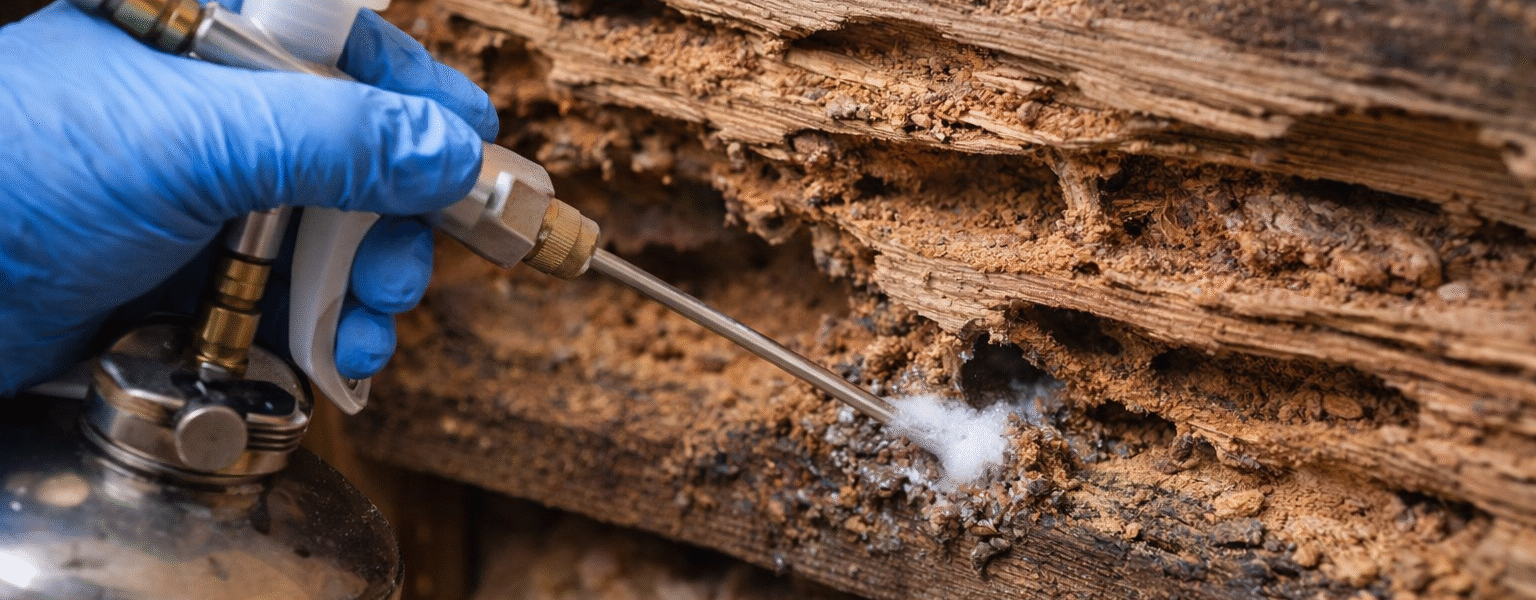
How to Control Dampwood Termites
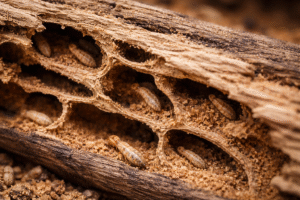
Dampwood termites are a type of termite that thrives in wood with high moisture levels, making them a common concern for homes and wooden structures in humid areas. These colonies can grow to thousands of termites, creating extensive tunnels, or galleries, that can stretch deep into infested wood. They are most often found in regions like Florida and the Florida Keys, as well as in mangroves, forests, and other damp environments.
Unlike subterranean or drywood termites, dampwood termites depend entirely on moist wood to survive. They rarely need to make contact with soil and are usually found in rotting boards, stumps, logs, or other wood that holds moisture. Their presence is often subtle at first, so homeowners may not notice them until damage becomes visible.
Although dampwood termites generally cause less damage than other termite species, early action is key. At the first signs of an infestation—like soft or hollow wood, frass buildup, or visible termites—control measures should be implemented immediately. Addressing the problem quickly can prevent costly repairs and keep your home safe from structural damage.
Dampwood Termite Identification
Although dampwood termites are reddish to light or dark they are generally brown, the nymphs are cream-colored. Dampwood termites are the largest in North America, they possess two front wings and two rear wings, which are equally in shape and size their bodies have three segments, a smaller head segment, and a larger head segment that contains their thorax and abdomen. They have six legs and two straight antennae protruding from their head segment.
Dampwood Termites LifeCycle
The dampwood termite life cycle can be divided into three stages egg, nymphs, and adults, the first two stages of this termite species last for about a month each and the adult life expectancy can last for several years.
Signs of Dampwood Termite Damage
Dampwood termites infest wood that contains high moisture, unlike subterranean termites they don’t need to make contact with the soil to sustain themselves but can be found in wood that makes contact with the ground. Although their infestation can be found in damp or decaying wood, dead trees, stumps, and logs they will infest structures that are exposed to high humidity and moist soil. To know if you have a dampwood termite infestations look for these signs.
- Signs of wood decay.
- The wood sounds hollow when tapped.
- The presence of termites is visible.
- Evidence of shed wings.
- Most termites will push their waste (frass) out of the holes, but with dampwood termites, they will use the frass or droppings to seal openings into the wood to lock in humidity and moisture.
- When touched the wood feels soft.
- Piles of fecal pellets outside wood galleries
- Dampwood termites will weaken the wood structure by creating tunnels inside.
- Ejected wood pellets are visible
Note: It is best to consider calling first a professional company to do the job for you.
Affiliate Disclosure: This page contains affiliate links. If you buy through my links, I may earn a small commission at no extra cost to you.
As an Amazon Associate, I earn from qualifying purchases.
How to Treat Dampwood Termite
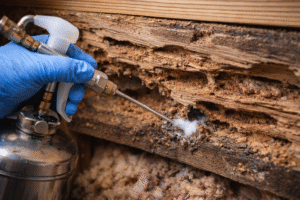
- Your first line of defense in treating dampwood termites is the removal of boards or wood that are moisture-soaked and rotting.
- Increase ventilation.
- Make sure that all of your drains are working properly.
- Heat treatments are an effective way to control dampwoood termites, this process is accomplished with the use of propane heaters. These heaters are used to heat the house or building structure that has been covered with traps to assist in holding in the heat. Once the temperature inside the wood reaches 130 degrees is kept at that temperature for about an hour and a half. However, this method will prove ineffective if the termite’s nest is near or below the ground
- because of not be able to raise the temperature high enough to control termites.
Here is a quick checklist of the most common “hot spots” you should investigate to make your property a lot less inviting to these pests:
-
AC Condensate Lines: Check your air conditioning unit’s drainage. In humid climates, these lines can constantly drip, saturating the wood siding or the foundation nearby.
-
Wood-to-Ground Contact: This is a big one. Look for fence posts, deck stairs, or wooden door frames that touch the soil directly. These act like straws, sucking moisture right up into the wood.
-
Stuff Crawl Spaces: If your crawl space feels like a sauna, it’s a termite paradise. Ensure your vents are clear of debris and consider a vapor barrier to keep things dry.
-
Damaged Eaves and Overhangs: Leaky or clogged gutters often overflow, causing water to soak into the wooden eaves (the “soffits”) of your roof.
-
Leaky Outdoor Faucets: Even a tiny, steady drip from a hose bib can keep the surrounding wood and soil damp enough to support a massive colony.
How to Treat Dampwood Termites-Click the product name to buy on Amazon and start protecting your home today
| Product Name | Type | Best Use |
|---|---|---|
| Bora-Care Wood Treatment | Borate-based wood preservative | Treats exposed wood, attics, crawl spaces, long-term protection |
| D-Foam Deltamethrin | Insecticidal foam | Spot treatment for localized infestations in beams, door frames, furniture |
| Tri-Die Pressurized Silica Gel Aerosol | Silica gel aerosol | Kills termites on contact in wood cavities or galleries |
| Premise 2 Concentrate | Liquid termiticide | Professional-grade termite control for widespread infestations |
| Optigard Flex Insecticide | Flexible liquid insecticide | Spot or perimeter treatment in wood structures |
| Stainless Steel Needle Injector | Injection tool | Delivers insecticide directly into termite galleries for deep control |
| Termidor SC Concentrate | Liquid termiticide | Effective for large-scale infestations; used by professionals |
| Alpine Ant and Termite Foam | Foam insecticide | Easy-to-use foam for cracks, voids, and small infestations |
| Timbor Professional Wood Treatment | Borate powder | Preventive treatment for new wood or exposed structural timber |
| Hand Held Sprayer | Spray applicator | For DIY application of liquid insecticides in targeted areas |
Always read the label and follow according to the manufacturer’s directions for the best results.
How to Prevent Dampwood Termite
Here are Key Points to prevent Dampwood Termites in your Home.
- To prevent dampwood termites from your home or building structure address any moisture issue, and eliminate moisture by diverting water away from your property’s foundation. For example rainfall.
- Make sure that your gutters are clean and free of debris for proper water movement.
- Direct water away from AC units, wood, and your building’s foundation.
- Repair leaky pipes
- Roofs that have leak issues should be dealt with immediately.
- Repair leaky faucets.
Conclusion
Dampwood Termites are destructive and should be dealt with immediately once discovery is made, this guide will help you to save hundreds or even thousands of dollars. I have seen the damage these termites can cause weakening a house or building structure that is dangerous. Do it yourself or call in a professional company to do the job for you, you will be glad with the results as you stop termites in their tracks.


Hi Norman,
Thanks for the thorough post on dealing with dampwood termites. It’s great to know that moisture control is key, and I appreciate the practical steps for treating and preventing infestations. Living in a high-humidity area, this is really relevant for me. I’m curious about the heat treatment process you mentioned—how often would you recommend this treatment to ensure termites don’t return, especially in areas that are naturally damp?
Thank you for your work and for sharing this helpful information!
Best,
Makhsud.
Not as often as long as you follow preventive measures.
https://bugoffcontrol.com/how-…
This article is very helpful in controlling damp wood termites in the home. I already knew that damp wood is attracted to and thrives on moisture-soaked or rotten wood. Therefore, I have learned to avoid having water near wood if possible or get rid of rotten wood as soon as possible.
I did not fully understand your point about using propane heaters to control damp wood termites. Are you supposed to keep the wood near the propane heater so that it can heat up? How do you know it is working to deal with the damp wood termites? In other words, what is the desired effect that you are looking for?
propane heaters are used to heat the house or building structure that has been covered with traps to assist in holding in the heat. Once the temperature inside the wood reaches 130 degrees is kept at that temperature for about an hour and a half. This method will eliminate dampwood termites.