
How To Identify Cockroach Species In Your Home (Comparison Chart + Best Treatment Products)
BugOffControl.com Quick Start Checklist (Use This First)
-
✅ Check roach size and color
-
✅ Note where you saw it (kitchen, drain, attic, yard)
-
✅ Compare with the roach type chart below
-
✅ Match the key sign (stripes, slow crawl, flies, near water)
-
✅ Pick the right product for that species
-
✅ Start treatment within 24 hours
Trust cue: Practical, safety-first pest control guidance for real homes and gardens.
Stay, and you’ll get: fast roach ID, a visual comparison chart, and the best product picks matched to each roach type.
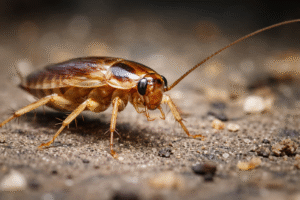
If you can identify the cockroach species, you can solve the problem faster. That is the simple truth. Different roaches behave in different ways. Some stay close to water. Others hide in warm appliances. A few fly in from outdoors. Because of that, the right fix depends on the right ID.
However, most homeowners guess wrong at first. They treat all roaches the same. As a result, the infestation keeps coming back. This guide fixes that mistake. You will learn how to identify cockroach species in your home using size, color, location, and behavior.
Even better, you will also get a buyer’s guide. It includes proven Amazon top sellers matched to the roach type and situation. Therefore, you can move from identification to action without delay.
First, use the quick comparison chart. Then confirm with the step-by-step guide. After that, choose your treatment product with confidence.
Affiliate Disclosure: This page contains affiliate links. If you buy through my links, I may earn a small commission at no extra cost to you.
As an Amazon Associate, I earn from qualifying purchases.
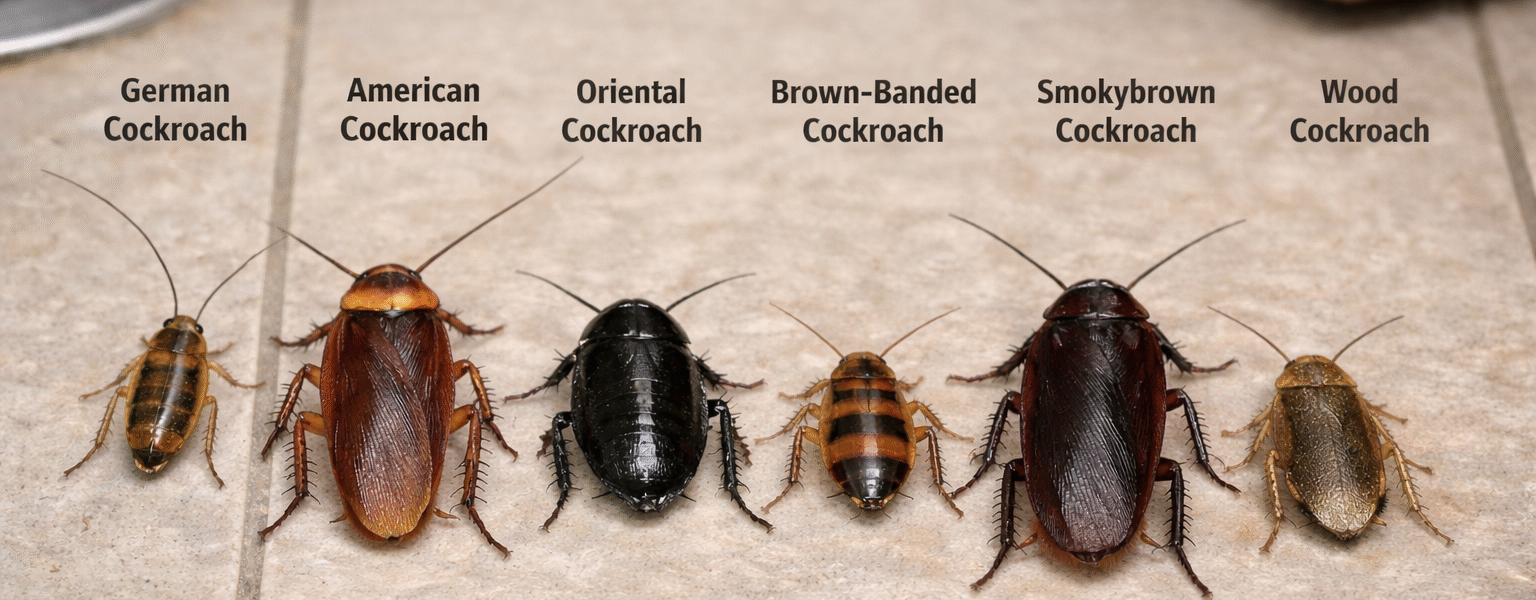
Roach Type Comparison Table (Home & Garden)
Use this visual chart first — most visitors can identify their roach here in seconds.
-
Compare size and color
-
Match the common location
-
Check the key sign
-
Follow the first control step
| Roach Type | Size | Color | Common Location | Active Time | Main Risk | Key Sign | Best First Control Step |
|---|---|---|---|---|---|---|---|
| German Cockroach | Small (½–⅝ in) | Light brown with 2 dark stripes | Kitchens, bathrooms, appliances | Night | Fast indoor infestation | Seen near sinks & stoves | Use gel baits + sanitation |
| American Cockroach | Large (1½–2 in) | Reddish brown | Basements, drains, sewers | Night | Spreads bacteria | Found near drains | Seal entry + bait stations |
| Oriental Cockroach | Medium (1–1¼ in) | Dark brown/black | Damp basements, crawl spaces | Night | Moisture indicator pest | Slow-moving, near water | Reduce moisture + traps |
| Brown-Banded Roach | Small (½ in) | Brown with light bands | Bedrooms, ceilings, furniture | Night | Spreads through rooms | Found high on walls | Targeted gel bait placement |
| Smoky brown Roach | Large (1½ in) | Dark mahogany | Attics, yards, gutters | Night | Outdoor-to-indoor invader | Attracted to lights | Exterior perimeter treatment |
| Australian Roach | Large (1¼ in) | Brown with yellow markings | Gardens, greenhouses | Night | Plant & food contaminator | Near plants/windows | Outdoor barrier spray |
| Asian Cockroach | Small (½–⅝ in) | Light brown | Outdoors, lawns, mulch | Dusk/night (flies) | Light-attracted invader | Flies toward lights | Reduce lighting + seal gaps |
| Wood Cockroach | Medium | Brown | Firewood, wooded areas | Night | Nuisance, not indoor breeder | Found near firewood | Move wood away from home |
How To Identify Cockroach Species In Your Home — Fast Method
Let’s make this simple and practical.
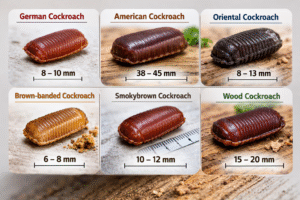
Step 1 — Check Size First
Size removes half the options immediately.
-
Very small → German or Brown-banded
-
Medium dark → Oriental
-
Very large → American or Smoky brown
Next, check markings.
Step 2 — Look for Stripes or Bands
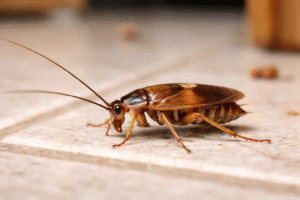
Markings are strong clues.
-
Two dark stripes behind the head → German cockroach
-
Light bands across wings → Brown-banded
-
No pattern, glossy dark → Oriental
Then consider location.
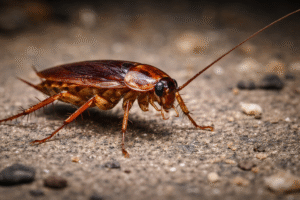
Step 3 — Where Did You See It?
Location often gives the final answer.
-
Inside appliances → German
-
Near drains → American
-
Damp basement → Oriental
-
High walls or ceilings → Brown-banded
-
Near lights outdoors → Smoky brown or Asian
Finally, watch behavior.
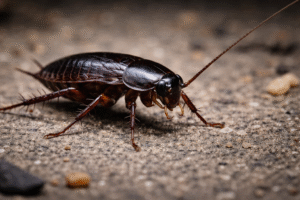
Step 4 — Movement & Behavior
-
Very fast runner → German
-
Slow and heavy → Oriental
-
Flies toward light → Asian or Smoky brown
Now you likely know your species. So next, choose the right control product.
Quick Picks — Best Roach Control Products by Situation
Use this buyer chart to match the product to roach behavior.
-
Fast colony killers
-
No-mess bait stations
-
Moisture-area treatments
-
Outdoor barrier sprays
| Product | Best For | Type | Rating | Quick Link |
|---|---|---|---|---|
| Advion Cockroach Gel Bait | German roaches | Gel bait | ⭐⭐⭐⭐⭐ | Check Price on Amazon |
| Combat Roach Bait Stations | Large indoor roaches | Bait station | ⭐⭐⭐⭐½ | Check Price on Amazon |
| Harris Roach Tablets | Damp areas | Tablets | ⭐⭐⭐⭐ | Check Price on Amazon |
| Hot Shot Liquid Bait | Hidden roaches | Liquid bait | ⭐⭐⭐⭐ | Check Price on Amazon |
| Ortho Home Defense Spray | Outdoor invaders | Barrier spray | ⭐⭐⭐⭐ | Check Price on Amazon |
Note: IGRs (Insect Growth Regulators)Products
IGRs (Insect Growth Regulators): Products like Gentrol Point Source are the “birth control” for roaches. They don’t kill the adults, but they prevent the babies (nymphs) from ever being able to reproduce. Without an IGR, you are just killing the individuals while the colony continues to grow.
⭐⭐⭐⭐⭐ Advion Cockroach Gel Bait — Best Overall for German Roaches
1. Advion Cockroach Gel Bait
-
Safety Verdict: 🟢 High. Because this is applied in tiny dots inside deep cracks and behind appliances, it is naturally “built-in” to the home’s structure and remains inaccessible to pets and children. It has no fumes and does not get into the air. Safety Note: This site rates Advion as ‘High Safety’ due to its placement, but don’t let the green icon lead to complacency. It contains Indoxacarb, a chemical pesticide. While it’s one of the safest application methods available, professional best practice is to rely on the manufacturer’s safety label rather than a website’s rating system
Best for: Kitchens, cabinets, heavy infestations

Pros
-
Very strong colony kill
-
Tiny placement dots
-
Works behind appliances
-
Professional grade formula
Cons
-
Needs careful placement
-
Avoid wet surfaces
-
Keep away from pets
If you see small striped roaches, start with Advion Gel Bait today. Fast colony control matters.
Check Price on Amazon.
⭐⭐⭐⭐½ Combat Roach Killing Bait Stations — Best No-Touch Option
2. Combat Roach Bait Stations
-
Safety Verdict: 🟡 Moderate. The bait is encased in a hard plastic shell, which is “child-resistant.” However, a curious dog could chew the plastic. Pro Tip: Use the adhesive to stick these to the underside of cabinets or behind the fridge where pets can’t reach.
Best for: American and mixed roaches
Pros

-
No mess handling
-
Child-resistant design
-
Long-lasting bait
-
Easy to deploy
Cons
-
Slower than gel
-
Visible stations
-
Less flexible placement
Prefer a clean, simple setup? Choose Combat Bait Stations now.
Check Price on Amazon.
⭐⭐⭐⭐ Harris Roach Tablets — Best for Damp Spaces
3. Harris Roach Tablets
-
Safety Verdict: 🟠 Caution Required. These look like small treats or pills to a pet or child. You must follow the “Expert Rule”: If you can see the tablet after placing it, you haven’t hidden it well enough. Push them deep under appliances or into “drawer wells” where they are invisible.
Best for: Basements and crawl spaces
Pros

-
Great in moisture zones
-
Long shelf life
-
Budget friendly
-
Simple placement
Cons
-
Slower action
-
Not for open areas
-
Must be secure from pets
Seeing dark roaches near moisture? Use Harris Roach Tablets. Check Price on Amazon.
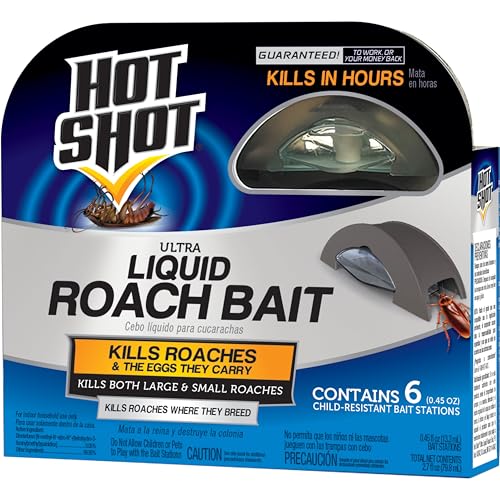
⭐⭐⭐⭐ Hot Shot Liquid Roach Bait — Best for Hidden Feeders
4. Hot Shot Liquid Bait
-
Safety Verdict: 🟠 Caution Required. Contains liquid bait that can spill if the station is tipped or crushed by a large pet. Place these exclusively inside cabinets or in restricted “no-go” zones like the back of a pantry shelf.
Best for: Brown-banded and scattered roaches
Pros
-
Attracts thirsty roaches
-
Enclosed design
-
Good for dry rooms
-
Easy replacement
Cons
-
Needs monitoring
-
Smaller bait volume
-
Not instant kill
Finding roaches in bedrooms or high shelves? Try Hot Shot Liquid Bait.
Check Price on Amazon.
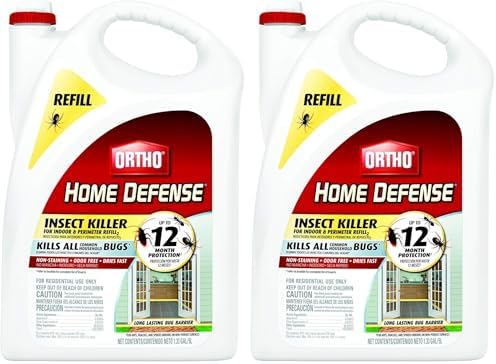
⭐⭐⭐⭐ Ortho Home Defense — Best Outdoor Barrier
5. Ortho Home Defense Spray
-
Safety Verdict: 🟢 High (Once Dry). This is a surface treatment. The golden rule is: Keep pets and kids away until it is 100% dry (usually 1-2 hours). Once dry, the active ingredients “lock” to the surface and are safe for incidental contact, like walking across a treated doorway.
Best for: Smokybrown and outdoor roaches
Pros
-
Long residual barrier
-
Indoor + outdoor
-
Easy wand sprayer
-
Fast perimeter coverage
Cons
-
Not a bait
-
Needs reapply
-
Surface only
Stop roaches before they enter. Spray Ortho Home Defense around entry points.
Check Price on Amazon.
Pro Tips for Maximum Gel Bait Effectiveness
-
The “No-Spray” Rule: If you use Advion Gel, do not spray Raid or Ortho in the same room. Sprays are repellents; they will contaminate the bait, making it taste like poison to the roach, and they won’t eat it.
-
Rotation is Key: If you have a massive German roach problem and they stop eating the Advion after a month, they might be “bait-averse.” Switch to Maxforce FC Magnum or Optigard. Rotating active ingredients prevents the colony from developing resistance.
-
Vacuum First: Before putting bait down, use a vacuum with a HEPA filter to suck up every visible roach and egg case (ootheca) you see. This immediately drops the population and forces the remaining ones to be “hungrier” for your bait.
If DIY Cockroach Treatments Fails
When To Call A Pro-
Activity after 3–4 weeks
Roaches seen daytime
Multiple rooms active
Egg cases visible weekly
10 FAQs — Cockroach Identification & Control
1. What is the most common indoor cockroach?
German cockroaches are the most common indoor species.
2. Which roach is usually in basements?
American and Oriental roaches often appear there.
3. Are small roaches always babies?
No. German roaches are naturally small.
4. Do roaches fly inside homes?
Some species can, but most indoor ones rarely fly.
5. Does seeing one roach mean infestation?
Not always. However, it should trigger inspection.
6. Are gel baits better than sprays?
Often yes. Gels spread through colonies.
7. Should I use spray and bait together?
Avoid spraying near bait placements.
8. What attracts German roaches most?
Food crumbs, grease, and moisture.
9. Which roach likes damp areas most?
Oriental cockroaches prefer moisture.
10. When should I call a professional?
If activity continues after several weeks of treatment.
Conclusion — Correct Roach Identification Changes Everything
Correct identification is the turning point. It saves time. It saves money. It prevents repeat infestations. First, use the comparison chart. Next, confirm with size, color, and location clues. Then choose the product designed for that roach’s behavior.
Take action today. Match your roach type and click Check Price on Amazon on the recommended product above. Fast action leads to faster control.



Hello Norman,
This was actually more useful than I expected because I’ve had those “is that a roach or just some random bug?” moments and never really known what to look for, so your breakdown of how to tell the different species apart gave me some real language to think about instead of just guessing. I liked that you explained it in a way that doesn’t feel gross or too technical, because honestly identifying bugs up close can be awkward enough without trying to decode a scientific guide at the same time. It gave me a better sense of what to watch for so I can actually make smarter choices if we ever need to handle an infestation instead of just freaking out and squashing everything that moves. Where we used to live, based on your comparison table, we had German Cockroaches in our house and around our front door. I am so glad we moved!
Angela M 🙂
sometimes it can become confusing with bug identification around the home. I am glad that this post was of great help to you!