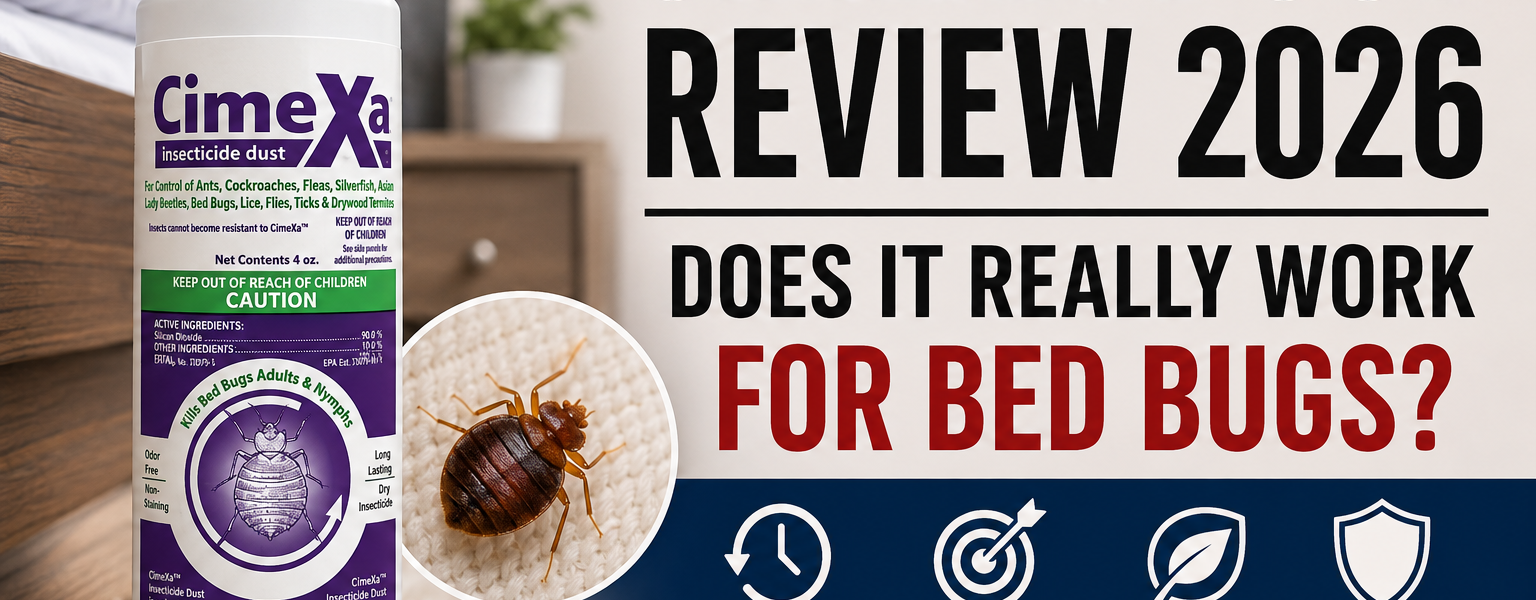
Cimexa Dust Review 2026: Does It Really Work for Bed Bugs?

If you have discovered bed bugs in your home, finding a treatment that actually makes sense can be frustrating. You’ll find plenty of options for dealing with bed bugs, including sprays, traps, heat treatments, mattress encasements, dusts, and professional pest control. With so many choices available, it can be difficult to know which approach is right for your situation.
So where does Cimexa Dust fit in?
In this Cimexa Dust review, we’ll look at how it works, what makes it different from conventional bed bug sprays, how long it can take to work, where it may be appropriate to use, its advantages and drawbacks, and whether it’s worth considering as part of a bed bug-control plan.
Quick Answer: Is Cimexa Dust Worth Buying?
Is Cimexa Dust Worth Considering?
Cimexa Dust may be a good option if you prefer a low-odor treatment that tackles bed bugs in a different way than traditional liquid sprays. One of its main benefits is its desiccant action, which can continue working in suitable areas when the dust is applied correctly and left undisturbed.
The trade-off is patience. Cimexa is not designed to deliver an instant knockdown. Bed bugs must come into contact with the treated dust for it to work, so you may not see the quick results that can sometimes occur with certain liquid insecticides.
Our rating: 4.5/5
Cimexa may be a good fit if you want:
- A desiccant-based treatment
- Low odor
- Residual treatment potential
- A product that can complement a broader bed bug-control strategy
- A targeted treatment for appropriate cracks, crevices, gaps, and other approved areas
- An alternative to relying entirely on conventional sprays
Cimexa may not be right for you if you:
- Expect bed bugs to die immediately
- Want a simple spray-and-forget treatment
- Don’t want to handle insecticidal dust
- Aren’t comfortable following detailed application directions
-
- Are dealing with a significant infestation that may require professional help
Important: Applying more dust won’t necessarily improve the results. Using the right amount in the right places is what matters most.
Affiliate Disclosure: This page contains affiliate links. If you buy through my links, I may earn a small commission at no extra cost to you.
As an Amazon Associate, I earn from qualifying purchases.
Cimexa Dust at a Glance
| Feature | Cimexa Dust |
|---|---|
| Treatment type | Desiccant dust |
| Main material | Amorphous silica gel |
| Odor | Low |
| Immediate knockdown | Limited |
| Residual potential | Yes, when properly applied |
| Application | Targeted application in approved areas |
| Best suited for | Appropriate cracks, crevices, gaps, and other approved treatment areas |
| Biggest advantage | Different mode of action from many conventional sprays |
| Biggest drawback | Requires patience and careful application |
| Our rating | 4.5/5 |
Affiliate disclosure: This article contains affiliate links. If you purchase through one of our links, BugOffControl.com may earn a commission at no additional cost to you. Our recommendations are based on the product’s characteristics, intended use, advantages, limitations, and overall usefulness—not on the commission.
Check the Current Cimexa Dust Price
Prices, sizes, sellers, and availability can change, so check the current Amazon listing before purchasing.
What Is Cimexa Dust?
Cimexa is a specialized insect-control dust that contains amorphous silica gel as its active ingredient. Rather than relying on the same approach used by many traditional bed bug sprays, Cimexa works through a desiccant action, helping control insects by disrupting their protective outer layer.
That means its approach to insect control is based on disrupting the insect’s protective outer layer rather than simply relying on the type of liquid insecticide found in many sprays.
For someone dealing with bed bugs, that difference can be important.
Rather than expecting a treatment that knocks bed bugs down right away, Cimexa works by giving the insects an opportunity to come into contact with properly placed dust. That makes one point especially important to understand about using Cimexa:
It isn’t a magic powder that you simply sprinkle around the room and forget about.
The location and method of application can make a big difference in how well the product performs.
How Does Cimexa Kill Bed Bugs?

Cimexa uses a desiccant mode of action.
When a bed bug comes into contact with appropriately applied Cimexa dust, the material can interfere with the insect’s protective outer layer.
This can gradually draw moisture from the insect, interfering with its ability to survive.
As moisture loss continues, the insect can eventually die from dehydration.
The important word here is contact.
A bed bug doesn’t necessarily have to eat the product for the treatment to be useful. It needs to encounter the treated material.
That’s why having Cimexa on hand is only part of the solution—the way you use it matters just as much.
The product needs to be used according to its label and placed in appropriate treatment areas where bed bugs can encounter it.
Does Cimexa Kill Bed Bugs Immediately?
Cimexa is better understood as a long-lasting dust treatment rather than a product designed to kill bed bugs on contact. Since it works through desiccation, the bugs must encounter the properly applied dust, and the time it takes to see results can differ depending on the situation.
Several factors can influence the process, including:
- Whether bed bugs actually encounter the dust
- How much exposure occurs
- Where the product is applied
- Whether the treated area remains undisturbed
- Moisture and environmental conditions
- The size and severity of the infestation
- Whether other control methods are being used
So don’t judge Cimexa solely by whether you see dead bed bugs immediately after application.
At the same time, patience doesn’t mean ignoring an infestation.
If you’re still seeing bed bugs, it’s a good idea to reassess your overall treatment approach and determine what may need to be adjusted.
How Long Does Cimexa Take to Work?
There isn’t a simple one-size-fits-all answer.
Cimexa isn’t designed to provide the kind of immediate visible response people often expect from a conventional insecticide spray.
The bed bug has to encounter the treated dust, and the amount of exposure can affect how quickly the treatment works.
This is one reason Cimexa is better viewed as one component of a bed bug-control strategy rather than a guaranteed overnight solution.
If you’re expecting to apply the product today and wake up tomorrow to a completely bed-bug-free bedroom, Cimexa may not meet those expectations.
If you’re comfortable with a slower approach that can provide residual activity when properly applied, it may make more sense.
How to Use Cimexa Dust for Bed Bugs along with a Hand Duster

A hand duster can make applying Cimexa much easier and more precise. Rather than spreading excess dust around, you can use the duster to deliver a light, controlled amount into suitable cracks, crevices, gaps, and other locations where bed bugs may hide or move through.
To use it correctly, add Cimexa to the duster according to the product and duster instructions. Hold the duster close to the treatment area and use a gentle, controlled puff to apply a very light layer of dust. The goal is not to create a thick pile or coat the entire surface. A thin, barely visible application is generally preferable to overapplying the product.
Work carefully around approved treatment locations, such as suitable cracks, crevices, gaps, and voids. Avoid blowing dust into the air or applying it to surfaces that the current product label does not approve.
The key is control: use the hand duster to place a small amount of Cimexa exactly where it is needed, rather than spreading dust throughout the room. Always follow the current product label for approved application sites, precautions, and application directions.
The most important rule is simple:
Follow the current Cimexa product label.
Always follow the product label first. It contains the manufacturer’s approved uses, application instructions, safety precautions, and other important guidance that should take precedence over general information found online.
1. Identify Appropriate Treatment Areas
Before using Cimexa, take a little time to identify the spots where bed bugs are most likely to hide, move, or pass through. This helps you focus the treatment where it is most useful instead of applying dust unnecessarily.
Depending on the label and the specific treatment situation, appropriate areas may include certain:
- Cracks
- Crevices
- Gaps
- Voids
- Other approved treatment locations
The goal is targeted application.
There’s no need to coat your entire bedroom with dust. The goal is to apply it carefully and only in appropriate areas where it can be effective.
2. Apply the Product as Directed
One of the biggest misconceptions about insecticidal dust is that more must automatically be better.
That’s not a good approach.
Follow the product’s application instructions and use a light, even application rather than piling on a heavy layer of dust.
A properly applied treatment is more important than simply using a large amount of product.
3. Avoid Unapproved Application Areas
Just because a surface is inside your home doesn’t mean it’s automatically suitable for Cimexa. Be especially careful around areas that people or pets touch, as well as clothing, bedding, and other everyday household items. Before treating any specific surface, always check the current product label to make sure the application is permitted and follow its instructions carefully.
4. Allow the Treatment to Remain Where Appropriate
One of the benefits of desiccant dust is that it can continue working for an extended period when applied correctly and left undisturbed in appropriate areas. However, its effectiveness over time can be influenced by factors such as cleaning, movement, moisture, and other changes in the treated area.
5. Don’t Rely on Cimexa Alone for Every Infestation
An established bed bug infestation can be difficult to eliminate.
Depending on what you’re dealing with, an effective approach may involve combining several different steps, such as:
- Vacuuming
- Decluttering
- Bed bug interceptors
- Mattress and box-spring encasements
- Heat treatment
- Carefully selected insecticides
- Monitoring
- Professional pest-control assistance
Cimexa can be useful as part of that approach.
Where Should Cimexa Dust Be Applied?
This is one situation where it’s best to stick with the recommended instructions rather than trying to create your own application method.
Use Cimexa only in locations approved by the current product label.
Depending on the label and infestation, appropriate treatment areas may include certain cracks, crevices, gaps, and other places where bed bugs hide or travel.
The objective is targeted treatment.
The goal isn’t to cover every surface throughout the room with dust.
In fact, spreading dust indiscriminately can create unnecessary exposure without necessarily improving your bed bug-control strategy.
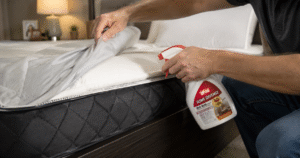
Can You Put Cimexa on a Mattress?
Treating bed bugs doesn’t automatically mean Cimexa should be applied directly to a mattress. The surfaces where the product can be used depend on the current label instructions. If a particular application isn’t specifically permitted on the label, it’s safest not to assume that it’s suitable.
This is particularly important for mattresses and other surfaces that have close and repeated contact with people.
Before using Cimexa on a mattress, bedding, or any similar surface, always review the current product label to confirm that the application is permitted.
Is Cimexa Safe Around Pets and Children?
Cimexa should be handled according to the product label.
Follow the label’s precautions regarding:
- Children
- Pets
- Treated areas
- Handling
- Ventilation
- Exposure
- Approved application sites
Low odor shouldn’t be confused with permission to use the product anywhere or without precautions.
If you’re not sure whether Cimexa is suitable for use around children or pets in a particular area, check the latest product label or speak with a qualified pest-control professional before applying it.
Cimexa Dust Pros and Cons
Before buying any pest-control product, it’s helpful to look at both sides.
Pros of Cimexa Dust
Different mode of action
Cimexa uses a desiccant approach rather than functioning like a conventional liquid bed bug spray.
Low odor
Its low-odor characteristic can be appealing to people who don’t want a strong-smelling treatment.
Residual potential
When used correctly in appropriate areas and allowed to remain undisturbed, Cimexa can continue providing residual control over time.
Useful as part of a broader strategy
Cimexa doesn’t have to be your only bed bug-control method.
It can potentially complement other appropriate approaches.
Targeted application
The product can be useful in appropriate cracks, crevices, gaps, and other approved treatment areas where bed bugs may travel or hide.
Cons of Cimexa Dust
It isn’t an instant solution
If you’re looking for quick, visible results, Cimexa may seem slower to work because it isn’t designed for an immediate knockdown.
Application requires care
It’s important to follow the product’s instructions instead of simply dusting every spot where you happen to notice a bed bug.
Bed bugs need to encounter the treatment
The product isn’t useful simply because it is sitting somewhere in your home.
It isn’t necessarily enough by itself
If the infestation is large or well established, you may need to use a more comprehensive approach rather than relying on a single treatment method.
More isn’t automatically better
Overapplication isn’t a substitute for correct application.
Cimexa Dust vs. Diatomaceous Earth
Cimexa and diatomaceous earth are often compared because both are associated with desiccant insect control.
However, they aren’t the same product.
Cimexa uses amorphous silica gel, while diatomaceous earth is a different silica-rich material derived from fossilized microscopic organisms.
That difference matters.
Instead of simply trying to find the “best” option, look at the product itself, the pest you’re targeting, where the product is approved for use, and the label instructions. It’s also important to consider how that treatment fits into your overall pest-control plan.
| Factor | Cimexa Dust | Diatomaceous Earth |
|---|---|---|
| Main material | Amorphous silica gel | Silica-rich fossilized material |
| Treatment type | Desiccant | Desiccant |
| Odor | Low | Low |
| Application | Light application in approved areas | Light application in appropriate areas |
| Best use | Targeted insect-control applications | Targeted insect-control applications |
| Main consideration | Careful application | Product quality and proper application |
Which One Should You Choose?
There isn’t a universal winner.
If you’re interested in a desiccant dust made with amorphous silica gel and want the specific characteristics that Cimexa offers, it could be a suitable choice for your treatment plan.
If you are comparing several desiccant products, look at the actual product, label, intended use, application requirements, and overall treatment plan rather than assuming all insecticidal dusts work identically.
Compare the Current Cimexa Price on Amazon
Cimexa Dust vs. Bed Bug Spray
This comparison is helpful because Cimexa and traditional bed bug sprays work in distinctly different ways.
Cimexa Dust
Cimexa:
- Uses desiccant action
- Is applied as a dust
- Works when bed bugs come into contact with the properly applied treatment.
- Can provide residual activity when properly applied
- Can be useful in appropriate treatment areas
- Doesn’t provide the same immediate visual effect as some sprays
Bed Bug Sprays
Bed bug sprays:
- Use liquid formulations
- Can contain different active ingredients
- May provide faster knockdown depending on the product
- Can have different residual characteristics
- Have product-specific application instructions
Which Is Better?
It depends on what you’re trying to accomplish.
If your priority is immediate visible knockdown, a spray may appear more appealing.
If you prefer a low-odor desiccant approach with residual potential, Cimexa may be more attractive.
But you shouldn’t automatically think of the choice as Cimexa versus every other treatment.
A bed bug-control strategy can involve several appropriate methods.
Never mix or combine pest-control products unless their labels specifically allow it.
Cimexa vs. Other Bed Bug Treatments
Cimexa is just one tool in the bed bug-control toolbox.
Depending on the situation, homeowners may also consider:
- Bed bug heat treatment
- Mattress and box-spring encasements
- Bed bug interceptors
- Vacuuming
- Decluttering
- Monitoring
- Carefully selected insecticides
- Professional pest-control services
The most effective strategy isn’t necessarily the one with the strongest single product.
Bed bug control is often about finding the insects, reducing hiding places, treating appropriate areas, monitoring the situation, and consistently using suitable control methods.
Cimexa Dust Comparison Table
| Feature | Cimexa Dust | Bed Bug Spray | Diatomaceous Earth |
|---|---|---|---|
| Treatment type | Desiccant dust | Liquid insecticide | Desiccant |
| Immediate knockdown | Limited | Product-dependent | Limited |
| Residual potential | Yes, when properly applied | Varies by product | Can provide residual activity |
| Application | Light application in approved areas | Liquid application according to label | Light application in appropriate areas |
| Odor | Low | Varies | Low |
| Best suited to | Appropriate treatment areas | Product-specific treatment areas | Appropriate treatment areas |
| Main consideration | Careful application | Active ingredient and product directions | Product quality and proper application |
Check Current Cimexa Pricing
What Makes Cimexa Different?
Cimexa’s biggest difference is its mode of action.
Instead of relying on the same type of approach used by many conventional liquid insecticides, Cimexa is a desiccant dust.
That gives homeowners another option when putting together a bed bug-control strategy.
However, the different mode of action also means you need to adjust your expectations.
You may not see the same immediate visual results that you might associate with spraying an insect directly.
The product needs to be encountered by the bed bugs, and appropriate application is critical.
Things to Consider Before Buying Cimexa
Cimexa may sound like a simple purchase, but there are several things worth considering first.
1. Compare the Container Size
Don’t look only at the price.
Compare how much product you’re actually receiving.
A less expensive container isn’t necessarily the better value if it contains substantially less product.
2. Consider Application Equipment
A suitable duster can make controlled application easier.
If you don’t already have the necessary equipment, remember to include that cost when deciding whether Cimexa is right for you.
3. Think About Your Treatment Area
Cimexa isn’t something you should plan to scatter throughout an entire room.
Think about where treatment is appropriate before purchasing it.
4. Read the Current Label
This is extremely important.
The current product label should guide:
- Where you can use the product
- How you should apply it
- How much to use
- What precautions to follow
- Whether reapplication is appropriate
- Which surfaces or locations are approved
Online reviews can help you understand a product, but they should never replace the label.
5. Consider the Size of Your Infestation
If you’re dealing with an established infestation, don’t assume Cimexa alone will solve the problem.
You may need a broader approach or professional assistance.
Is Cimexa Dust Worth the Money?
For the right situation, yes.
Cimexa’s biggest attractions are its:
- Desiccant mode of action
- Low odor
- Residual potential
- Usefulness in appropriate treatment areas
- Ability to complement other bed bug-control methods
But there are important limitations.
Cimexa:
- Doesn’t provide instant results
- Requires careful application
- Requires contact with the treated material
- Shouldn’t be spread indiscriminately
- May not be enough by itself for a significant infestation
So instead of asking only, Does Cimexa work?, ask:
Does Cimexa fit the way I need to approach my bed bug problem
If you’re comfortable with a slower, residual approach and careful application, it may be a good fit.
If you’re looking for an instant-kill product, you may be disappointed.
Our Cimexa Dust Rating
4.5 out of 5 stars
⭐⭐⭐⭐½
Effectiveness: 4.5/5
Cimexa offers a different approach to bed bug control and can provide residual activity when properly applied in appropriate areas.
Ease of Use: 4/5
Application requires more care than simply spraying a liquid product.
Odor: 5/5
Its low-odor characteristic is one of its more appealing qualities.
Versatility: 4/5
Cimexa can be useful as one component of a broader treatment strategy, but its application must remain within the product’s approved uses.
Overall Value: 4.5/5
For the right homeowner and the right situation, Cimexa can be a worthwhile addition to a bed bug-control plan.
Who Should Buy Cimexa Dust?
Cimexa is worth considering if you are:
- Looking for a desiccant treatment
- Interested in a low-odor option
- Comfortable applying dust carefully
- Looking for residual treatment potential
- Trying to complement other bed bug-control methods
- Willing to follow the product label closely
Who Should Skip Cimexa?
You may want to consider another approach if you:
- Expect instant results
- Want a simple spray-and-forget product
- Don’t want to handle insecticidal dust
- Plan to apply large amounts throughout your home
- Are dealing with a severe infestation and expect one product to solve it
Final Verdict: Is Cimexa Dust Worth Buying?
Yes, Cimexa Dust is worth considering—but it’s important to buy it with realistic expectations.
Its biggest strength is its desiccant mode of action, low odor, and potential for residual activity when it is properly applied in suitable areas.
Its biggest weakness is that it isn’t an instant solution.
Bed bugs need to encounter the treated dust, and an established infestation may require more than one control method.
For that reason, we wouldn’t recommend thinking of Cimexa as a miracle cure.
Instead, think of it as one useful tool in a larger bed bug-control strategy.
Our bottom line:
Cimexa is a strong option for homeowners who want a low-odor desiccant treatment and are willing to apply it carefully.
If you want immediate visible knockdown, however, a conventional bed bug spray may better match your expectations.
Overall rating: 4.5/5
Check the Current Cimexa Price
Frequently Asked Questions About Cimexa Dust
Does Cimexa kill bed bugs?
Cimexa is designed as a desiccant insect-control product. Bed bugs that come into contact with appropriately applied dust can lose moisture and eventually die.
However, Cimexa should not be viewed as a guaranteed stand-alone solution for every infestation.
Does Cimexa kill bed bugs immediately?
No.
Cimexa is not an instant-knockdown spray. Bed bugs need to encounter the treated dust, and the time required for an effect can vary.
How does Cimexa kill bed bugs?
Cimexa contains amorphous silica gel.
The dust can interfere with the insect’s protective outer layer after contact, causing moisture loss that can eventually lead to death from dehydration.
How long does Cimexa take to work?
There isn’t one fixed timeframe that applies to every situation.
Exposure, treatment location, environmental conditions, and other factors can influence how quickly the treatment affects bed bugs.
How long does Cimexa remain effective?
Cimexa can provide residual activity when properly applied and left undisturbed in appropriate treatment areas.
Cleaning, disturbance, moisture, and other conditions can affect how long the treatment remains in place.
Always follow the current label for application and reapplication instructions.
Can Cimexa be used indoors?
Cimexa is intended for certain indoor applications.
However, you should follow the current label for approved locations, application methods, and precautions.
Never assume that every indoor surface is automatically approved.
Can you use Cimexa on a mattress?
Don’t automatically apply Cimexa to a mattress.
Check the current product label to determine whether the particular application is approved.
If a surface isn’t specifically approved, don’t apply the product there.
Is Cimexa safe around pets?
Follow all label directions concerning pets, children, treated areas, handling, and exposure.
Keep pets away from treated areas according to the product’s instructions.
If you’re uncertain about a particular situation, consult the label or a qualified pest-control professional.
Can Cimexa be used with bed bug spray?
Different products may sometimes form part of the same overall treatment strategy, but you should not automatically mix or combine them.
Follow the individual product labels and only combine treatments when their directions specifically permit it.
Where should Cimexa be applied?
Application locations depend on the current product label and the infestation.
Appropriate areas may include certain cracks, crevices, gaps, and other approved locations where bed bugs hide or travel.
The goal is targeted application—not spreading dust everywhere.
Is Cimexa better than diatomaceous earth?
Neither product is automatically better for every situation.
Cimexa uses amorphous silica gel, while diatomaceous earth is a different desiccant material.
The better choice depends on the product, intended use, approved application areas, and overall treatment strategy.
Is Cimexa better than bed bug spray?
Not necessarily.
Cimexa and sprays use different approaches.
A spray may be more appealing when immediate knockdown is important, while Cimexa may appeal to someone looking for a low-odor desiccant treatment with residual potential.
The right choice depends on your situation.
Is Cimexa worth buying?
For homeowners looking for a low-odor desiccant treatment with residual potential, Cimexa can be worth considering.
Just don’t expect it to instantly eliminate an infestation or replace every other bed bug-control method.
Related Bed Bug Guides
If you’re dealing with bed bugs, these guides can help you build a more complete treatment strategy.
Treatment & Removal
- Bed Bug Heat Treatment
- How to Get Rid of Bed Bugs Naturally at Home
- DIY Bed Bug Traps for Home
- Best Diatomaceous Earth for Bed Bugs
- Ortho Bed Bug Spray Review
Prevention
- How to Prevent Bed Bugs in Hurricane Shelters
- Can Bed Bugs Return After Treatment?
- Will Bed Bugs Infest a Clean House?
Identification & Behavior
- How to Identify Bed Bug Bites vs. Mosquito Bites
- Can Bed Bugs Live in Pillows?
- How Do Bed Bugs Enter a House?
The Bottom Line
Cimexa Dust isn’t a quick fix, and it shouldn’t be treated like one.
But if you’re looking for a low-odor desiccant treatment that works differently from conventional bed bug sprays, it can be a useful option to consider.
The biggest thing to remember is that correct application matters more than simply using more product.
Follow the current product label, use Cimexa only in approved areas, apply it as directed, and consider it one part of a broader strategy when dealing with an established infestation.