Why Are Ants Attracted To AC Units? (And The Best Products To Stop Them Fast)
✅ BugOffControl.com Quick Action Checklist
Safety is Always First! if you are not sure about this process it is always best to call in the professionals who are highly trained and experienced to take on this job!
Before you do anything, run through this simple checklist:
-
✔ Check for moisture buildup or condensation around your AC unit
-
✔ Look for small ant trails near wiring or control panels
-
✔ Inspect for aphids or scale insects nearby (ants farm them for honeydew)
-
✔ Clear leaves, mulch, and debris within 2 feet of the unit
-
✔ Apply a protective ant barrier around the base
-
The “Contactors” Check: If you are comfortable opening the electrical panel of your AC (after turning off the breaker!), look for the “contactor.” If it’s covered in ants, don’t just spray it. Use a soft brush or compressed air to clear them out first.
-
Ant-Proof Contactors: If you have a recurring problem, HVAC technicians can install “sealed contactors” that prevent ants from getting between the electrical points.
⚠️ A Note on Safety (The “Contactor” Check) know your limits with ac maintenance. Call in the professional that have the training and the experience to fix this problem!.
Please be extremely careful here. 1. Power Off: Turn off the power at the disconnect box (the small box on the wall near the AC) AND the indoor breaker. 2. Capacitor Danger: Even with the power off, the start capacitor can hold a lethal electrical charge. If you aren’t experienced with HVAC internals, stick to treating the exterior perimeter.
If you don’t have professional HVAC training, it’s smart to keep your hands out of the electrical compartment. Air conditioning systems carry strong electrical currents, and the internal components aren’t designed for DIY handling. Opening the panel without the right experience can put your safety at risk and potentially cause expensive damage.
That doesn’t mean you can’t do anything helpful. Focus on easy, low-risk tasks like removing leaves, weeds, and debris from around the unit so it can breathe properly. You can also carefully hose off dirt from the exterior coils — just double-check that the power is fully shut off before you start.
Staying within these simple maintenance steps helps your system run smoothly while keeping you safe and avoiding unnecessary repair bills.
-
Trust Cue: Every product below is Amazon Choice or a Best Seller with strong buyer reviews.
🎯 Stay With Us: You’ll learn exactly why ants target AC units and which products stop them fast — without damaging your system.
Affiliate Disclosure: This page contains affiliate links. If you buy through my links, I may earn a small commission at no extra cost to you.
As an Amazon Associate, I earn from qualifying purchases.
Why Are Ants Attracted To AC Units?
Here’s the quick answer:
Ants are attracted to AC units because of moisture, warmth, electrical fields, and shelter.
Air conditioning systems produce condensation. That water attracts thirsty ants. In addition, the unit creates warmth and vibration. Ants love protected, dry spaces inside contactors and control panels.
Even worse, some species — like fire ants and crazy ants — are drawn to electromagnetic fields.
That’s when real damage happens.
⚠ How Ants Are a Danger to AC Units
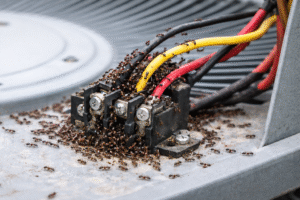
This is not just a nuisance. Ants can:
-
🧯 Cause short circuits by nesting in contactors
-
🔥 Trigger electrical failures
-
💸 Blow fuses and damage compressors
-
❄ Shut down cooling during peak summer
-
🛠 Lead to expensive repair bills ($300–$1,500+)
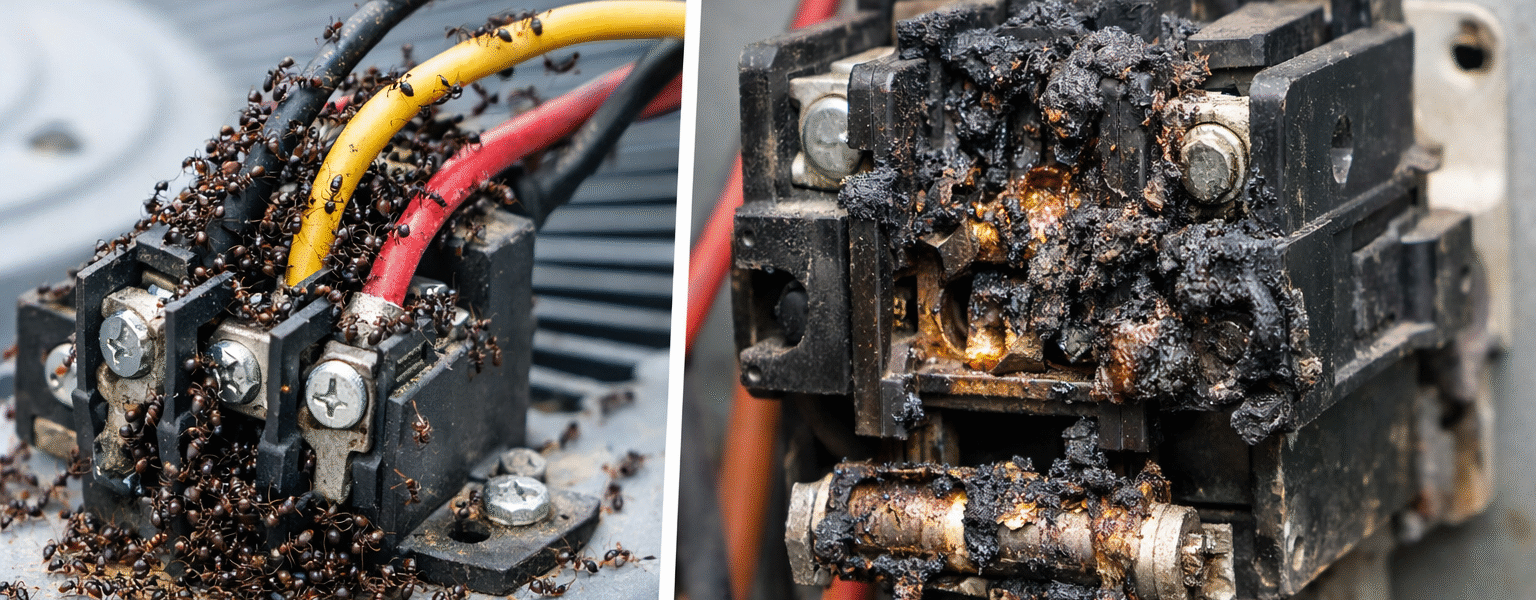
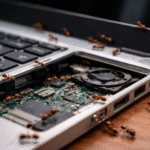
When ants swarm inside electrical components, they can die in clusters. That buildup creates a bridge between circuits. The result? A fried control board.
What Ant Damage Looks Like Inside an AC
When ants invade electrical components, they don’t just crawl around — they create serious problems. As ants swarm live electrical parts, many get electrocuted. Their bodies can pile up and form a conductive bridge between terminals, causing short circuits. This often results in burned contactors, blown fuses, damaged control boards, or tripped breakers. Over time, repeated swarming can lead to compressor failure — one of the most expensive AC repairs.
How Much AC Repairs From Ant Damage Cost
Many homeowners don’t realize how expensive ant-related AC damage can be. Replacing a contactor or fuse may cost $300–$600. If the control board is damaged, repairs can climb to $800 or more. In severe cases where the compressor fails, you could be looking at $1,500+ in repair bills — or even a full system replacement. Compared to those costs, using preventative ant control products around your AC unit is a small investment that can save you thousands.
If you live in warm climates — like Florida, Texas, or the Bahamas — this problem is even more common.
Now let’s fix it.
Best Ant Control Products For AC Units (Quick Picks)
• Stops ants fast
• Safe for outdoor perimeter use
• Works around electrical systems
• Long-lasting barrier protection
• Strong customer ratings
Comparison Table – Best Products To Protect Your AC Unit
| Top Rated Ants Product | Best For | Star Rating | Key Benefit | Check Price Amazon |
|---|---|---|---|---|
| TERRO T300 Liquid Ant Baits | Killing the colony at the source | 4.6/5⭐⭐⭐⭐☆ | Eliminates the entire ant colony | Check Price on Amazon |
| Ortho Home Defense Insect Killer | Long outdoor barrier | 4.4/5⭐⭐⭐⭐☆ | 12-month perimeter protection | Check Price on Amazon |
| Amdro Ant Block Granules | Outdoor mound control | 4.4/5⭐⭐⭐⭐☆ | Kills visible & hidden colonies | Check Price on Amazon |
| Advion Ant Gel Bait | Heavy infestations | 4.3/5⭐⭐⭐⭐☆ | Professional-grade control | Check Price on Amazon |
| Ortho BugClear Lawn Insect Killer1 | Yard-wide coverage | 4.3/5⭐⭐⭐⭐☆ | Covers up to 12,500 sq ft | Check Price on Amazon |
1. TERRO T300 Liquid Ant Baits
Best for killing the entire colony
TERRO is a proven ant killer. It uses sweet liquid bait. Ants carry it back to the nest. Then the colony collapses.
How To Use Around AC Units
-
Place bait stations near ant trails.
-
Position them beside (not inside) the AC unit.
-
Avoid placing directly on wet ground.
-
Allow ants to feed freely.
Within days, you’ll see results.
Pros

-
Kills the entire colony
-
Easy to use
-
Affordable
-
No spraying required
Cons
-
Not instant
-
Attracts more ants initially
Stop ants at the source today. Click here to check the latest TERRO price on Amazon.
2. Ortho Home Defense Insect Killer
Best for long-lasting AC protection
This spray creates a protective barrier around your unit. It lasts up to 12 months outdoors.
How To Use
-
Spray a 2-foot barrier around the AC base.
-
Treat entry points and foundation cracks.
-
Let dry completely before rain.
The battery-powered wand makes it simple.
Pros

-
Long residual effect
-
Large coverage
-
Easy spray application
Cons
-
Chemical-based
-
Needs reapplication after heavy rain
Protect your AC all season long. See today’s Ortho Home Defense price on Amazon.
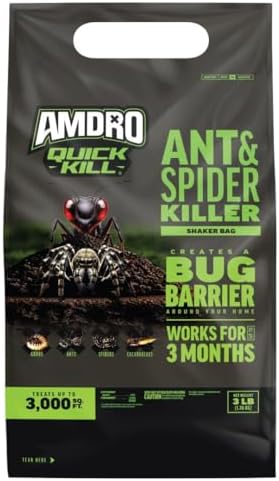
3. Amdro Ant Block Granules
Best for outdoor mound control
Granules are perfect if ants are nesting in your yard near the AC.
How To Use
-
Sprinkle evenly around the AC perimeter.
-
Apply during dry weather.
-
Do not water immediately.
Ants carry granules back to the nest.
Pros
-
Targets hidden colonies
-
Good for fire ants
-
Easy application
Cons
-
Not ideal for indoor use
-
Must stay dry
Wipe out hidden colonies before they reach your AC. Check Amdro’s price on Amazon now.
4. Advion Ant Gel Bait
Best professional-grade option
This is powerful. Pest control pros use it.
How To Use
-
Apply small pea-sized dots near trails.
-
Keep away from direct rain.
-
Monitor activity for 3–5 days.
It works even on tough species like Argentine ants.
Pros

-
Extremely effective
-
Fast colony elimination
-
Works on many species
Cons
-
Slightly higher price
-
Must apply carefully
Want pro-level results? Click here to check Advion’s latest price on Amazon.
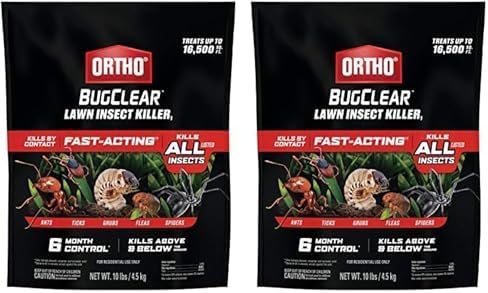
5. Ortho BugClear Lawn Insect Killer1
Best for broad-spectrum yard bug control
If you want a do-it-all lawn pest killer that tackles more than ants, this one’s a strong choice.
How To Use
-
Apply evenly with a lawn spreader when you first notice pests.
-
Focus on the lawn and home perimeter.
-
Water granules in after spreading.
-
Let dry before letting pets/people walk on treated areas.
-
Creates a bug barrier that helps keep insects out.
Pros
-
Covers large lawns (up to ~16,500–33,000 sq. ft., depending on bag size).
-
Kills a wide range of insects (ants, ticks, fleas, armyworms, grubs, spiders).
-
Long residual protection (months).
Cons
-
Requires watering in after application.
-
Labels specify certain insects excluded from protection.
-
Maybe more than needed for small yards.
Secure your lawn and garden today. Check Ortho’s price on Amazon.
Why Electrical Fields Attract Ants
Some species, especially crazy ants, appear to be attracted to electrical equipment, possibly due to warmth, vibration, or electrical activity.
They enter the unit. They get electrocuted. More ants follow. Soon, circuits short out.
That’s why prevention matters more than repair.
Additional AC Protection Tips
-
Keep vegetation trimmed
-
Fix drainage issues
-
Seal entry gaps
-
Schedule yearly HVAC maintenance
-
Install ant barriers early spring
Prevention is cheaper than replacing a compressor.
Related Ant Guides:
- Why are ants attracted to toasters and toaster ovens
- Why are ants attracted to wall outlets and switch boxes
- Best natural ways to get rid of ants in your home
- Why are ants attracted to electronics
- How to keep ants out of coffee maker
- Why are ants attracted to my laptop
- Best ant baits 2026: Top 5 traps to elimanate ants fast
- How to get rid of ants in the kitchen naturally
- Why do dead ants attract more ants
- Why do I suddenly have sugar ants
- How to get rid of sugar ants in your car
- Best way to get rid of sugar ants
- How to get rid of ants in car
- How to get rid of ants in walls
- How to get rid of ants in potted plants
- Plants that attract ants
10 FAQs – Why Are Ants Attracted To AC Units?
1. Do ants damage AC units?
Yes. They can cause short circuits and electrical failure.
2. Why do ants like electrical boxes?
They are warm and sheltered.
3. Can ants trip breakers?
Yes. Swarms can short circuits.
4. What species invade AC units?
Crazy ants, fire ants, Argentine ants.
5. Is spraying inside AC safe?
No. Only treat around the perimeter.
6. How often should I treat?
Every 3–6 months depending on climate.
7. Are natural remedies effective?
Sometimes, but heavy infestations need stronger products.
8. Should I call an HVAC tech?
If electrical damage occurs, yes.
9. Can moisture alone attract ants?
Yes. Water is a strong attractant.
10. What’s the best prevention method?
Use a combination of bait and barrier treatment.
Final Verdict: Protect Your AC Before Ants Destroy It
Ants are attracted to AC units because of moisture, warmth, and electrical fields. Unfortunately, that attraction can cost you hundreds — even thousands — in repairs.
The good news?
You can stop them early.
If you want colony elimination, go with Advion or TERRO.
If you want long-term perimeter defense, choose Ortho Home Defense.
If yard infestations are the issue, use Amdro or Ortho BugClear Lawn Insect Killer1
Don’t wait for your AC to shut down on the hottest day of the year.
Click your preferred product above and check the latest price on Amazon now.





Really good post and very informative! I have not had issues with ants/pests at my air conditioning unit, but this information is great to have in the event I do have an issue. I like the comparison of the different products and the chart that users can refer to, click and get more information on that product and pricing. A well put together post!
Thanks so much for stopping by and commenting