
How to Get Rid of Rats in Walls: A Complete Guide for Homeowners
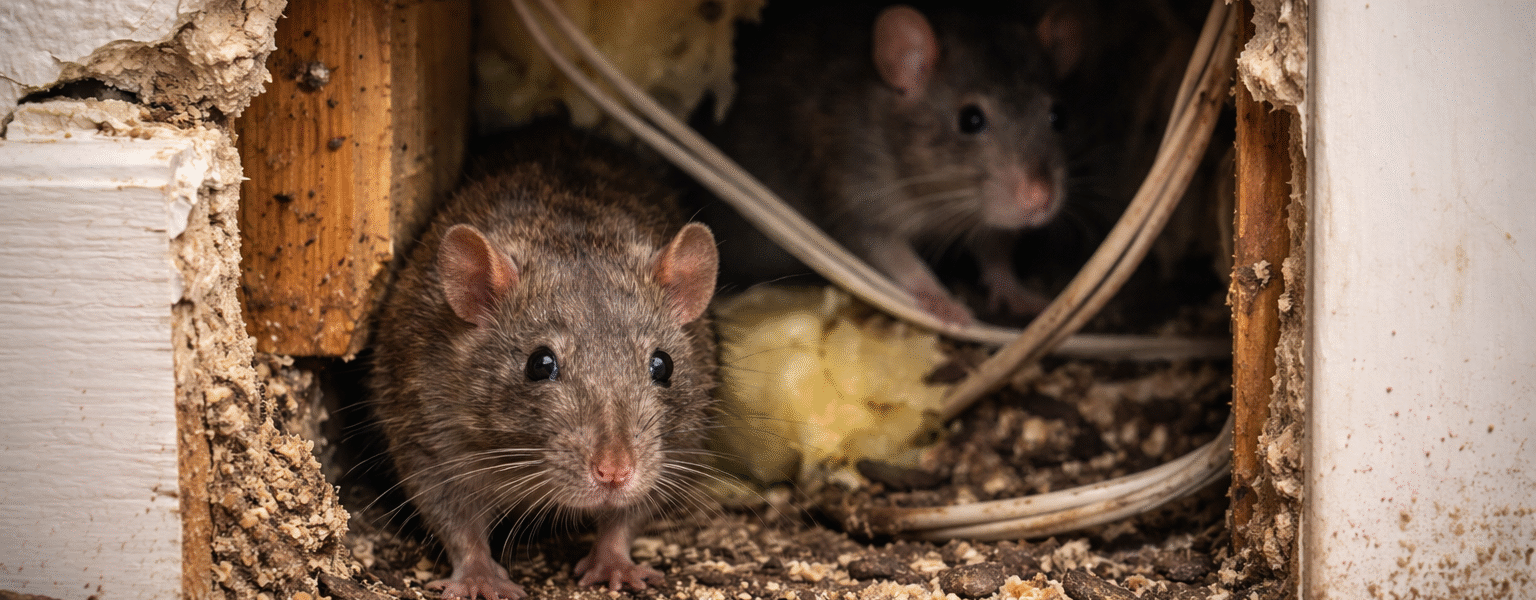
Rats are one of the most persistent and damaging pests that can invade your home. These rodents are more than just an annoyance—they carry diseases and can cause serious property damage, especially by chewing on electrical wires, which can lead to fire hazards.
What makes rats even more troublesome is their ability to reproduce quickly. A single rat sighting can soon turn into a full infestation, making early detection and action crucial. If they make their way inside your home, rats often find hidden areas, like walls, to set up nests and thrive.
If you suspect rats have taken up residence in your walls, swift action is critical to preventing further damage and health risks. In this guide, we’ll cover how to identify signs of rats in your walls, how they enter, and the most effective methods to get rid of them.
Signs of Rat Infestation in Your Walls
Recognizing the signs of a rat infestation early can help prevent a small issue from becoming a larger problem. Here are common signs that rats may be living in your wall cavity:
-
Visible Rat Droppings:
-
Rats often leave droppings that are about ½ to ¾ inches in length. These droppings are typically dark brown or black in color and may be scattered near food sources or along rat travel routes in walls.
-
-
Gnaw Marks and Rub Marks:
-
Rats gnaw on a variety of materials, including wood, insulation, and wires, which can cause visible damage. Rub marks, which are dark streaks left behind from the rats’ fur rubbing against walls, are also common.
-
-
Scurrying and Scratching Noises:
-
If you hear scratching or scurrying noises coming from within your walls, particularly at night when rats are most active, this is a clear sign of their presence.
-
-
Foul Odors:
-
Rats produce a strong ammonia-like smell due to their urine. The smell may become especially noticeable if there’s a large infestation inside the walls.
-
-
Rat Nests:
-
Rats build nests using a variety of materials, such as paper, fabric, insulation, and cardboard. If you find piles of these materials in your walls, it’s likely that rats are nesting inside.
-
How Rats Get into Your Walls
Rats can find their way into your home through even the smallest openings. Here are common entry points:
-
External Cracks or Holes:
-
Cracks in your foundation or walls are prime entry points for rats. Once inside, they may travel through spaces where wires and pipes enter the home, such as in the wall cavities.
-
-
Air Conditioning Units:
-
If your air conditioning unit passes through the wall, it could provide an easy entry for rats. Small gaps around the unit can be used by rats to slip into the walls.
-
-
Overhanging Trees and Roof Edges:
-
Rats are excellent climbers. Trees with branches that touch your roof give rats a bridge to climb and gain access to your walls through small gaps or vents.
-
-
Cable Lines and Ventilation Systems:
-
Cable lines that enter your home and venting systems may also be vulnerable to rat infiltration. Rats can squeeze through gaps around these fixtures and access the walls.
-
How to Prevent Rats from Entering Your Walls
Prevention is key when it comes to managing rats. Here are several proactive steps you can take to keep rats from invading your walls:
-
Seal Holes and Gaps:
-
Inspect your home for any cracks or holes in the foundation, walls, or around utility lines. Use caulk or expanding foam to seal any openings you find.
-
-
Trim Trees and Shrubs:
-
Keep trees and shrubs trimmed so that branches don’t touch your roof or walls. This will prevent rats from using them as bridges to access your home.
-
-
Remove Clutter:
-
Clutter in your home and yard provides hiding spots and nesting material for rats. Keep your property tidy and remove anything that could provide shelter for rodents.
-
-
Fix Leaky Pipes and Remove Water Sources:
-
Rats are attracted to water sources. Fix any leaky outdoor pipes and clean gutters to prevent water accumulation that may draw rats in.
-
-
Secure Trash and Food Sources:
-
Make sure your trash cans have tight-fitting lids, and clean up any food crumbs or spills. Do not leave pet food outside, and store compost in rodent-proof containers.
-
Steps to Get Rid of Rats in Your Walls
If you already have rats in your walls, the following methods can help you eliminate them:
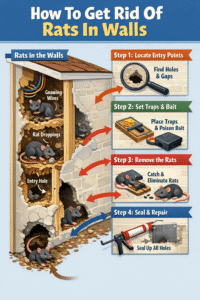
Step 1: Locate Entry Points
-
Inspect the Exterior of Your Home:
-
Look for cracks in the foundation or walls. Pay close attention to areas around pipes, vents, and cables.
-
-
Check the Attic and Roof:
-
Ensure there are no gaps in the roof or eaves, and check for signs of rodent activity.
-
Step 2: Use Traps and Baits
Rat bait blocks contain toxic ingredients that can seriously harm children, pets, and wildlife if misused. For safe home use:
- Always place bait inside tamper-resistant bait stations
- Never leave bait exposed outdoors or indoors
- Store unused bait in a locked container, out of reach of children and pets
- Wear gloves when handling bait blocks
- If accidental exposure occurs, contact Poison Control immediately
If you’re unsure about safe placement, especially in homes with kids or pets, consult a licensed pest control professional before proceeding.
Note: Rodenticide rules vary by location—check local regulations and always follow the label.
-
Place Traps Near Entry Points:
-
Use snap traps or electric traps near known entry points. Make sure they are placed in locations that are difficult for children or pets to access.
-
-
Poison Baits:
-
If you choose to use poison, ensure that it’s placed in secure bait stations to prevent accidental exposure to pets or children.
-
Step 3: Remove the Rats
-
Set and Monitor Traps:
-
Monitor your traps daily and dispose of any trapped rats promptly. If you use poison, monitor the area carefully to prevent any harmful exposure.
-
-
Call a Professional:
-
If the infestation is severe, consider contacting a pest control professional. They can provide more effective solutions tailored to your specific situation.
-
Step 4: Seal and Repair the Walls
-
Seal All Gaps:
-
Once you’ve eliminated the rats, seal up any holes, cracks, or gaps with materials like caulk, steel wool, or mesh wire to prevent future access.
-
-
Repair Damage:
-
If rats have chewed through wires or insulation, make the necessary repairs before sealing the walls.
-
Unique Comparison Chart: Methods to Get Rid of Rats in Walls
| Method | Effectiveness | Ease of Use | Cost | Pros | Cons |
|---|---|---|---|---|---|
| Snap Traps 🪤 | High | Easy | Low | Instant results, reusable, no poison involved ⚡ | May require frequent resetting 🔄 |
| Poison Baits ☠️ | Moderate | Easy | Moderate | Effective for large infestations, easy to use 🐭 | Risk to pets and children 🐕🐈, takes longer ⏳ |
| Electric Traps ⚡ | High | Easy | High | Fast and humane, reusable, no mess 🔌 | Higher upfront cost 💰, needs electricity ⚡ |
| Ultrasonic Repellents 🎵 | Low | Very Easy | Low | No need for traps or poisons, safe for pets 🐾 | May not work for severe infestations 🚫 |
| Professional Pest Control 🧑🔬 | Very High | Moderate | High | Guaranteed results, expert advice and service 🏠 | Expensive 💸, may require multiple visits 🔁 |
10 FAQs for How To Get Rid Of Rats In Walls
-
How do I know if there are rats in my walls?
-
Signs include scratching or scurrying noises, droppings, gnaw marks, and chewed wires or insulation. If you notice any of these signs, it’s important to take action immediately.
-
-
What attracts rats to walls in my home?
-
Rats are typically attracted to food sources, warmth, and shelter. Cracks, holes, or gaps in walls or around pipes can provide easy access for rats looking to nest in the insulation or wall cavities.
-
-
How can I safely get rid of rats in my walls?
-
Start by sealing any entry points to prevent further access. You can then use traps or baits. If the infestation is large, hiring a professional pest control service is recommended.
-
-
Are there any natural ways to get rid of rats in the walls?
-
Natural methods include using peppermint oil, ultrasonic devices, or setting up live traps. However, these methods may not be as effective for large infestations.
-
-
What types of traps are best for rats in walls?
-
Snap traps, electronic traps, or live traps are commonly used. It’s important to place them near suspected entry points or in areas where you have noticed rat activity.
-
-
How long does it take to get rid of rats in walls?
-
The time frame depends on the severity of the infestation and the method used. It could take anywhere from a few days to a couple of weeks to effectively eliminate rats.
-
-
What are the risks of having rats in my walls?
-
Rats can cause significant damage to your home by chewing on wires, insulation, and structural materials. They also pose health risks by spreading diseases through their urine, feces, and bites.
-
-
Can I use poison to kill rats in the walls?
-
While poison can be effective, it carries risks. Dead rats in the walls may create unpleasant odors, and it can also be hazardous to pets or children. It’s safer to use traps or call a professional.
-
-
How do I prevent rats from entering my walls in the future?
-
Seal any holes or cracks, especially around pipes, vents, or electrical wires. Ensure that windows and doors are properly fitted, and keep food sources sealed tightly.
-
- Should I hire a professional pest control service for rats in the walls? If DIY methods aren’t working or if the infestation is severe, a professional pest control service can assess the situation and provide more effective solutions to remove rats and prevent future problems.
Conclusion
Dealing with rats in your walls can be a stressful and challenging situation. However, by identifying the signs of an infestation early, locating entry points, using traps and baits, and sealing up potential access points, you can eliminate rats and prevent future infestations. Although it may take some time and effort, following a well-thought-out plan will ensure your home remains rat-free. For more complex infestations, don’t hesitate to contact a professional pest control service to ensure complete eradication. With the right strategy in place, you can rest easy knowing your home is safe from the destructive behavior of rats.




Thanks for this comprehensive guide, Norman! As someone who’s dealt with urban pest control, I particularly appreciate your point about trees being ‘bridges’ for rats – it’s often overlooked. However, I’m curious about your mention of cats as a control method. In your experience, have you found that indoor cats are less effective than outdoor cats for rat control? I’ve heard conflicting opinions on this, and it would be interesting to listen to what others have experienced with their feline helpers!
Eric
It all depends on the level of infestation, there is not a set answer but rather a tried and tested approach. While some may have success others may differ. I hope this helps.