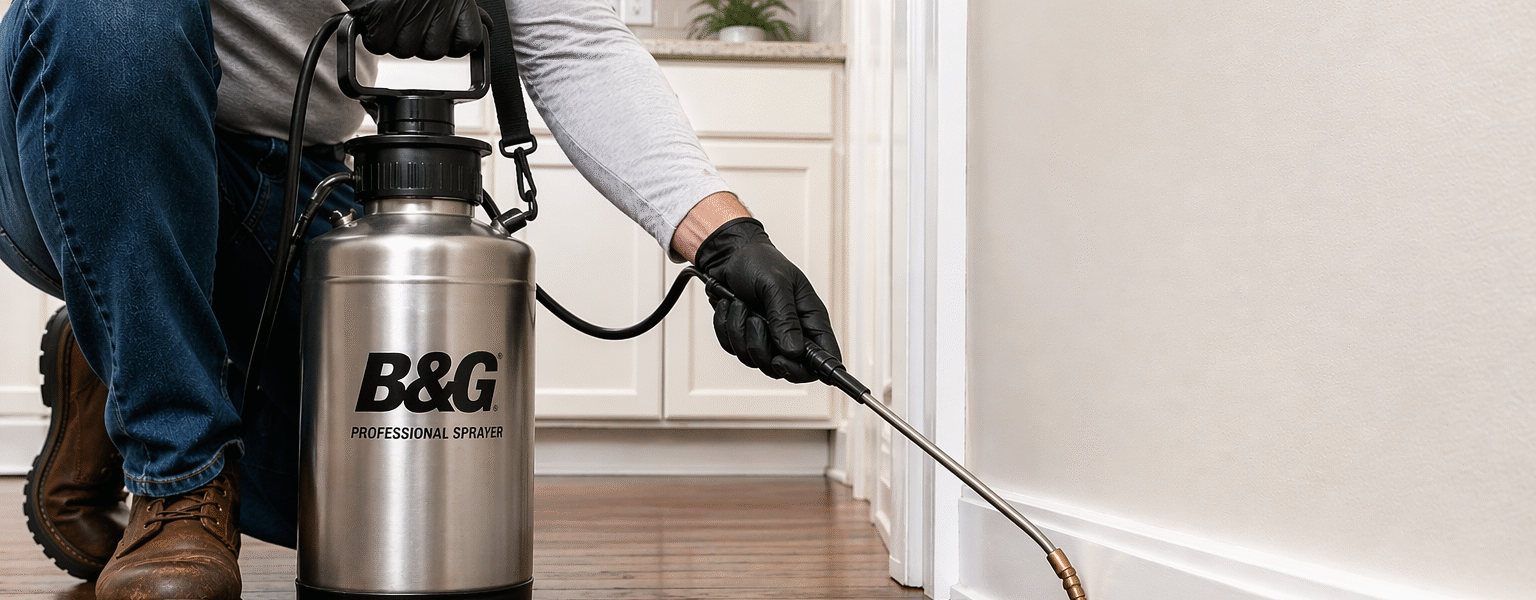
How To Use a B&G Sprayer for Pest Control (Step-by-Step Guide for Best Results)
In this guide, you’ll learn:
- How to use a B&G sprayer step by step
- Pro tips for better results
- Common mistakes to avoid
- How to get the most out of every application
Before you begin, check out the full B&G 124 Sprayer Review to see performance, features, and pricing.
Affiliate Disclosure
This page contains affiliate links. If you buy through my links, I may earn a small commission at no extra cost to you. As an Amazon Associate, I earn from qualifying purchases.
What Is a B&G Sprayer (Quick Overview)
A B&G sprayer is a professional-grade compression sprayer used for applying pest control solutions. It uses manual pressure to deliver a steady spray.
Because of its design, it offers:
- Better control
- Even coverage
- Long-lasting durability
If you’re new to this tool, read: What Is a B&G Sprayer and How Does It Work
It’s one of the most trusted tools when learning how to use a compression sprayer for pest control effectively.
Why Proper Usage Matters
Using a B&G sprayer correctly is important. If you don’t, you may:
- Waste chemicals
- Miss key pest areas
- Get poor results
However, when used properly, it allows you to:
- Target pests precisely
- Reduce chemical use
- Improve effectiveness
For a full breakdown of performance, visit the B&G 124 Sprayer Review.
Step-by-Step: B&G 124 Sprayer — How to Use It for Pest Control
These B&G 124 sprayer how to use steps are the same methods professionals follow for consistent results
Let’s break it down into simple steps.
Step 1: Choose the Right Pest Control Solution
First, select the correct pesticide for your problem.
Always:
- Read the label carefully
- Follow mixing instructions
- Use only recommended products
This step is critical. The wrong solution will not work, no matter how good your sprayer is.
Step 2: Mix the Solution Properly
Next, mix your solution.
- Use the correct ratio
- Avoid over-concentrating
- Mix thoroughly
Too much chemical can be harmful. Too little may be ineffective.
Step 3: Fill the Sprayer Tank
Now, pour the solution into the tank.
Important tips:
- Do not overfill
- Leave space for air pressure
- Secure the lid tightly
This ensures proper pressurization.
Step 4: Pump to Build Pressure
After sealing the tank, pump the handle.
Usually:
- 20–30 pumps is enough
- You’ll feel resistance when pressure builds
This pressure is what pushes the liquid out evenly.
Step 5: Adjust the Nozzle
Before spraying, adjust the nozzle.
Choose your spray type:
- Fine mist → large areas
- Stream → cracks and crevices
This step improves accuracy.
Learn more about spray control here:
What Is a B&G Sprayer and How Does It Work
Step 6: Apply the Treatment Strategically
Now it’s time to spray.
Focus on areas where pests hide:
- Baseboards
- Corners
- Entry points
- Under sinks
- Around windows and doors
Avoid spraying randomly. Instead, target specific areas.
These are standard professional pest control sprayer tips that help improve accuracy and reduce chemical waste.
Step 7: Maintain Consistent Pressure
While spraying, keep an eye on pressure.
If the spray weakens:
- Pump a few times
- Continue spraying
Consistent pressure ensures even coverage.
Step 8: Avoid Over-Spraying
More is not always better.
Over-spraying can:
- Waste product
- Increase exposure risk
- Reduce effectiveness
Instead, apply just enough to lightly coat the area.
Step 9: Release Pressure After Use
Once finished:
- Release any remaining pressure
- Open the tank carefully
This prevents wear and tear.
Step 10: Clean the Sprayer
Finally, clean your sprayer.
- Empty leftover solution
- Rinse the tank
- Run clean water through the nozzle
For full maintenance steps, see:
How to Maintain and Clean a B&G Sprayer
Pro Tips for Better Results
Now that you know the basics, here are some professional pest control sprayer tips to help you get even better results.
Use the Right Nozzle Setting
Different pests require different spray patterns.
Apply During Low Activity Times
Early morning or evening works best.
Focus on Prevention
Don’t wait for infestations. Treat problem areas early.
Keep Your Sprayer Clean
A clean sprayer performs better and lasts longer.
Want to see how professionals use it? Read:
Why Professionals Use B&G Sprayers
Common Mistakes to Avoid
Even with a great tool, mistakes can reduce results.
1. Overfilling the Tank
This prevents proper pressure buildup.
2. Using Too Much Chemical
This can be unsafe and wasteful.
3. Ignoring Maintenance
Dirty sprayers clog and lose efficiency.
4. Spraying the Wrong Areas
Always target pest hiding spots.
5. Not Reading Labels
Each product has specific instructions.
Avoiding these mistakes will improve your results quickly.
Best Areas to Use a B&G Sprayer
Knowing where to spray is just as important as how.
Indoor Areas
- Baseboards
- Behind appliances
- Under furniture
Outdoor Areas
- Foundation perimeter
- Entry points
- Garage edges
Targeting these areas increases effectiveness.
If you’re wondering how to use a B&G sprayer indoors, focus on low, targeted application and avoid over-spraying in living spaces.
Is a B&G Sprayer Worth It for Home Use?
You might be wondering if this tool is right for you.
It’s a great choice if:
- You want professional-level results
- You handle pest control yourself
- You prefer durable tools
However, for occasional use, a cheaper sprayer may be enough.
Still deciding? Read the full B&G 124 Sprayer Review before buying.
Related Guides
- What Is a B&G Sprayer and How Does It Work
- How to Maintain and Clean a B&G Sprayer
- B&G vs Chapin: Which Is Better
- Why Professionals Use B&G Sprayers
FAQs: How To Use a B&G Sprayer for Pest Control
1. How much should I pump a B&G sprayer?
Usually 20–30 pumps until resistance increases.
2. Can I use it indoors?
Yes, it’s ideal for indoor pest control.
3. What spray setting should I use?
For a B&G sprayer, the “right” setting isn’t one fixed mode—it depends on what you’re targeting. The key is adjusting the nozzle between a fine spray and a pin/stream spray.
4. How often should I clean it?
After every use for best performance.
5. Can I leave solution in the tank?
No, it’s best to empty it after use.
6. Is it safe around pets?
To use a B&G sprayer indoors safely, apply a light, controlled spray to baseboards and entry points, keep pets away until dry, and always follow pesticide label instructions.
7. What pests can I treat?
Ants, roaches, spiders, and more.
8. Why is my sprayer losing pressure?
It may need more pumping or maintenance.
9. Is it better than a regular sprayer?
Yes, for precision and durability.
10. Where can I buy one?
See trusted options in the B&G 124 Sprayer Review
Conclusion
Learning how to use a B&G sprayer for pest control can completely change your results.
When used correctly, it provides:
- Better precision
- More consistent spraying
- Improved pest control outcomes
It’s no surprise that professionals rely on it every day.
If you want to take your pest control to the next level, this tool is worth considering.
Before making your decision, check out the full B&G 124 Sprayer Review for detailed insights and recommendations.
By following these B&G sprayer instructions and applying proven professional pest control sprayer tips, you can achieve better results with less effort.