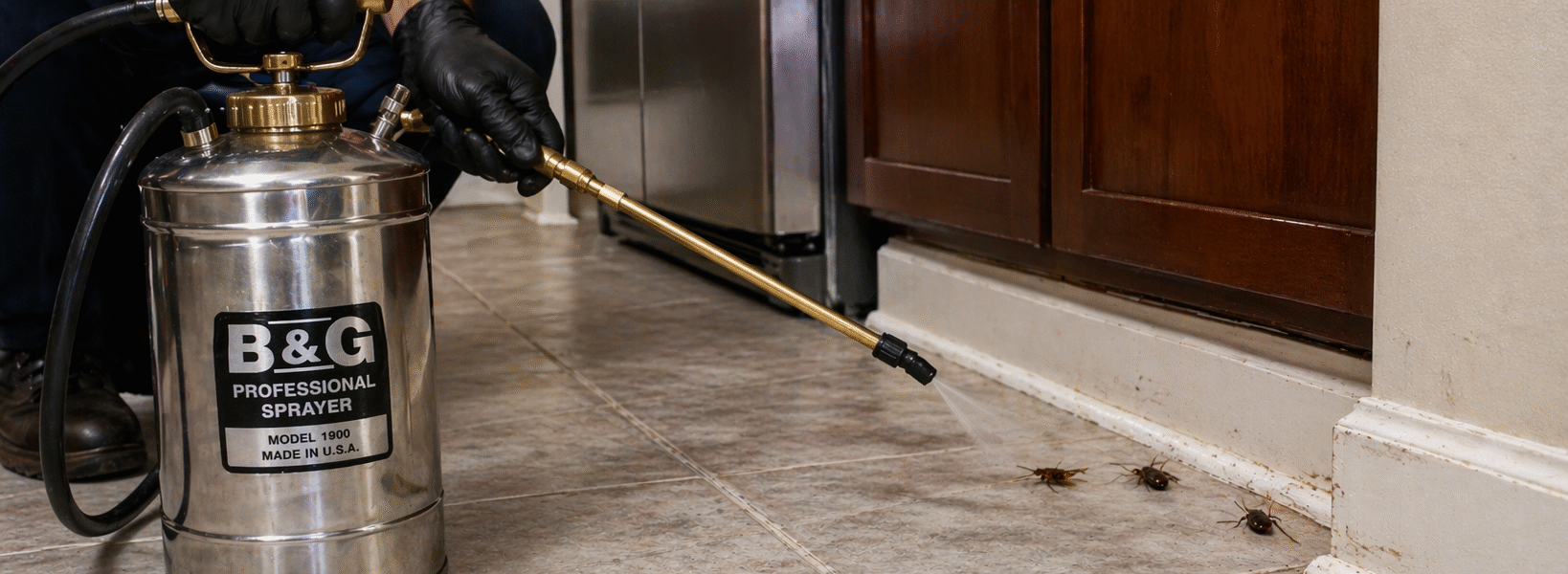
What Is a B&G Sprayer? How It Works + Beginner’s Guide
What exactly is a B&G sprayer—and why do so many professional pest control technicians rely on it more than just about any other tool in their kit?
If you’ve been searching for a reliable way to apply pest control treatments with precision, consistency, and real control, chances are you’ve already come across the B&G name more than once.
And there’s a good reason for that—it’s not just another sprayer. It’s often considered a “gold standard” in the pest control world.
There’s a reason for that. It’s not just another sprayer sitting on a shelf—it’s a precision-built tool designed to deliver consistent results where it matters most.
In this guide, you’ll learn:
- What a B&G sprayer is
- How it works step by step
- Why it outperforms standard sprayers
- Whether it’s the right choice for you
Disclaimer: This post may contain affiliate links. If you purchase through these links, BugOffControl.com may earn a small commission at no extra cost to you. BugOffControl.com is an independent website and is not affiliated with or endorsed by B&G, Chapin, or any other brands mentioned. All opinions are based on independent research and practical pest control experience to help you make informed decisions.
Before you go further, check out the full B&G 124 Sprayer Review to see real-world performance, pros, and pricing.
What Is a B&G Tank Sprayer?
A B&G sprayer is a professional-grade compression sprayer used for pest control. It is known for its durability, precision, and consistent performance.
Unlike basic plastic sprayers, B&G models are built with stainless steel tanks. This makes them stronger and longer-lasting.
More importantly, they are designed for controlled chemical application. That means you can target pests without wasting product.
Because of this, pest control professionals trust B&G sprayers for both indoor and outdoor jobs.
Want to see if it’s worth the investment? Take a closer look at the B&G 124 Sprayer Review.
Affiliate Disclosure: This page contains affiliate links. If you buy through my links, I may earn a small commission at no extra cost to you.
As an Amazon Associate, I earn from qualifying purchases.
What Makes B&G Sprayers Different?
At first glance, all sprayers may seem similar. However, B&G sprayers stand out in several key ways.
This is why it’s widely considered a professional pest control sprayer used by technicians in the field.
1. Strong Stainless Steel Build
They resist rust and damage. As a result, they last much longer than plastic models.
2. Consistent Pressure System
Once pressurized, they deliver a smooth, even spray.
3. Precision Application
They are perfect for crack-and-crevice treatments. This is where many pests hide.
4. Long-Term Reliability
With proper care, they can last over a decade.
For a detailed breakdown of features and performance, visit the B&G 124 Sprayer Review.
Why Professionals Prefer This Pest Control Sprayer
Pest control professionals rely on B&G sprayers because they deliver consistent, predictable results in real working conditions. When you’re treating homes or commercial spaces, there’s no room for uneven spray or unreliable equipment.
Here’s why professionals continue to choose it:
Reliability
A B&G sprayer is built for long-term use in demanding environments. Unlike plastic sprayers that wear out quickly, it maintains performance over years of repeated use.
Precision
Professionals need to target specific areas like cracks, crevices, and hidden nesting spots. This sprayer allows controlled, accurate application so chemicals go exactly where they’re needed—not wasted on surrounding surfaces.
Commercial Use
Because of its durability and consistent pressure system, the B&G sprayer is widely used in commercial pest control operations, including residential services, restaurants, and facility management.
B&G Sprayer How It Works (Step-by-Step Guide)
Now let’s break it down in simple terms.
A B&G sprayer works by using compressed air pressure to push liquid through a nozzle. This creates a steady and controlled spray.
Step-by-Step Process
1. Fill the Tank
You start by adding your pest control solution to the tank. Always follow the label instructions.
2. Seal the Tank
Close the lid tightly. This is important for building pressure.
3. Pump to Build Pressure
Use the handle to pump air into the tank. This creates internal pressure.
4. Adjust the Nozzle
You can control the spray pattern. Choose a fine mist or a direct stream.
5. Spray the Target Area
Press the trigger to release the solution. The pressure pushes the liquid out evenly.
Because the pressure stays consistent, you don’t need to pump constantly.
Want to use it like a pro? Read: How to Use a B&G Sprayer for Pest Control
Key Parts of a B&G Sprayer Explained
Understanding the parts helps you use it better.
Tank
This holds the liquid solution. It is made of stainless steel for durability.
Pump Assembly
This builds the pressure inside the tank.
Wand
The wand directs the spray. It helps you reach tight spaces.
Nozzle
The nozzle controls how the liquid comes out. You can adjust the spray pattern.
Hose
The hose connects the tank to the wand.
Each part works together to deliver precise results.
Why Consistent Pressure Matters
Consistency is key in pest control.
With cheap sprayers, the pressure drops quickly. This leads to uneven spraying.
However, B&G sprayers maintain pressure longer. As a result:
- The spray stays even
- You use less product
- You get better coverage
This is one reason professionals prefer them.
See how this affects real-world performance in the B&G 124 Sprayer Review.
Common Uses for a B&G Sprayer
B&G sprayers are versatile. You can use them for many pest control tasks.
Indoor Applications
- Baseboards
- Cracks and crevices
- Under appliances
Outdoor Applications
- Around foundations
- Entry points
- Garden edges
Because of their precision, they are ideal for targeted treatments.
B&G Sprayer vs Regular Sprayers
Let’s compare briefly.
| Feature | B&G Sprayer | Regular Sprayer |
|---|---|---|
| Build Quality | Stainless steel | Plastic |
| Lifespan | 10+ years | 1–3 years or can last longer depending on use and tank maintenance |
| Spray Control | High precision | Basic |
| Pressure Consistency | Excellent | Inconsistent |
Clearly, B&G sprayers are built for serious use.
For a deeper comparison, check: B&G vs Chapin: Which Is Better?
Is a B&G Sprayer Worth It?
This depends on your needs.
A B&G sprayer is worth it if:
- You handle pest control regularly
- You want professional-level results
- You prefer long-lasting tools
However, if you only need occasional use, a cheaper sprayer may be enough.
Still, many users upgrade once they experience the difference.
Not sure yet? Read the full B&G 124 Sprayer Review before deciding.
Maintenance Basics (Quick Overview)
To keep your sprayer working well:
- Rinse it after each use
- Avoid leaving chemicals inside
- Check seals regularly
For full instructions, see: How to Maintain and Clean a B&G Sprayer
Related Guides
How to Use a B&G Sprayer for Pest Control
How to Maintain and Clean a B&G Sprayer
B&G vs Chapin: Which Is Better
Why Professionals Use B&G Sprayers
This creates a strong content cluster that search engines love.
FAQs: What Is a B&G Sprayer and How Does It Work?
1. What is a B&G sprayer used for?
It is mainly used for applying pest control solutions with precision.
2. How does a B&G sprayer build pressure?
It uses a manual pump to compress air inside the tank.
3. Is a B&G sprayer better than plastic sprayers?
Yes, it offers better durability and consistent performance.
4. Can beginners use a B&G sprayer?
Yes, it is easy to learn with basic instructions.
5. What kind of chemicals can I use?
Most liquid insecticides and pest control solutions.
6. How long does a B&G sprayer last?
With proper care, it can last over 10 years.
7. Do I need electricity to use it?
No, it is manually operated.
8. How often should I clean it?
After each use for best results.
9. Can it clog?
It rarely clogs if maintained properly.
10. Where can I buy one?
Check trusted options in the B&G 124 Sprayer Review
Conclusion
So, what is a B&G sprayer and how does it work?
In simple terms, it’s a high-quality, pressure-based sprayer designed for precise pest control. It uses compressed air to deliver a consistent and controlled spray.
Because of its durability and performance, it has become a favorite among professionals.
If you want better pest control results, upgrading your tools is a smart step.
Before making your final decision, don’t miss the full B&G 124 Sprayer Review to see if it’s the right fit for your needs.