Best Bug Sprays for Tropical Climates: 5 Top Picks for Hot, Humid We
If you live in a tropical climate or are traveling somewhere hot and humid, mosquitoes and other biting insects can turn a relaxing afternoon outdoors into an uncomfortable experience. Choosing the right insect repellent can make outdoor time much more enjoyable, but finding the best option isn’t always as easy as picking the strongest spray you can find.
DEET, picaridin, oil of lemon eucalyptus/PMD, and IR3535 are different repellent options, and each can make sense for different situations. Some people prioritize long-lasting protection, while others care more about how a product feels on the skin, its scent, or how convenient it is for everyday outdoor use.
For this guide, we looked at five bug sprays from the original product selection and compared them based on their intended use, active ingredient, comfort, and suitability for hot-weather outdoor activities.
Our Top Picks at a Glance
- 🏆 Best Overall: Sawyer Products Premium Insect Repellent, 20% Picaridin
- 💪 Best for Maximum DEET Protection: Repel 100 Insect Repellent, 98% DEET
- 🌿 Best Plant-Based Option: Murphy’s Naturals Lemon Eucalyptus Oil Insect Repellent
- 👕 Best for a Comfortable Feel: OFF! Clean Feel Insect Repellent
- 🥾 Best for Outdoor Adventures: Coleman SkinSmart Insect Repellent
Affiliate Disclosure: This page contains affiliate links. If you purchase through one of our links, we may earn a commission at no additional cost to you.
Amazon Associate Disclosure: As an Amazon Associate, we earn from qualifying purchases.
Quick Answer: What Is the Best Bug Spray for Tropical Climates?
For most people who want a balance between effective insect protection and comfortable everyday use, Sawyer Products Premium Insect Repellent with 20% picaridin is our top pick from this group.
If your priority is a high-DEET formulation, Repel 100 is the heavy-duty option in this comparison. If you prefer a plant-based repellent containing oil of lemon eucalyptus, Murphy’s Naturals is the natural-focused choice.
The best option ultimately depends on where you’re going, how much insect activity you’re dealing with, how long you’ll be outdoors, and which active ingredient you prefer.
Comparison of the 5 Best Bug Sprays for Tropical Climates
| Product | Active Ingredient | Best For | Key Advantage |
|---|---|---|---|
| Sawyer Products Premium Insect Repellent | 20% Picaridin | Best Overall | Balance of protection and comfortable everyday use |
| Repel 100 Insect Repellent | 98% DEET | Maximum DEET Protection | Very high DEET concentration |
| Murphy’s Naturals Lemon Eucalyptus | Oil of Lemon Eucalyptus | Plant-Based Option | DEET-free, plant-based formula |
| OFF! Clean Feel | 20% Picaridin | Comfortable Daily Use | Lightweight, non-sticky feel |
| Coleman SkinSmart | IR3535 | Outdoor Adventures | Convenient option for outdoor activities |
Important: Protection duration, age restrictions, application instructions, and material compatibility can vary by specific formulation. Always check the current product label before use.
1. Sawyer Products Premium Insect Repellent — Best Overall

Active ingredient: 20% Picaridin
Best for: Everyday protection in hot and humid conditions
If you want an insect repellent that strikes a good balance between protection and everyday comfort, Sawyer Products Premium Insect Repellent with 20% picaridin is our top choice from this list.
Picaridin is a popular alternative to DEET for people who don’t want the feel or odor they associate with some traditional repellents. The original product selection also highlighted Sawyer for its comfortable, non-greasy feel and suitability for travel and outdoor use.
Why We Like It
A good everyday tropical-weather repellent needs to be practical. If a product feels unpleasant, leaves an unwanted residue, or has an overpowering smell, you may be less likely to use it consistently.
Sawyer’s 20% picaridin formula is therefore a strong choice for people who want effective protection without making comfort an afterthought.
Pros
- 20% picaridin
- Comfortable option for everyday outdoor use
- Non-greasy feel
- Suitable for travel and outdoor activities
- Strong all-around choice for this guide
Cons
- May cost more than basic insect repellents
- Not necessarily the right choice for everyone
Best For
People who want a well-rounded insect repellent for everyday outdoor activities in hot and humid weather.
See Sawyer Products Premium Insect Repellent on Amazon →
2. Repel 100 Insect Repellent — Best for Maximum DEET Protection

Active ingredient: 98% DEET
Best for: People specifically looking for a very high-DEET formulation
When your main priority is choosing a product with a very high concentration of DEET, Repel 100 stands out in this comparison.
With 98% DEET, it is considerably different from the lower-concentration formulations in this guide. That makes it a product people may consider when they specifically want a high-DEET option for demanding outdoor conditions.
Why We Like It
DEET has been used in insect repellents for decades, and Repel 100 provides a very high concentration.
However, more is not automatically better for every person or situation. A high-DEET product may not be the best choice if your priority is a lighter feel, lower odor, or everyday convenience.
Pros
- 98% DEET
- Designed for people seeking a high-DEET formulation
- Appropriate option to consider for demanding outdoor situations
- Long-lasting protection is a key product feature
Cons
- Stronger odor may be noticeable
- Can feel heavier on the skin
- Requires careful attention to label directions
- Not necessarily the best choice for everyday casual use
Best For
Adults who specifically want a high-DEET insect repellent and are comfortable following the product’s application instructions carefully.
3. Murphy’s Naturals Lemon Eucalyptus Oil Insect Repellent — Best Plant-Based Option
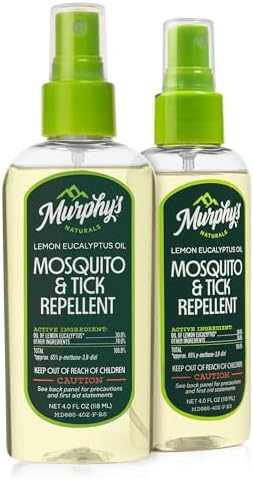
Active ingredient: Oil of lemon eucalyptus
Best for: People seeking a plant-based, DEET-free option
If you’d rather avoid DEET, Murphy’s Naturals Lemon Eucalyptus Oil Insect Repellent provides a different approach.
The product uses oil of lemon eucalyptus and was included in our original lineup as the plant-based option.
One thing worth keeping in mind is that plant-based doesn’t automatically mean chemical-free. That’s why we avoid describing this—or any other insect repellent—as “chemical-free.
Why We Like It
Some people prefer a plant-based repellent because of personal preferences around ingredients and scent.
However, this type of product shouldn’t automatically be treated as interchangeable with every other lemon-eucalyptus product. Check the exact active ingredient and current label for the product you’re purchasing.
Pros
- Plant-based option
- DEET-free
- Pleasant scent may appeal to some users
- Alternative to DEET-based repellents
Cons
- May require more frequent application than some longer-lasting formulations
- Not necessarily the best choice for very heavy insect exposure
- Exact protection instructions should be checked on the product label
Best For
People who prefer a plant-based, DEET-free repellent for lighter or moderate outdoor exposure.
See Murphy’s Naturals on Amazon →
4. OFF! Clean Feel Insect Repellent — Best for a Comfortable Feel

Active ingredient: 20% Picaridin
Best for: People who dislike heavy or sticky-feeling repellents
For many people, comfort matters just as much as protection. If you dislike the sticky or heavy sensation that some repellents can leave behind, OFF! Clean Feel is worth considering.
The original article selected this product for sensitive-skin users and highlighted its lightweight, non-sticky feel.
Why We Like It
A repellent that you actually want to use can be more practical than one that sits unused because you dislike its texture.
The 20% picaridin formulation makes this another option for people who want picaridin rather than a high-DEET product.
Pros
- 20% picaridin
- Lightweight feel
- Non-sticky
- Convenient for regular outdoor use
- Good option for people prioritizing comfort
Cons
- May not be everyone’s preferred formulation
- Exact protection period depends on the product label
- People facing particularly heavy insect exposure may prefer a different formulation
Best For
People who want a comfortable-feeling repellent for everyday outdoor activities.
See OFF! Clean Feel on Amazon →
5. Coleman SkinSmart Insect Repellent — Best for Outdoor Adventures

Active ingredient: IR3535
Best for: Camping, hiking, travel, and other outdoor activities
If your tropical adventures involve hiking, camping, sightseeing, or spending extended periods outside, Coleman SkinSmart is another option to consider.
The original product selection positioned it as the outdoor-adventure choice and highlighted its convenient, comfortable approach to outdoor protection.
Why We Like It
Not everyone wants a high-DEET product. IR3535 provides another active-ingredient option for people comparing different types of repellents.
Pros
- Uses IR3535
- Designed for outdoor use
- Convenient option for travel and activities
- Comfortable choice for many outdoor situations
Cons
- May not be your first choice if you specifically want DEET or picaridin
- Protection duration should be confirmed on the current product label
Best For
Outdoor enthusiasts who want an alternative to DEET and picaridin for activities such as hiking, camping, and travel.
See Coleman SkinSmart on Amazon →
DEET vs. Picaridin vs. Plant-Based Repellents
One of the easiest ways to narrow your choices is to start with the active ingredient.
DEET
DEET is one of the most established insect-repellent ingredients.
In this guide, Repel 100 contains 98% DEET, making it the high-DEET choice.
Choose this type of product if you specifically want a high-DEET formulation and are comfortable following the label carefully.
Picaridin
Picaridin is another widely used repellent ingredient.
Both Sawyer Products Premium Insect Repellent and OFF! Clean Feel contain 20% picaridin.
For many shoppers, picaridin is appealing because it can provide a balance between insect protection and a more comfortable everyday experience.
Oil of Lemon Eucalyptus
Oil of lemon eucalyptus provides a plant-based alternative.
However, don’t assume every product marketed with “lemon eucalyptus” has the same formulation. Always check the active ingredient listed on the actual product label.
IR3535
IR3535 is the active ingredient in Coleman SkinSmart in this comparison.
It gives shoppers another option when comparing repellents by active ingredient rather than simply choosing the strongest-sounding product.
How to Choose a Bug Spray for a Tropical Climate
The “best” repellent depends heavily on how and where you plan to use it.
1. Think About Your Exposure
Are you spending 30 minutes on a patio, or several hours hiking through a humid environment?
Someone taking an evening walk may have very different needs from someone camping or exploring outdoors all day.
Consider:
- How long you’ll be outside
- How much insect activity you expect
- Whether you’ll be sweating
- Whether you’ll be swimming
- Whether you’re traveling
- Whether you’re mainly dealing with mosquitoes or other biting insects
2. Choose the Active Ingredient First
If you know which ingredient you prefer, your decision becomes much easier.
Want high DEET?
Consider Repel 100.
Want picaridin?
Consider Sawyer or OFF! Clean Feel.
Prefer a plant-based option?
Consider Murphy’s Naturals.
Want an IR3535 option?
Consider Coleman SkinSmart.
3. Consider Comfort
You’ll be much more likely to use a repellent consistently if you like how it feels.
Think about:
- Odor
- Greasiness
- Stickiness
- Ease of application
- How it feels when you’re sweating
4. Consider Your Destination
Tropical climates aren’t all the same.
A city vacation, Caribbean beach trip, backyard barbecue, jungle excursion, and multi-day camping trip can involve very different levels of insect exposure.
Choose the product based on the actual conditions you’ll encounter.
5. Check the Label Before Buying
This is especially important for:
- Children
- Pregnancy
- Sensitive skin
- Frequent application
- Clothing and equipment
- Swimming
- Reapplication
- Specific insects
Product formulations can change, so check the current packaging and label rather than relying solely on an old online description.
How to Use Bug Spray Safely in Hot, Humid Weather
Even an effective repellent needs to be used correctly.
1. Follow the Product Label
The label is the most important source for application instructions, age restrictions, reapplication intervals, and other precautions.
2. Apply Only as Directed
Don’t assume that applying more product will automatically provide better protection.
Use the amount and application method recommended for the specific product.
3. Keep Repellent Away From Your Eyes and Mouth
When applying near your face, follow the product directions carefully. Avoid spraying directly into your eyes, mouth, or other sensitive areas.
4. Don’t Apply to Damaged Skin
Avoid applying repellent to cuts, irritated skin, or areas where the product label says not to use it.
5. Reapply According to the Label
Don’t rely on a universal “every six hours” rule.
The appropriate reapplication interval depends on the formulation and its directions. Swimming, heavy sweating, and other activities can also affect how long protection lasts.
6. Wash Treated Skin When Appropriate
After you no longer need the repellent, wash treated skin according to normal hygiene practices and the product’s directions.
7. Store Repellent Properly
Keep insect repellents in a safe place and follow the storage instructions on the packaging.
How to Get Better Protection Without Relying Only on Bug Spray
Repellent is only one part of your defense against biting insects.
You can also reduce exposure by:
- Wearing long sleeves and long pants when practical
- Using screens around living areas
- Staying in areas with good airflow
- Avoiding areas with heavy insect activity when possible
- Removing standing water around your property
- Using appropriate mosquito-control measures around the home
- Checking outdoor areas after heavy rainfall
This combination can be particularly helpful when mosquitoes are abundant.
For additional mosquito-control ideas, see our guide to mosquito control for homes and gardens.
What About Bug Spray After Heavy Rain?
Heavy rain can change mosquito activity around your property.
Standing water can create additional breeding opportunities, while warm temperatures can contribute to continued insect activity.
If you’re dealing with increased mosquito activity after a storm or period of heavy rainfall, don’t rely exclusively on personal repellent.
Also look around your property for:
- Buckets
- Plant saucers
- Gutters
- Containers
- Toys
- Low areas that hold water
- Other objects capable of collecting rainwater
For more information, see our guide to mosquito control options after flooding.
Common Mistakes People Make When Using Bug Repellent
Using More Than Necessary
More product isn’t automatically better. Follow the label.
Assuming All Repellents Work the Same Way
DEET, picaridin, oil of lemon eucalyptus, and IR3535 are different active ingredients.
Choosing Based Only on the Highest Percentage
A higher percentage doesn’t automatically mean the product is the best choice for every person or situation.
Think about ingredient, intended use, comfort, duration, and label instructions together.
Forgetting About Clothing and Physical Barriers
Repellent can be useful, but clothing and other physical barriers can provide another layer of protection.
Applying a Product Without Checking the Label
This is especially important when the product will be used around children, on clothing, or during activities such as swimming.
Frequently Asked Questions
What is the best bug spray for tropical climates?
For this comparison, Sawyer Products Premium Insect Repellent with 20% picaridin is our Best Overall choice because it provides a balance between insect protection and everyday comfort.
However, the best choice depends on your preferred active ingredient and the conditions in which you’ll use it.
Is DEET or picaridin better?
Neither ingredient is automatically the best choice for everyone.
DEET is a long-established insect repellent ingredient, while picaridin is popular with people looking for a comfortable alternative.
Consider the specific product, concentration, intended use, and label directions.
Is picaridin good for hot and humid weather?
Picaridin is an option worth considering for people who want effective insect protection without choosing a high-DEET formulation.
Sawyer Products and OFF! Clean Feel are the two 20% picaridin products included in this guide.
What is the best natural bug spray for tropical climates?
Murphy’s Naturals Lemon Eucalyptus Oil Insect Repellent is our plant-based choice from this group.
Remember that “plant-based” does not mean “chemical-free,” and always check the product’s current active ingredient and directions.
Does sweat affect insect repellent?
Heavy sweating, swimming, and other activities can affect how long a repellent remains effective.
Instead of assuming that every product needs to be reapplied after the same amount of time, follow the specific product’s label.
Can I use insect repellent on my face?
Don’t spray repellent directly into your face.
Follow the product label. If the label permits facial application, use the recommended method, which may involve applying the product to your hands first and then carefully applying it to the appropriate areas.
Can children use insect repellent?
Age restrictions vary by active ingredient and product.
Always check the exact product label before applying an insect repellent to a child.
Never assume that a product is appropriate for children simply because another product with a similar active ingredient is.
Can I use bug spray with sunscreen?
Many people use both sunscreen and insect repellent, but follow the directions for each product.
Apply each product as directed and avoid assuming that every combination or formulation behaves identically.
What time of day are mosquitoes most active?
Mosquito activity varies by species and location, so there isn’t one universal time that applies everywhere.
Dawn and dusk can be periods of increased activity for some mosquitoes, but local conditions and mosquito species matter.
How can I reduce mosquitoes around my home?
Start by eliminating standing water where possible, keeping screens and doors in good condition, and reducing areas where mosquitoes can shelter.
Personal repellent can help protect you when you’re outdoors, while property-level mosquito control addresses the environment around your home.
Our Final Picks
After comparing the five products, here’s how we’d break them down:
🏆 Best Overall: Sawyer Products Premium Insect Repellent
A strong all-around choice for people who want a 20% picaridin formulation and a comfortable option for regular outdoor use.
💪 Best High-DEET Option: Repel 100
The choice in this guide for shoppers specifically looking for a very high-DEET formulation.
🌿 Best Plant-Based Option: Murphy’s Naturals
A DEET-free, plant-based alternative for shoppers who prefer that type of formulation.
👕 Best Comfortable Option: OFF! Clean Feel
A 20% picaridin option for people who prioritize a lightweight, non-sticky feel.
🥾 Best for Outdoor Adventures: Coleman SkinSmart
An IR3535 option worth considering for camping, hiking, travel, and other outdoor activities.
Related Pest-Control Guides
If you’re dealing with mosquitoes or other biting insects around your home, these guides may also help:
- Mosquito Control Tips for Homes and Gardens
- Best Mosquito Control Options After Flooding
- Do Mosquitoes Prefer a Certain Blood Type?
- Pest-Proofing Homes for Hurricanes and Floods
Final Thoughts
Tropical weather doesn’t have to mean spending every outdoor moment swatting mosquitoes.
The best approach is to choose an insect repellent based on the active ingredient, your expected level of exposure, how long you’ll be outside, and how comfortable you are using the product.
For an everyday option, Sawyer Products Premium Insect Repellent with 20% picaridin is our Best Overall choice. If you specifically want a high-DEET formulation, Repel 100 is the standout option in this comparison. For shoppers who prefer a plant-based alternative, Murphy’s Naturals is worth considering.
And remember: personal repellent works best as part of a broader strategy. Removing standing water, using appropriate clothing and screens, and reducing exposure to areas with heavy mosquito activity can all help.
Before using any insect repellent, read the current product label and follow its application and safety instructions.
Check Current Prices and Availability on Amazon →