How to Clean and Maintain a B&G Sprayer (Step-by-Step Guide)
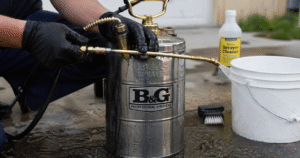
A proper pesticide sprayer maintenance routine ensures your B&G sprayer delivers consistent pressure and safe chemical application over time.
Learning how to clean and maintain a B&G sprayer is essential for keeping consistent pressure and performance
If you own a B&G sprayer, you already know it’s one of the most trusted tools in pest control.
However, even the best equipment needs proper care. Without regular cleaning and maintenance, performance drops fast.
Pressure weakens. Nozzles clog. And eventually, costly repairs follow.
The good news? Keeping your B&G sprayer in top condition is simple.
With a few easy steps, you can extend its lifespan, maintain steady pressure, and get better pest control results every time.
Quick Answer: How To Maintain And Clean A B&G Sprayer
If you’re in a hurry, here’s the short version:
- Rinse the tank after every use
- Flush the hose and nozzle with clean water
- Use mild detergent for deep cleaning weekly
- Lubricate the pump regularly
- Inspect O-rings, hose, and seals monthly
- Store it dry and empty
Now, let’s break it down step by step.
Why Proper Maintenance Matters
A B&G sprayer works under pressure. Over time, chemical residue builds up inside the tank, hose, and nozzle. If left unchecked, this buildup can:
- Block spray flow
- Reduce pressure efficiency
- Damage internal seals
- Cause uneven application
Proper brass sprayer care, including lubrication and seal inspection, helps extend the lifespan of internal components.
As a result, your pest control efforts become less effective. On the other hand, regular maintenance keeps everything running smoothly and safely.
Good pump sprayer maintenance prevents clogging, pressure loss, and uneven spray patterns that can reduce pest control effectiveness.
How Often Should You Clean Your B&G Sprayer?
- After every use: Quick rinse and flush
- Weekly: Deep clean with detergent
- Monthly: Full inspection and lubrication
This simple routine prevents most problems before they start.
Tools and Supplies You’ll Need
- Clean water
- Mild detergent
- Soft brush
- Clean cloth
- Non-petroleum lubricating oil
- Replacement O-rings (recommended)
Pro Tip: Keeping spare parts on hand saves time and prevents downtime.
Step-By-Step: How To Clean A B&G Sprayer
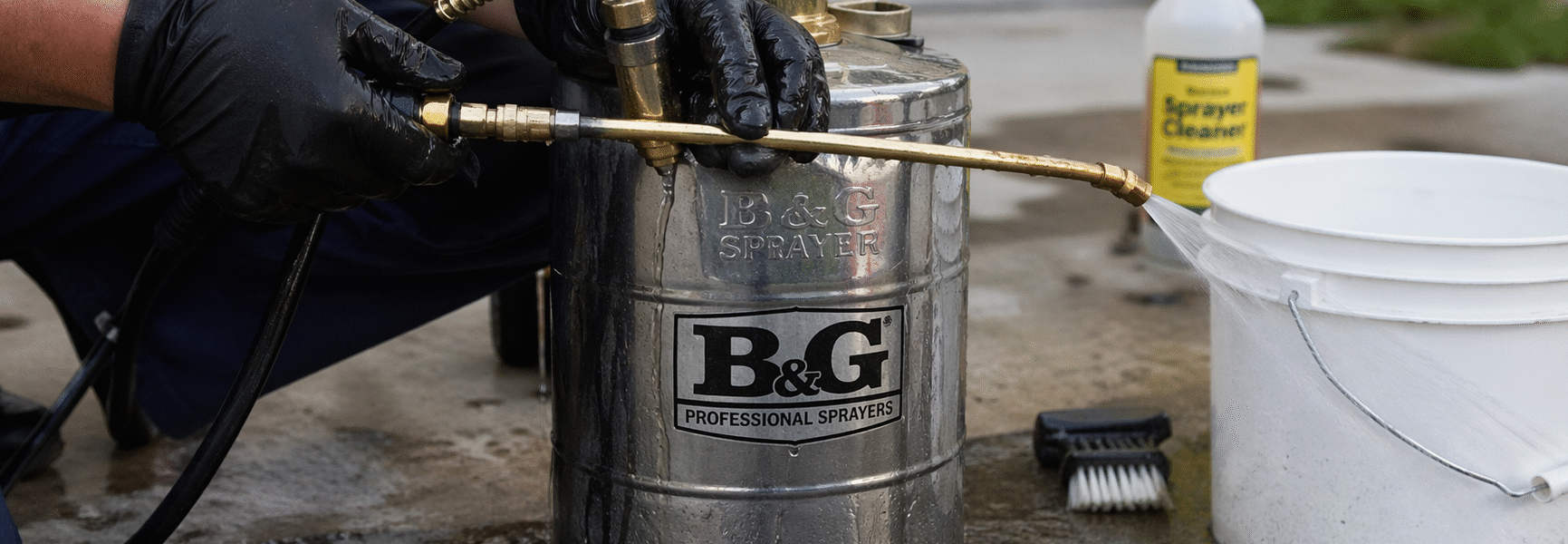
Regular pest control sprayer cleaning is essential to remove chemical buildup and keep your equipment functioning properly.
1. Empty the Tank
Release pressure and safely dispose of any leftover solution. Never store chemicals inside the sprayer.
2. Rinse with Clean Water
Fill the tank halfway with water. Shake gently, then spray it through the hose and nozzle.
Repeat once more for best results.
3. Deep Clean with Detergent
Add warm water and a small amount of mild detergent. Pump and spray the solution through the system.
Then rinse thoroughly with clean water.
4. How To Clean A B&G Sprayer → Cleaning the Nozzle
Remove the nozzle tip. Soak it in soapy water and gently brush away debris, soaking and brushing the nozzle is one of the most effective methods for nozzle clog prevention, ensuring a consistent spray pattern.
Avoid sharp tools—they can damage the spray pattern.
5. Flush the Hose and Wand
Run clean water through the system again to remove any remaining residue.
6. Dry Completely
Air dry all parts. Wipe the exterior to prevent rust.
How To Maintain A B&G Sprayer
1. Lubricate the Pump
Use a non-petroleum oil to keep the pump moving smoothly. This helps maintain strong pressure.
Recommended: High-quality sprayer pump oil (great for extending pump life)
2. Replace Worn O-Rings
O-rings wear out over time. If you notice leaks or pressure loss, replace them immediately.
Recommended: B&G replacement O-ring kit (affordable and essential)
3. Inspect the Hose
Check for cracks or soft spots. Replace damaged hoses to prevent leaks.
4. Test the Pressure Valve
Make sure the safety valve works properly. Clean or replace it if needed.
5. Store It Correctly
Keep your sprayer in a cool, dry place. Never store it with liquid inside.
Best Accessories To Improve Performance
Adding the right accessories can make maintenance easier and improve results:
- Replacement nozzle tips (for consistent spray patterns)
- Extension wands (for hard-to-reach areas)
- Professional cleaning kits
These upgrades are affordable and can significantly improve performance over time.
Common Mistakes To Avoid
- Skipping cleaning after use
- Using harsh chemicals
- Forgetting lubrication
- Ignoring leaks
- Storing with leftover solution
Avoiding these mistakes can double the lifespan of your sprayer.
Pro Tips For Better Results
- Use filtered water to reduce buildup
- Dedicate one sprayer per chemical type
- Do quick inspections before each use
- Keep spare parts ready
Small habits lead to big improvements.
Don’t Miss: B&G 124 Sprayer Review
Want to see if the B&G 124 is the right sprayer for you?
Check out our full B&G 124 Sprayer Review to see performance, pros & cons, and real-world use cases.
Frequently Asked Questions (FAQs)
1. How do I unclog a B&G sprayer nozzle?
Soak it in warm soapy water and clean with a soft brush.
2. Can I use vinegar to clean it?
Yes, but rinse thoroughly afterward.
3. Why is my sprayer losing pressure?
Worn O-rings, leaks, or poor lubrication are common causes.
4. How often should I replace parts?
Inspect monthly and replace when worn.
5. Can I store chemicals in it?
No. Always empty after use.
6. What oil should I use?
Use non-petroleum pump oil.
7. How do I fix uneven spray?
Clean or replace the nozzle.
8. Is warm water safe?
Yes. Avoid very hot water.
9. Why does it still smell?
Rinse again—residue may remain.
10. Is maintenance difficult?
No. It only takes a few minutes.
B&G Sprayer vs Competitors (Quick Comparison)
If you’re deciding between sprayers, this quick comparison helps:
| Feature | B&G Sprayer | Generic Pump Sprayers |
|---|---|---|
| Build Quality | Professional-grade stainless steel | Plastic, less durable |
| Pressure Control | Consistent and adjustable | Often inconsistent |
| Lifespan | 5–10+ years with maintenance | 1–3 years average or depending on maintenance can last even longer |
| Maintenance | Easy with replaceable parts | Limited repair options |
| Price | Higher upfront | Lower upfront |
Bottom line: B&G sprayers cost more upfront, but they last much longer and perform better over time.
Conclusion: Protect Your Investment
A B&G sprayer is built to last—but only if you take care of it.
Regular cleaning keeps it efficient. Proper maintenance prevents costly repairs. And smart habits ensure consistent performance.
If you want professional-level results, don’t skip these steps.
And if you’re thinking about upgrading or buying one, don’t forget to read the B&G 124 Sprayer Review to make the best choice.
Take care of your sprayer, and it will take care of your pest control needs for years to come.