Bed Bug Life Cycle: Eggs, Nymphs, and How Fast They Spread
Bed bugs are tiny insects, but they can cause big problems. Once they enter a home, they can multiply quickly and become difficult to eliminate. Unfortunately, many homeowners do not realize they have a bed bug infestation until bites, stains, or live bugs become noticeable.
The good news is that understanding the bed bug life cycle can help you identify an infestation early and take action before it gets out of control. By learning about bed bug eggs, nymphs, adults, and the conditions that help them thrive, you can better protect your home and family.
Quick Answer: What Is the Bed Bug Life Cycle?
Bed bug life cycle includes three main stages: egg, nymph, and adult. Under ideal conditions, bed bugs can develop from eggs into breeding adults within 5 to 8 weeks.
Warm temperatures, easy access to blood meals, and plenty of hiding places allow bed bug populations to grow rapidly.
Table of Contents
- What Is the Bed Bug Life Cycle?
- Stage 1: Bed Bug Eggs
- Stage 2: Bed Bug Nymphs
- Stage 3: Adult Bed Bugs
- Bed Bug Life Cycle Chart
- Complete Bed Bug Development Timeline
- How Fast Do Bed Bugs Spread?
- Bed Bug Behavior Throughout Their Life Cycle
- Environmental Triggers That Affect Growth
- Signs of Every Bed Bug Life Stage
- How Long Can Bed Bugs Live Without Feeding?
- Common Myths About Bed Bugs
- How to Prevent Bed Bug Infestations
- How to Interrupt the Bed Bug Life Cycle
- Related bed bug guides
- FAQs
- Conclusion
What Is the Bed Bug Life Cycle?
Bed bugs develop through a process known as incomplete metamorphosis. Unlike butterflies and beetles, they do not have a pupal stage.
Instead, they progress through three primary stages:
- Egg
- Nymph
- Adult
Each stage plays an important role in bed bug reproduction, population growth, and infestation development.
Because bed bugs reproduce efficiently, even a few insects can eventually turn into a major infestation if left untreated.
Stage 1: Bed Bug Eggs
The first stage begins when a female bed bug lays eggs.
Bed bug eggs are extremely small and difficult to see without close inspection. They are usually deposited in protected areas where they are less likely to be disturbed.
What Do Bed Bug Eggs Look Like?
Bed bug eggs are:
- Tiny and oval-shaped
- White or translucent
- About 1 millimeter long
- Slightly sticky
The sticky coating helps eggs attach to surfaces.
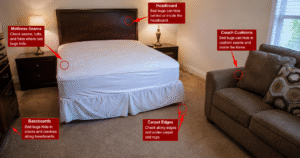
Common egg-laying locations include:
- Mattress seams
- Box springs
- Bed frames
- Furniture cracks
- Behind baseboards
- Electrical outlets
How Many Eggs Do Bed Bugs Lay?
A female bed bug can lay:
- 1 to 7 eggs per day
- 200 to 500 eggs during her lifetime
As a result, infestations can expand surprisingly fast.
Egg Hatching Timeline
Most bed bug eggs hatch within:
- 6 to 10 days in warm environments
- Up to several weeks in cooler temperatures
Warmer conditions speed up bed bug development significantly.
Stage 2: Bed Bug Nymphs
After hatching, bed bugs enter the nymph stage.
These baby bed bugs look like miniature adults but are lighter in color and much smaller.
Nymphs must feed on blood before they can continue growing.
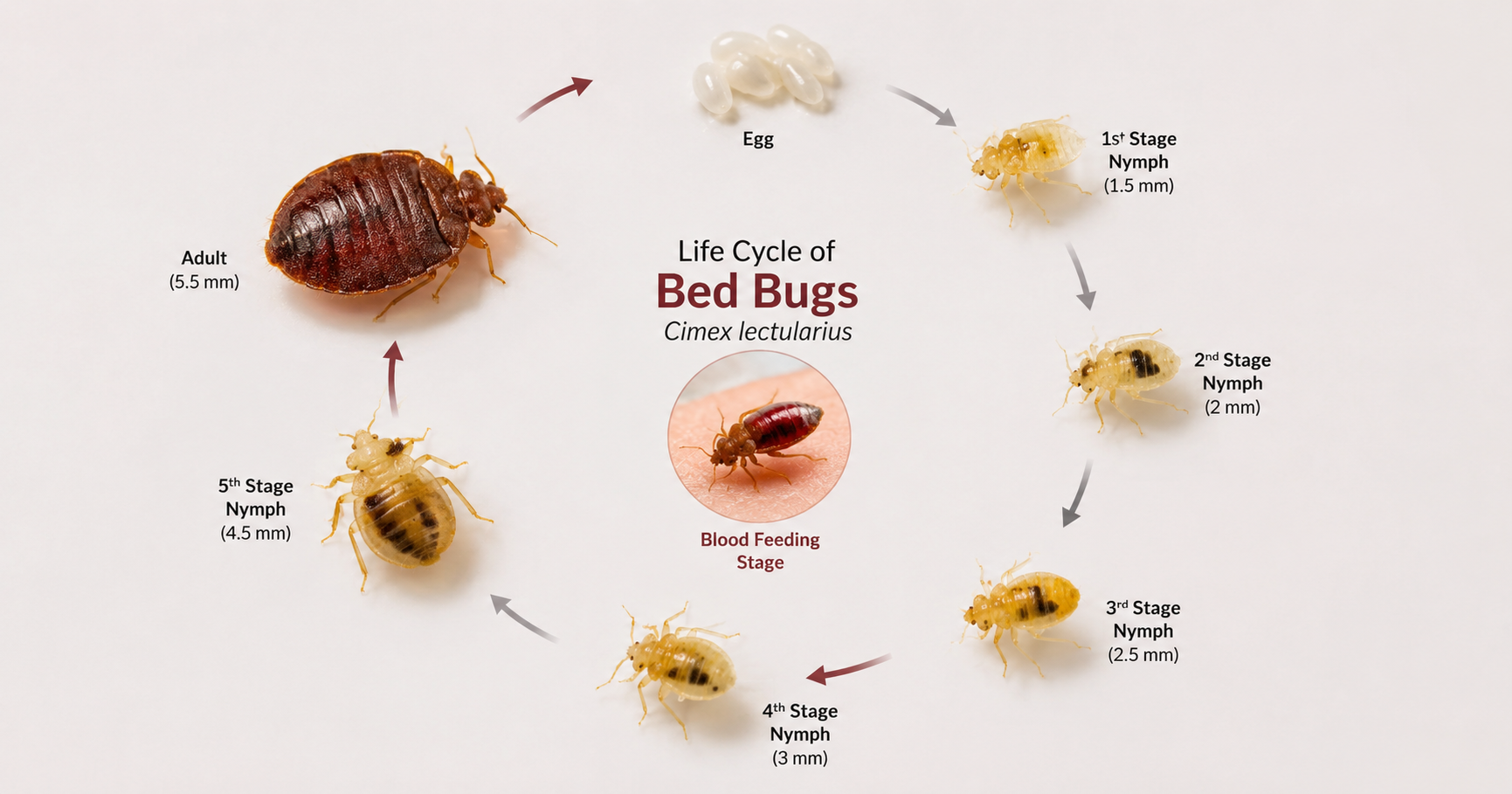
The Five Bed Bug Growth Stages
Bed bugs pass through five immature stages before becoming adults.
First Nymph Stage
- Nearly transparent
- Extremely small
- Difficult to detect
Second Nymph Stage
- Slightly larger
- More visible after feeding
Third Nymph Stage
- Light tan appearance
- Increased activity
Fourth Nymph Stage
- Noticeably larger
- Begins looking more like an adult
Fifth Nymph Stage
- Final immature stage
- Requires one last molt
Each stage requires a blood meal before the next molt can occur.
Without feeding, immature bed bugs cannot complete their development.
Nymph Development Timeline
In ideal conditions:
- Each molt takes several days
- Entire nymph stage lasts approximately 4 to 6 weeks
However, cooler temperatures and limited food can slow the process considerably.
Stage 3: Adult Bed Bugs
Once the fifth molt is complete, the bed bug becomes an adult.
Adult bed bugs are the reproductive stage of the life cycle.
Adult Bed Bug Characteristics
Adults are:
- Reddish-brown
- Oval-shaped
- Flat when unfed
- About the size of an apple seed
After feeding, they become more swollen and darker in color.
Bed Bug Lifespan
The average bed bug lifespan ranges from:
- 6 to 12 months
- Occasionally longer in ideal environments
Because adults can survive for extended periods, infestations often persist without proper treatment.
Bed Bug Life Cycle Chart
| Stage | Appearance | Time Required |
|---|---|---|
| Egg | Tiny white egg | 6–10 days |
| Nymph 1 | Nearly transparent | Several days |
| Nymph 2 | Small pale bug | Several days |
| Nymph 3 | Light tan | Several days |
| Nymph 4 | Larger tan bug | Several days |
| Nymph 5 | Almost adult size | Several days |
| Adult | Reddish-brown | 6–12 months lifespan |
Complete Bed Bug Development Timeline
The exact timeline depends on environmental conditions.
| Life Stage | Average Duration |
|---|---|
| Egg | 6–10 days |
| Nymph Stages | 4–6 weeks |
| Adult Maturity | Immediate after final molt |
| Total Development | 5–8 weeks |
Therefore, several generations can develop in a single year.
How Fast Do Bed Bugs Spread?
Many homeowners ask how quickly a bed bug infestation can grow.
The answer depends on several factors.
Rapid Reproduction
Bed bugs reproduce throughout their adult lives.
A single female may produce hundreds of eggs.
Consequently:
- Small infestations can become moderate infestations within weeks.
- Moderate infestations can become severe within months.
- Untreated infestations may contain thousands of bed bugs.
Movement Around the Home
Although bed bugs cannot fly or jump, they spread efficiently by crawling.
They frequently move between:
- Bedrooms
- Sofas
- Recliners
- Wall voids
- Electrical outlets
As populations grow, they expand into nearby rooms in search of shelter and hosts.
Bed Bug Behavior Throughout Their Life Cycle
Understanding bed bug behavior helps explain why infestations can be difficult to detect.
Nocturnal Feeding
Bed bugs are most active at night.
They emerge while people sleep and feed for several minutes before returning to hiding places.
Host Detection
Bed bugs locate humans using:
- Carbon dioxide
- Body heat
- Natural body odors
These signals help them find hosts efficiently.
Hiding Behavior
During daylight hours, bed bugs hide in:
- Mattress seams
- Bed frames
- Upholstered furniture
- Baseboards
- Picture frames
Their secretive behavior often allows infestations to grow unnoticed.
Grouping Behavior
Bed bugs commonly gather together.
Clusters may contain:
- Bed bug eggs
- Nymphs
- Adults
- Shed skins
Finding one bug often means others are nearby.
Environmental Triggers That Affect Bed Bug Growth
Several factors influence bed bug population growth.
Temperature
Temperature is the most important environmental trigger.
Warm Conditions
- Faster egg hatching
- Faster molting
- Increased reproduction
Cooler Conditions
- Slower development
- Reduced activity
- Delayed reproduction
Blood Meal Availability
Bed bugs need blood to survive and reproduce.
Without feeding:
- Nymphs cannot molt
- Adults reproduce less often
- Population growth slows
Shelter and Hiding Places
Clutter creates ideal conditions.
Examples include:
- Clothing piles
- Cardboard boxes
- Furniture cracks
- Storage areas
More hiding places often mean larger infestations.
Humidity
Moderate humidity supports bed bug survival.
Very dry conditions may reduce egg survival rates.
Signs of Every Bed Bug Life Stage
Recognizing the signs of bed bugs early can help prevent major infestations.
Egg Signs
- Tiny white eggs
- Eggs attached to surfaces
- Clusters in cracks and crevices
Nymph Signs
- Small pale insects
- Shed skins
- Tiny blood stains
Adult Signs
- Visible reddish-brown bugs
- Dark fecal spots
- Musty odor in severe infestations
How Long Can Bed Bugs Survive Without Feeding?
One reason bed bugs are difficult to eliminate is their ability to survive without food.
Adult bed bugs can often live for several months without feeding.
In cooler environments, some may survive even longer.
This survival ability explains why vacant homes, guest rooms, and storage areas can still harbor bed bugs long after people have left.
Therefore, simply leaving a room unused rarely eliminates an infestation.
Common Myths About Bed Bugs
Many misconceptions exist about bed bugs.
Let’s separate fact from fiction.
Myth #1: Bed Bugs Only Live in Dirty Homes
False.
Bed bugs do not care whether a home is clean or messy.
They are attracted to blood meals, not dirt.
Even luxury hotels and spotless homes can experience infestations.
Myth #2: Bed Bugs Spread Diseases
Current research indicates that bed bugs are not known to transmit diseases to humans in the same way mosquitoes or ticks do.
However, their bites can cause discomfort, itching, and sleep disruption.
Myth #3: You Can Feel Bed Bugs Crawling on You
Most people do not notice bed bugs feeding.
Bed bugs inject saliva that helps them feed without immediate detection.
As a result, many persons are unaware until bite reactions appear later.
How to Prevent Bed Bug Infestations
Prevention is much easier than eliminating an established infestation.
Inspect Hotel Rooms
While traveling:
- Check mattress seams
- Inspect headboards
- Examine furniture near the bed
Check Used Furniture Carefully
Never bring used furniture indoors without inspecting it thoroughly.
Vacuum Frequently
Regular vacuuming helps remove:
- Eggs
- Shed skins
- Live insects
Reduce Clutter
Fewer hiding spots make infestations easier to detect.
Use Mattress Encasements
Protective encasements help prevent bed bugs from establishing themselves in mattresses.
Wash Travel Clothing
After returning from trips:
- Wash clothing promptly
- Dry items using high heat when appropriate
These simple habits can significantly reduce your risk.
How to Interrupt the Bed Bug Life Cycle
Breaking the life cycle is essential for successful control.
Conduct Regular Inspections
Check:
- Mattresses
- Furniture seams
- Bed frames
Use Heat Treatments
Heat can kill:
- Bed bug eggs
- Nymphs
- Adults
Vacuum Thoroughly
Vacuuming helps remove multiple life stages.
Dispose of vacuum contents immediately.
Seek Professional Help
Large infestations often require professional treatment to eliminate all stages successfully.
Recommended Resources
For additional information, consult:
- CDC Bed Bug Resources: https://www.cdc.gov
- EPA Bed Bug Information: https://www.epa.gov
- National Pest Management Association: https://www.pestworld.org
Related Guides:
- Will Bed Bugs Infest A Clean House
- How Do Bed Bugs Enter A House
- Best Waterproof Bed Bug Mattress Covers For King Size Beds
- 7 Best Waterproof Bed Bug Mattress Covers For Queen Size Beds
- Best Bed Bug Pillow Protectors For Allergy Sufferers
Travel & Outdoor Prevention
Shelter Prevention
Bed Bug Treatment & Removal
DIY Bed Bug Control
- How To Get Rid Of Bed Bugs Naturally At Home
- How To Get Rid Of Bed Bugs Permanently At Home
- DIY Bed Bug Traps For Home
- Best DIY Bed Bug Treatment Kit
- Best Diatomaceous Earth For Bed Bugs
Professional & Advanced Treatments
Equipment & Tools
Bed Bug Spray Reviews
Product Reviews
Best Spray Guides
Bed Bug Mattress & Bedding Protection
Mattress Encasements
- Best Waterproof Bed Bug Mattress Covers For King Size Beds
- 7 Best Waterproof Bed Bug Mattress Covers For Queen Size Beds
Pillow Protection
Frequently Asked Questions (FAQs)
1. How long does the bed bug life cycle take?
Most bed bugs develop from egg to adult in approximately 5 to 8 weeks under favorable conditions.
2. How many eggs can a female bed bug lay?
A female can lay between 200 and 500 eggs during her lifetime.
3. What do baby bed bugs look like?
Baby bed bugs, called nymphs, are smaller, lighter-colored versions of adult bed bugs.
4. How many growth stages do bed bugs have?
Bed bugs pass through five nymph stages before reaching adulthood.
5. Can bed bugs survive without feeding?
Yes. Adults can survive several months without a blood meal.
6. Do bed bugs fly or jump?
No. Bed bugs crawl but cannot fly or jump.
7. Where do bed bugs hide most often?
Common hiding places include mattresses, bed frames, furniture cracks, and baseboards.
8. What causes bed bug infestations to spread quickly?
Rapid reproduction, hidden behavior, and easy transportation through luggage and furniture all contribute to fast spread.
9. What environmental conditions do bed bugs prefer?
Bed bugs thrive in warm environments with access to blood meals and protected hiding spots.
10. What is the most effective way to stop bed bugs?
Early detection, sanitation, heat treatments, and professional pest control services are often the most effective solutions.
Author Note
At BugOffControl.com, we research common household pests and provide practical pest management information to help homeowners identify, prevent, and control infestations safely and effectively.
Conclusion
Understanding the bed bug life cycle: eggs, nymphs, and how fast they spread gives homeowners a valuable advantage when dealing with these persistent pests. From tiny bed bug eggs to fully mature adults, every stage contributes to the growth of a bed bug infestation.
Because bed bugs reproduce quickly and hide effectively, early detection is essential. Fortunately, by recognizing the signs of bed bugs, understanding their behavior, and knowing the environmental triggers that support their growth, you can reduce the risk of a severe infestation.
Whether you’re dealing with a current problem or trying to prevent one, regular inspections, good housekeeping practices, and prompt treatment can help break the bed bug life cycle and keep your home protected year-round.