Flea Life Cycle Explained: 4 Stages, How Long They Live & How to Stop Them
The fleas you notice jumping on your pet are only part of the problem. Hidden inside your home, thousands of flea eggs, larvae, and pupae may be developing where you cannot easily see them.
If you have ever treated your dog or cat for fleas, only to see the scratching return a few weeks later, you are not alone. Many pet owners feel frustrated when it seems like the fleas are gone, only for a new wave to appear.
The reason fleas are so difficult to eliminate is because adult fleas are just one stage of their life cycle. While adult fleas live on pets and are the ones you usually notice, most of the infestation may be hiding in carpets, pet bedding, furniture, cracks in floors, and outdoor areas. These hidden stages continue developing until they become new adult fleas.
Understanding the flea life cycle is one of the most important steps in preventing repeat infestations.
When you know how fleas grow from tiny eggs into adults, it becomes much easier to understand why treatments sometimes seem to fail and what you can do to stop the cycle.
In this guide, you will learn about all four flea life stages, how long each stage lasts, what conditions help fleas survive, and the most effective ways to break the flea life cycle and protect your pets and home.
Quick Answer:
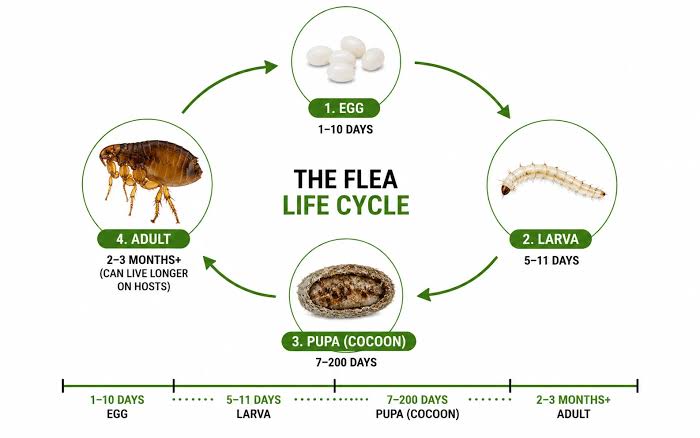
Fleas develop through four stages: egg, larva, pupa, and adult. Under ideal conditions, the flea life cycle can be completed in about 14–21 days, but protected pupae may survive for months. To stop fleas from returning, you must treat pets and eliminate hidden eggs, larvae, and pupae inside your home.
Flea Life Cycle Explained (Egg to Adult)
| Stage | How Long It Lasts | Where Found |
|---|---|---|
| Egg | 2–10 days | Carpet, bedding, soil |
| Larva | 5–20 days | Dark areas, carpet fibers |
| Pupa | Weeks to months | Protective cocoon |
| Adult | Weeks to months | Pets and animals |
Under ideal conditions, fleas can complete their life cycle in as little as 14 to 21 days. However, cooler temperatures, lower humidity, and lack of hosts can extend development for several months. Understanding each stage is essential for effective flea control because most fleas are not visible adults.
Affiliate Disclosure: This page contains affiliate links. If you buy through my links, I may earn a small commission at no extra cost to you.
As an Amazon Associate, I earn from qualifying purchases.
Best Flea Treatment Options
| Product Type | Best For | Why Use It |
|---|---|---|
| Flea Spray | Home carpets and furniture | Helps target fleas in the environment |
| Flea Vacuum | Removing eggs and larvae | Physically removes flea stages |
| Flea Preventative | Dogs and cats | Stops adult fleas from reproducing |
| Flea Growth Regulator | Breaking lifecycle | Prevents immature fleas from becoming adults |
Table of Contents
- Flea Life Cycle Overview
- The 4 Flea Life Stages
- How Long Do Fleas Live?
- Why Fleas Come Back After Treatment
- How to Break the Flea Life Cycle
- Common Flea Questions
Key Takeaways
✔ Fleas go through four life stages.
✔ Most fleas are hidden as eggs, larvae, or pupae.
✔ Warm temperatures and high humidity speed up development.
✔ The flea cocoon stage is the most difficult to eliminate.
✔ Effective flea control requires targeting every stage.
✔ Fleas can survive indoors throughout the year.
✔ A single female flea can lay hundreds of eggs during her lifetime.
What Is the Flea Life Cycle?
The flea life cycle refers to the complete transformation a flea undergoes from egg to adult. This process is a form of complete metamorphosis, meaning fleas pass through four distinct stages before becoming mature insects.
The four flea growth stages include:
- Egg
- Larva
- Pupa
- Adult
Depending on environmental conditions, the flea reproduction cycle can be completed in a few weeks or stretched over several months.
One reason flea infestations are difficult to control is that visible adult fleas make up only a small percentage of the population. Most fleas remain hidden in earlier developmental stages.
Flea Life Cycle Overview Table
| Stage | Location | Duration | Control |
|---|
| Egg | Carpet, bedding, soil | 2-10 days | Vacuuming |
| Larva | Dark areas, carpet fibers | 5-20 days | Cleaning + treatment |
| Pupa | Protected cocoons | Weeks/months | Persistence + follow-up |
| Adult | Pets and animals | Weeks/months | Pet treatment |
Stage 1: Flea Eggs
What Do Flea Eggs Look Like?
Flea eggs are extremely small and difficult to spot. They are usually white, oval-shaped, and roughly the size of a grain of salt.
Because of their size, many people never notice them until an infestation becomes severe.
Where Are Flea Eggs Found?
Female fleas typically lay eggs on a host animal after taking a blood meal.
However, flea eggs do not remain attached to fur for long.
As a result, they fall into:
- Carpets
- Area rugs
- Pet beds
- Furniture cushions
- Hardwood floor cracks
- Yard soil
This explains why flea eggs in carpet are one of the most common sources of household infestations.
Egg-Laying Behavior
Adult female fleas are incredibly productive.
A single female can lay up to 50 eggs each day.
Consequently, a small flea problem can grow into a large infestation surprisingly fast.
Egg Timeline
Under ideal conditions:
- Eggs hatch within 2 to 10 days.
Cool temperatures may slow the process.
Stage 2: Flea Larvae
What Are Flea Larvae?
After hatching, flea larvae emerge as tiny, pale, worm-like insects.
Unlike adult fleas, larvae do not feed on blood.
Instead, they consume organic material found in their environment.
Larval Behavior
Flea larvae avoid light.
Therefore, they hide in protected areas such as:
- Carpet fibers
- Floor cracks
- Under furniture
- Pet sleeping areas
Their ability to remain hidden makes detection difficult.
What Do Flea Larvae Eat?
Larvae survive by feeding on:
- Skin flakes
- Organic debris
- Dust particles
- Adult flea waste
Adult flea droppings contain partially digested blood, making them an important food source.
Larval Timeline
The larval stage generally lasts:
- 5 to 20 days
However, environmental conditions can significantly extend development.
Stage 3: Flea Pupae
Why the Pupal Stage Matters
The flea cocoon stage is often the most challenging part of the flea infestation lifecycle.
During this stage, the larva spins a protective cocoon around itself.
Inside the cocoon, the flea develops into an adult.
Pupal Behavior
The cocoon collects dust and debris from the environment.
This natural camouflage helps protect developing fleas.
Additionally, cocoons are resistant to:
- Dry conditions
- Physical disturbances
- Many insecticides
Therefore, even after treatment, pupae may survive and emerge later.
Pupal Timeline
Under favorable conditions:
- Adults may emerge in 5 to 14 days.
However, pupae can remain dormant for weeks or even months.
This ability allows fleas to wait until a suitable host arrives.
Stage 4: Adult Fleas
What Do Adult Fleas Look Like?
Adult fleas are small, dark-colored, wingless insects.
Most measure between:
- 1.5 and 3 millimeters
Their flattened bodies help them move easily through animal fur.
Adult Flea Behavior
Adult fleas are powerful jumpers.
They can leap many times their own body length.
After locating a host, they:
- Feed on blood
- Mate
- Lay eggs
The flea reproduction cycle then starts again.
Feeding Habits
Adult fleas commonly feed on:
- Cats
- Dogs
- Rabbits
- Wildlife
- Humans occasionally
Blood meals are essential for reproduction.
Adult Lifespan
Adult fleas can survive:
- Several weeks
- Up to a few months
Survival depends on temperature, humidity, and host availability.
Internal Reading Recommendations:
You may also find these helpful:
Flea Control for Dogs
Flea Control for Cats
- Flea Control For Cats
- Best Flea Treatment For Indoor Cats
- Best Flea Treatment For Indoor Cats Without Chemicals
Flea Control in the Home
- Flea Control In The Home
- How To Get Rid Of Fleas In House Fast Naturally
- Best Indoor Bug Spray Safe For Pets
Tick Control (General)
How Long Can Fleas Live?
One of the reasons flea infestations can be so frustrating is that fleas do not all disappear at the same time. Their lifespan depends on which stage of the flea life cycle they are in and the conditions around them, such as temperature, humidity, and access to a host.
Adult fleas usually live for several weeks to a few months when they have access to a pet or other animal for feeding. During this time, female fleas can continue laying eggs, allowing the infestation to grow if the life cycle is not interrupted.
Flea eggs have a much shorter lifespan on their own. Under favorable conditions, they typically hatch within a few days to several weeks. However, their development speed depends heavily on the environment. Warm, humid conditions allow eggs to develop faster, while cooler or drier conditions may slow the process.
The flea pupal stage is the longest-lasting and most difficult stage to eliminate. Inside their protective cocoons, developing fleas can survive for several months while waiting for the right conditions. Vibrations, body heat, and carbon dioxide from a nearby person or pet can trigger adult fleas to emerge and search for a host.
The complete flea life cycle can take as little as 14 to 21 days in ideal conditions, but unfavorable conditions may extend it for several months. This is why fleas can seem to return after treatment—even when adult fleas are no longer visible.
Understanding how long fleas can survive helps explain why consistent cleaning, pet protection, and follow-up treatments are important. Eliminating fleas requires breaking the entire life cycle, not just killing the adult fleas you see.
Why Do Fleas Come Back After Treatment?
One of the most frustrating parts of dealing with fleas is thinking you’ve solved the problem, only to find new fleas jumping around your home a week or two later. If this has happened to you, don’t worry—it doesn’t necessarily mean the treatment failed.
The most common reason fleas return is that many flea sprays and treatments are designed to kill adult fleas, but they have little or no effect on the earlier stages of the flea life cycle.
For example, flea eggs are often hidden deep inside carpet fibers, furniture cushions, pet bedding, and cracks in the floor. Since these eggs are difficult to see, they can easily survive after adult fleas have been eliminated.
Once the eggs hatch, tiny flea larvae emerge and move into dark, protected places where they feed on organic debris and flea dirt. As they grow, the larvae spin protective cocoons and enter the pupal stage.
This cocoon is one of the flea’s greatest survival tools. It shields the developing flea from drying out and can also protect it from many household insecticides.
Inside the cocoon, the flea continues developing until it senses vibrations, body heat, or carbon dioxide—signals that a person or pet is nearby.
When those conditions are right, newly developed adult fleas emerge from the cocoon looking for their first blood meal. This is why you may notice fleas reappearing days or even weeks after treating your home or pet.
The good news is that this doesn’t always mean you have a new infestation. In many cases, you’re simply seeing the final stages of an existing flea population completing its natural life cycle.
To completely eliminate fleas, it’s important to target every stage—not just the adults. Combining regular vacuuming, washing pet bedding, treating pets with veterinarian-approved flea products, and following up with additional treatments when needed gives you the best chance of breaking the flea life cycle for good.
Tick Control for Yards & Outdoor Areas
- Best Tick Control Products For Yards And Lawns
- Best Yard Treatment System For Homes With Dogs
- Best Tick Control for Yards-best-tick-control-yard-spray-action
Flea Lifecycle Timeline
The flea lifecycle timeline varies according to environmental conditions.
| Stage | Average Duration |
|---|---|
| Egg | 2–10 days |
| Larva | 5–20 days |
| Pupa | 5–14 days or longer |
| Adult | Several weeks to months |
In ideal environments, fleas may complete development in just:
14 to 21 days
Environmental Triggers That Affect Flea Development
Several environmental factors influence flea metamorphosis and survival.
Temperature
Fleas thrive in temperatures between:
- 70°F and 85°F
- 21°C and 29°C
Warm conditions speed development.
Humidity
Flea eggs and larvae require moisture.
Humidity levels above 50% improve survival rates.
Dry conditions reduce flea success.
Host Availability
Without hosts, adult flea reproduction declines.
However, when pets and wildlife are nearby, flea populations can expand rapidly.
Vibrations and Carbon Dioxide
Pupae detect:
- Vibrations
- Body heat
- Carbon dioxide
These signals indicate a host may be nearby.
As a result, adult fleas often emerge when people or pets enter a room.
Common Flea Species
Several flea species affect humans and animals.
Cat Flea
The cat flea is the most common flea found on both cats and dogs.
Despite its name, it feeds on many animals.
Dog Flea
Dog fleas are less common than cat fleas but still cause infestations in homes and kennels.
Human Flea
Human fleas are relatively uncommon today but still occur in some regions.
They may feed on people, pets, and wildlife.
Can Fleas Survive Without Pets?
The short answer is yes. Even if you don’t own a dog or cat, fleas can still find their way into your home and, under the right conditions, establish a population.
Many people are surprised to discover fleas in their house after their pet has moved away—or even when they’ve never owned a pet at all. That’s because fleas are opportunistic pests. As long as they can find shelter and a source of food, they can survive and continue their life cycle.
Rodents Can Bring Fleas Indoors
Mice and rats are common flea carriers. If rodents enter your attic, crawl space, garage, or walls, they may introduce fleas into your home without you ever noticing. Even after the rodents are gone, flea eggs, larvae, and pupae can remain hidden in the surrounding areas.
Wildlife Can Spread Fleas
Wild animals such as raccoons, opossums, squirrels, stray cats, and even some wild mammals can carry fleas into your yard. If these animals spend time under your deck, porch, shed, or around your landscaping, fleas may develop outdoors before eventually making their way inside.
Fleas From a Previous Infestation
A home that had fleas in the past may still contain dormant pupae hidden in carpets, floor cracks, furniture, or other protected areas. These developing fleas can remain inside their cocoons for weeks or even months before emerging when they detect movement, body heat, or carbon dioxide.
This is one reason fleas sometimes seem to appear “out of nowhere,” especially after returning from a vacation, moving into a home, or opening a room that hasn’t been used for a while.
Visiting Pets Can Leave More Than Paw Prints
Friends, family members, or neighbors may unknowingly bring fleas into your home when they visit with their pets. Even a brief visit can allow flea eggs to fall into carpets, rugs, or upholstered furniture, where they can continue developing through the flea life cycle.
How to Reduce the Risk
If you don’t have pets, you can still lower the risk of a flea infestation by:
- Sealing gaps that allow rodents to enter your home.
- Discouraging wildlife from nesting around your property.
- Vacuuming carpets and upholstered furniture regularly.
- Inspecting your home if guests bring pets inside.
- Addressing flea problems promptly before they become established.
The bottom line: Pets are the most common way fleas enter a home, but they’re not the only way. Rodents, wildlife, previous infestations, and visiting animals can all introduce fleas. Understanding these hidden sources makes it easier to stop an infestation before it grows into a much bigger problem.
Indoor vs Outdoor Flea Life Cycles
Indoor Flea Development
Indoor environments often provide:
- Stable temperatures
- Consistent humidity
- Reliable hosts
As a result, fleas can reproduce year-round indoors.
Outdoor Flea Development
Outdoor flea populations depend more heavily on weather conditions.
They prefer:
- Shaded areas
- Moist soil
- Animal resting spots
Outdoor flea survival decreases during extreme heat or cold.
Seasonal Flea Activity
Many people associate fleas with summer.
While flea activity often peaks during warm months, indoor infestations can occur year-round.
Spring
Flea populations begin increasing.
Summer
Warm temperatures support rapid development.
Fall
Many infestations continue indoors.
Winter
Outdoor activity may slow, but heated homes allow fleas to remain active.
Why Flea Infestations Spread So Quickly
Several factors contribute to rapid population growth.
Fleas Reproduce Quickly
Female fleas lay large numbers of eggs.
Hidden Development
Eggs, larvae, and pupae remain hidden.
Protective Cocoons
Pupae survive many treatments.
Constant Reproduction
Adults continue laying eggs throughout their lives.
Together, these factors create explosive population growth.
Best Flea Control Methods Compared
| Method | Works Against | Best Use |
|---|---|---|
| Flea Medication | Adult fleas | Pets |
| Flea Spray | Fleas in home | Carpets/furniture |
| Vacuuming | Eggs/larvae | Indoor control |
| Growth Regulator | Immature stages | Long-term control |
How to Break the Flea Life Cycle
Getting rid of fleas isn’t just about killing the adults you see jumping on your pet or around your home. Since most fleas are hidden as eggs, larvae, or pupae, the most effective approach is to target every stage of the flea life cycle. Following these simple steps consistently can help stop an infestation before it has a chance to grow.
Vacuum Your Home Thoroughly
Vacuuming is one of the easiest and most effective ways to reduce flea populations indoors. It removes flea eggs, larvae, flea dirt, and other organic debris hiding deep in carpets, rugs, furniture, and along baseboards. Vacuuming also creates vibrations that encourage adult fleas to emerge from their protective cocoons, making follow-up treatments more effective.
How often: Vacuum high-traffic areas and places where pets spend time every day during an active infestation. Once the problem is under control, vacuum at least two or three times each week.
Common mistake to avoid: Don’t leave the vacuum bag or collection bin full of debris. Empty or dispose of it immediately after cleaning to help prevent fleas from escaping back into your home.
Wash Pet Bedding and Soft Furnishings
Flea eggs and larvae often collect in pet beds, blankets, removable cushion covers, and other soft fabrics. Washing these items regularly helps remove hidden flea stages before they have a chance to mature.
How often: Wash pet bedding at least once a week while treating an infestation.
Common mistake to avoid: Using cold water alone may not eliminate every stage of the flea life cycle. Whenever the care label allows, wash items in hot water and dry them thoroughly using the highest safe heat setting.
Protect Your Pets
Your pets are usually the flea’s primary food source, so keeping them protected is an essential part of long-term flea control. Speak with your veterinarian about the flea prevention products that are best suited for your dog or cat based on their age, health, and lifestyle.
How often: Follow your veterinarian’s recommendations and always use flea preventatives according to the product instructions.
Common mistake to avoid: Never skip doses or stop treatment early just because you no longer see adult fleas. Hidden eggs and pupae may still be developing and can restart the infestation.
Treat Areas Where Fleas Hide
Fleas don’t stay only on your pets. Eggs, larvae, and pupae are commonly found in carpets, rugs, upholstered furniture, cracks in hardwood floors, and quiet corners where pets like to rest.
What to do: Pay extra attention to these areas when vacuuming or applying flea-control products. If you’re using an indoor flea treatment, carefully read and follow all label directions.
Common mistake to avoid: Focusing only on visible areas. Fleas prefer dark, protected places that are easy to overlook.
Don’t Forget Your Yard
If your pet spends time outdoors, fleas may also be living outside your home. Shady areas beneath shrubs, decks, porches, and dense vegetation can provide ideal conditions for fleas to survive.
How often: Inspect your yard regularly, especially during warm and humid weather.
Common mistake to avoid: Treating only the inside of your home while ignoring outdoor areas where pets frequently rest or play.
Be Patient and Stay Consistent
Breaking the flea life cycle doesn’t happen overnight. Even after successful treatment, adult fleas may continue emerging from protective cocoons for several weeks. This is a normal part of the flea life cycle and doesn’t always mean your treatment has failed.
Continue vacuuming, washing pet bedding, monitoring your pets, and following your flea prevention plan until no signs of fleas remain. Staying consistent is the best way to eliminate every stage of the flea life cycle and reduce the chances of another infestation.
Quick Flea Control Checklist
Before you finish treating your home, make sure you’ve completed these important steps:
- ✔ Vacuum carpets, rugs, furniture, and pet resting areas frequently.
- ✔ Wash pet bedding, blankets, and removable covers in hot water.
- ✔ Keep pets on a veterinarian-approved flea prevention program.
- ✔ Treat both indoor and outdoor areas where fleas may be hiding.
- ✔ Continue cleaning and monitoring for several weeks, even after adult fleas are no longer visible.
Following these steps consistently gives you the best chance of breaking the flea life cycle and keeping your home, pets, and family protected from future flea infestations.
Common Mistakes Homeowners Make When Treating Fleas
Getting rid of fleas takes more than treating the pet you can see scratching. Because fleas spend most of their lives as eggs, larvae, and pupae hidden throughout the home, overlooking even one step can allow the infestation to continue.
Here are some of the most common mistakes homeowners make—and how to avoid them.
Only Treating Your Pet
Many people apply a flea treatment to their dog or cat and expect the problem to disappear. While treating your pet is essential, it addresses only the adult fleas feeding on the animal.
Flea eggs, larvae, and pupae are usually scattered throughout your home, where they continue developing long after the adults have been removed.
What to do instead: Treat your pet and the areas where it spends the most time, including carpets, rugs, furniture, and pet bedding.
Not Vacuuming Often Enough
Vacuuming is one of the simplest and most effective ways to reduce flea populations, yet it’s often overlooked. Regular vacuuming removes flea eggs, larvae, flea dirt, and other organic debris that developing fleas rely on. It can also encourage hidden adult fleas to emerge from their cocoons, making follow-up treatments more effective.
What to do instead: Vacuum carpets, rugs, upholstered furniture, and baseboards several times a week during an active infestation. Empty the vacuum container or dispose of the vacuum bag immediately after cleaning.
Ignoring Outdoor Areas
If your pet spends time outside, your yard could be part of the problem. Fleas often hide in shaded areas, under decks, around shrubs, and anywhere wildlife or pets like to rest. Treating only the inside of your home may allow new fleas to hitch a ride back indoors.
What to do instead: Keep your lawn trimmed, remove piles of leaves and yard debris, and pay special attention to cool, shaded areas where fleas are most likely to survive.
Washing Pet Bedding in Cold Water
Pet beds, blankets, and soft toys can become hotspots for flea eggs and larvae. Washing them in cold water may remove dirt, but it may not eliminate every stage of the flea life cycle.
What to do instead: Wash pet bedding, blankets, and removable covers in hot water whenever the care label allows, then dry them completely using the highest safe heat setting.
Stopping Treatment Too Soon
One of the biggest reasons flea infestations return is that treatment ends as soon as the adult fleas disappear. Hidden pupae can continue developing and emerge days or even weeks later, making it seem like the infestation has started all over again.
What to do instead: Continue cleaning, monitoring, and using flea prevention products according to the manufacturer’s directions or your veterinarian’s recommendations. Staying consistent helps break the flea life cycle and reduces the chance of another outbreak.
The Bottom Line
Successful flea control isn’t about finding one quick fix—it’s about treating every stage of the flea life cycle. By avoiding these common mistakes and staying consistent with cleaning, pet care, and follow-up treatments, you’ll have a much better chance of eliminating fleas and preventing them from returning.
## Flea Prevention Checklist
Once you’ve eliminated a flea infestation, the next step is making sure it doesn’t return. Fleas can quickly become a problem again if even a few eggs or pupae survive. Following this simple checklist can help keep your home and pets protected throughout the year.
### Weekly Home Maintenance
✔ Vacuum carpets, rugs, upholstered furniture, and pet resting areas at least twice a week to remove flea eggs, larvae, and organic debris before they have a chance to develop.
✔ Wash pet bedding, blankets, and removable cushion covers in hot water once a week, then dry them completely using the highest safe heat setting recommended on the care label.
✔ Empty your vacuum canister or replace the vacuum bag after each cleaning to reduce the chance of fleas remaining inside.
### Pet Care Routine
✔ Keep your dog or cat on a veterinarian-approved flea prevention program throughout the year, even during cooler months when indoor fleas can remain active.
✔ Check your pets after walks, visits to parks, hiking trails, boarding facilities, or any outdoor activity where they may have been exposed to fleas.
✔ Brush your pet regularly and watch for excessive scratching, flea dirt, hair loss, or skin irritation that could signal the beginning of a flea problem.
### Outdoor Prevention
✔ Mow your lawn regularly to reduce cool, shaded areas where fleas are more likely to survive.
✔ Remove piles of leaves, grass clippings, and other yard debris that can provide shelter for fleas and the wildlife that carries them.
✔ Inspect shaded areas beneath decks, porches, shrubs, and pet resting spots, especially during warm and humid weather.
✔ Discourage wildlife such as raccoons, opossums, stray cats, and rodents from entering your yard by securing trash containers, cleaning up spilled pet food, and sealing openings around your home.
### Seasonal Reminder
Fleas are often most active during warm, humid weather, but heated homes allow them to survive indoors throughout the year. Maintaining a regular cleaning routine and keeping pets protected every season is one of the best ways to prevent future infestations.
### Quick Reference Checklist
Before you consider your flea control plan complete, make sure you can answer **yes** to these questions:
* ✔ Have I vacuumed all carpets, rugs, and upholstered furniture this week?
* ✔ Have I washed my pet’s bedding in hot water?
* ✔ Is every pet in my home using veterinarian-approved flea prevention?
* ✔ Have I inspected my pets after spending time outdoors?
* ✔ Is my yard trimmed and free of excess leaves or debris?
* ✔ Have I checked for places where wildlife could be bringing fleas into my yard?
A few minutes of routine maintenance each week can save you from dealing with a much larger flea infestation later. Consistent prevention is far easier—and often far less expensive—than trying to eliminate an established flea population.
Common Signs of a Flea Infestation
Watch for these warning signs.
On Pets
- Excessive scratching
- Hair loss
- Skin irritation
- Flea dirt
In Your Home
- Fleas jumping on floors
- Bites around ankles
- Fleas in pet bedding
- Visible flea dirt
Early detection improves control success.
Helpful Resources
For additional flea information, consult trusted sources such as:
- Centers for Disease Control and Prevention (CDC)
- Environmental Protection Agency (EPA)
- University Extension Programs
- Veterinary Colleges and Schools
These organizations provide science-based guidance on flea management and prevention.
Specific Tick Prevention Guides
- Deer Tick Prevention
- American Dog Tick Control
Frequently Asked Questions
1. How long does the flea life cycle take?
Most flea life cycles take 14 to 21 days under ideal conditions. However, development can take several months when conditions are unfavorable.
2. How many eggs can a female flea lay?
A female flea may lay up to 50 eggs per day and hundreds throughout her life.
3. Can flea eggs survive without a host?
Yes. Eggs often fall into carpets, furniture, and soil where development continues.
4. What is the hardest flea stage to eliminate?
The pupal stage is typically the most difficult because the cocoon protects the developing flea.
5. Do flea larvae bite people?
No. Flea larvae feed on organic debris and flea waste, not blood.
6. What causes fleas to emerge from cocoons?
Heat, vibrations, movement, and carbon dioxide can trigger emergence.
7. Can fleas live indoors year-round?
Yes. Indoor conditions often remain favorable throughout the year.
8. Why do fleas return after treatment?
Eggs, larvae, and pupae may survive treatments that only target adult fleas.
9. How can I naturally reduce flea populations?
Regular vacuuming, washing bedding, and maintaining cleanliness can help reduce flea numbers.
10. Are fleas active during winter?
Yes. While outdoor activity may decline, indoor infestations can continue in heated homes.
11. Can fleas live in carpet without pets?
Yes, fleas can live in carpets even if there are no pets in the home. While dogs and cats are common hosts, fleas can survive by developing through their egg, larva, and pupa stages in the environment.
Carpets provide an ideal hiding place because they protect flea eggs and larvae from being disturbed. Flea larvae feed on organic debris and flea dirt trapped deep in carpet fibers, while pupae can remain hidden inside protective cocoons until they detect a nearby host.
Keeping your home clean with frequent vacuuming, washing pet bedding and fabrics, and using the right flea control products can help reduce hidden flea stages and make it much harder for an infestation to take hold.
12. How long do flea eggs survive in a house?
Flea eggs usually hatch within 2 to 10 days under favorable conditions, but their development can be slower when temperatures are cooler or humidity levels are low.
Although flea eggs do not survive for months like flea pupae can, they can still create ongoing problems because they are often hidden in carpets, pet bedding, furniture, and cracks in floors where they are difficult to notice.
Removing flea eggs requires regular cleaning, especially vacuuming areas where pets spend time and washing bedding or fabrics that may contain flea debris.
13. Should I treat my house or pet first for fleas?
The best approach is to treat both your pet and your home as part of the same flea control plan. Treating only your pet may remove adult fleas currently feeding on them, but flea eggs, larvae, and pupae may still be developing inside your home.
Start by using a veterinarian-approved flea treatment for your pet, then clean and treat areas where fleas are likely to hide, including carpets, rugs, pet bedding, furniture, and other resting areas.
Because fleas can continue emerging from their protective cocoons after treatment, ongoing cleaning and follow-up care are important for breaking the entire flea life cycle.
14. Do flea bombs kill flea eggs?
Flea bombs, also called foggers, are not always effective at eliminating flea eggs. Many foggers are designed to kill exposed adult fleas, but flea eggs and pupae are often protected in carpets, furniture, cracks, and other hidden areas where the treatment may not fully reach.
The flea pupal stage is especially difficult to eliminate because the protective cocoon can help shield developing fleas from many insecticides.
For better results, combine appropriate flea treatments with regular vacuuming, washing pet bedding, and using products specifically designed to interrupt the flea life cycle.
Conclusion
This guide to Flea Life Cycle Explained (Egg to Adult) shows why fleas are such persistent pests. From eggs and larvae hidden deep within carpets to protective pupae and blood-feeding adults, every stage plays a role in the flea infestation lifecycle.
The key to successful flea control is targeting all four flea development stages rather than focusing only on the adults you can see. Regular cleaning, proper pet care, routine inspections, and timely treatment can dramatically reduce flea populations before they become overwhelming.
The sooner you interrupt the flea reproduction cycle, the easier it becomes to protect your pets, your home, and your family. If you notice signs of fleas, act quickly and consistently to stop the problem before it grows.
Start by treating your pets, cleaning the areas where fleas develop, and continuing control measures long enough to eliminate newly emerging fleas.