Termite Life Cycle: Egg, Nymph, Worker, Queen Explained
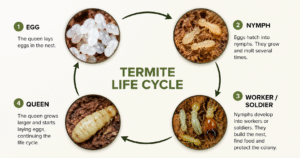
Termites can quietly destroy a home for months before you ever notice them. Understanding their life cycle is the fastest way to stop them early.
Termites may look small and harmless, but they are among the most destructive pests a homeowner can face. The real problem is that they often stay hidden for months while quietly damaging wood, flooring, and even the structure of a home.
That’s why understanding the termite life cycle stages is so important. When you know how termites grow and how a colony is structured, it becomes much easier to recognize early warning signs before costly damage happens.
In this guide, we’ll break everything down in a simple, easy-to-follow way. You’ll learn how termites develop from egg to adult roles, how colonies are organized, and why their system is so efficient at survival and expansion.
We’ll also explain:
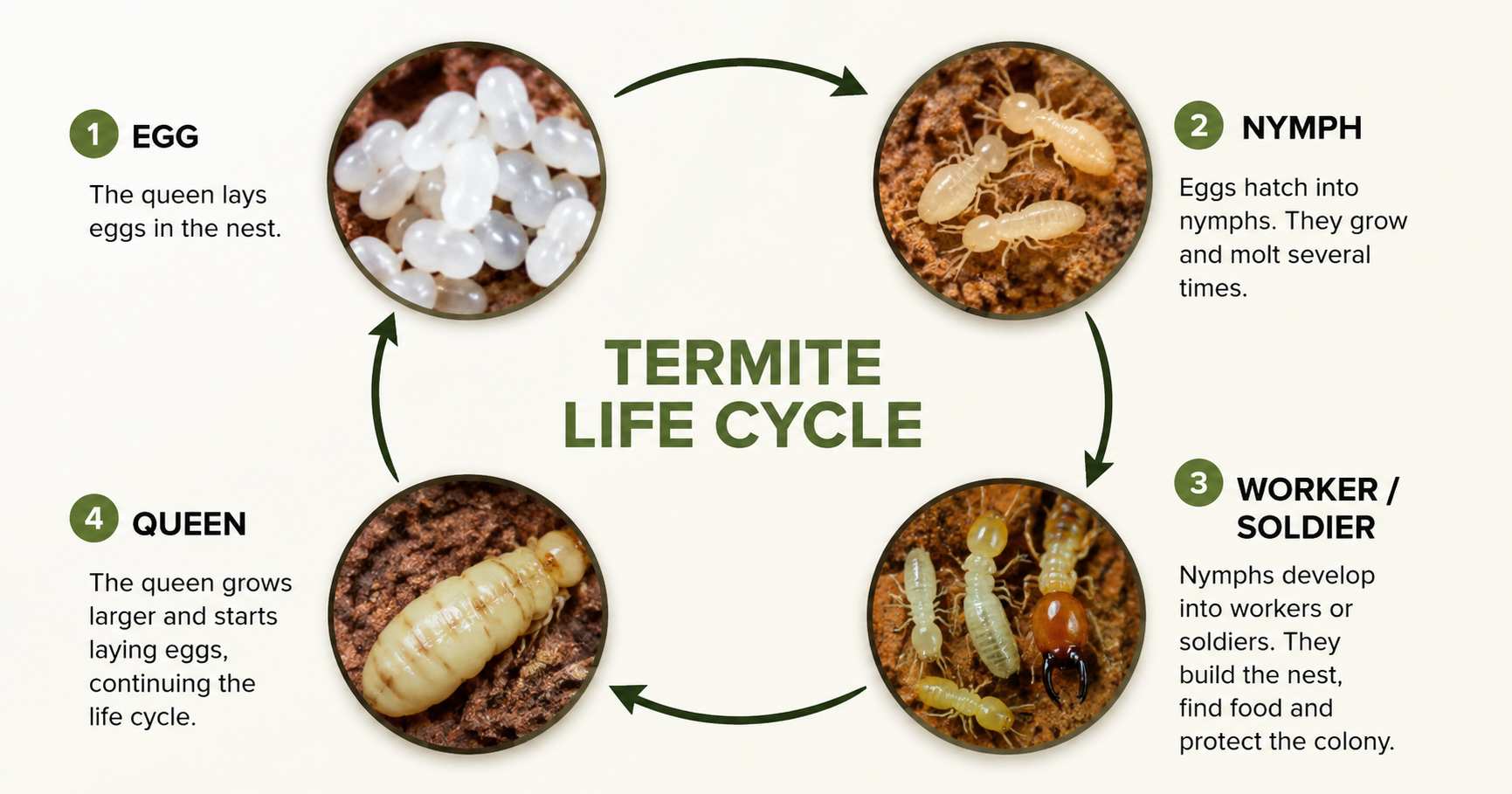
- termite life cycle diagram (what it looks like and how to understand it)
- termite egg nymph worker queen development and roles
- how termites grow step-by-step inside a colony
- termite colony structure explained in simple terms
- termite lifecycle timeline from start to maturity
By the end, you’ll have a clear understanding of how termite colonies work—and how to spot them earlier in your home.
Let’s get started.
What Is the Termite Life Cycle?
The termite life cycle is the series of stages a termite goes through from egg to adult. Unlike many insects, termites do not have a single “adult form” with one job. Instead, they develop into different types of termites based on the needs of the colony.
These include:
- Workers
- Soldiers
- Reproductive termites (queen and king)
Each role is essential. Without balance, the colony cannot survive.
Moisture plays a major role in termite activity, especially after storms or floods. If your home has recently been affected, you may also want to read our guide on termite control after flooding.
Why Understanding the Termite Life Cycle Matters
Understanding how termites grow helps you:
- Spot infestations earlier
- Understand how colonies expand
- Prevent long-term damage
- Identify weak points in the colony
Most importantly, it helps you take action before serious destruction happens.
Now let’s break down each stage in detail.
🟤 Stage 1: Egg Stage
The termite life cycle begins with the egg. This stage is the starting point of every termite in the colony.
What termite eggs look like
Termite eggs are very small. They are usually:
- White or translucent
- Oval-shaped
- Soft and fragile
The queen lays them deep inside the nest where conditions are stable and safe.
Behavior during the egg stage
At this stage, eggs do not move or feed. They depend entirely on the environment created by the colony. Worker termites take care of them by:
- Keeping them clean
- Protecting them from predators
- Moving them to safe areas if needed
Timeline of the egg stage
Eggs usually hatch within:
- 1 to 2 weeks under warm conditions
- Longer in cooler environments
Temperature and humidity play a major role in how fast they develop.
Environmental triggers
Egg development speeds up when:
- The environment is warm and humid
- Food sources (wood or plant material) are available nearby
- The colony is stable and well-established
In dry or cold conditions, development slows down significantly.
🟡 Stage 2: Nymph Stage
Once the egg hatches, the termite enters the nymph stage. This is where things start to become interesting.
What is a termite nymph?
A nymph is a young termite that looks like a smaller version of an adult. However, it is not yet fully developed.
Behavior of nymphs
Nymphs are very active inside the colony. During this stage, they:
- Feed on wood and organic material
- Shed their skin as they grow
- Move throughout the nest
- Begin developing into specific roles
This stage is important because it determines what type of termite they will become.
Timeline of the nymph stage
The nymph stage can last:
- Several weeks to a few months
- Sometimes longer depending on colony needs
There is no fixed outcome. The colony decides their future role.
Environmental triggers
Nymph development depends on:
- Food availability
- Colony size
- Temperature stability
- Humidity levels
When conditions are ideal, growth happens faster.
🟠 Stage 3: Worker, Soldier, and Reproductive Roles
Unlike many insects, termites do not follow a single adult path. Instead, they divide into specialized roles.
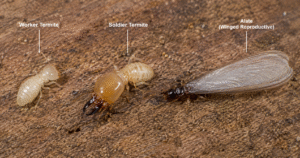
🧹 Worker termites
Workers are the most common type in a colony.
Behavior of workers
Workers are responsible for almost everything, including:
- Feeding the colony
- Building tunnels
- Caring for eggs and nymphs
- Searching for food sources
They are the real “engine” of the colony.
Why workers matter
Without workers, the colony cannot survive. They keep everything functioning.
Soldier termites
Soldiers have a very different role.
Behavior of soldiers
Soldiers do not feed themselves. Instead, they:
- Protect the colony from ants and predators
- Guard entry points
- Use strong jaws to defend the nest
They rely on workers for food.
Why soldiers matter
They are the security system of the colony. Without them, the colony becomes vulnerable.
👑 Reproductive termites (Queen and King)
This is the most important role in the colony.
The queen
The queen’s main job is reproduction. She:
- Lays thousands of eggs per day
- Controls colony growth
- Can live for many years
The king
The king stays with the queen and helps maintain reproduction throughout the colony’s life.
Behavior of reproductives
They remain deep inside the nest and are protected by workers and soldiers at all times.
Here is a simple breakdown:
| Stage | Duration | Key Activity |
|---|---|---|
| Egg | 1–2 weeks | Development inside safe nest |
| Nymph | Weeks to months | Growth and role development |
| Worker/Soldier | Ongoing | Colony support and defense |
| Queen | Years | Continuous egg production |
Termites do not follow a strict timeline like butterflies. Their development depends heavily on colony needs.
🌡️ Environmental Triggers That Affect Termite Growth
Termites are very sensitive to their environment. Several factors influence their life cycle:
1. Temperature
Warm environments speed up development. Cold slows it down.
2. Moisture
Termites need moisture to survive. Dry conditions can stop colony growth.
3. Food availability
Wood, cellulose, and plant material support faster colony expansion.
4. Colony size
Larger colonies develop more specialized roles faster.
5. Protection level
Safe nesting areas allow uninterrupted growth.
When all these factors are ideal, termite populations grow rapidly.
Why Termite Colonies Are So Successful
Termites are successful because of one key reason: specialization.
Instead of all termites doing the same job, each one has a role:
- Workers build and feed
- Soldiers defend
- Queen reproduces
This teamwork allows colonies to survive for decades if undisturbed.
⚠️ How the Life Cycle Helps You Understand Infestations
Knowing the termite life cycle helps you recognize:
- Early-stage infestations (eggs and nymphs hidden in wood)
- Active colonies (workers and tunnels)
- Mature colonies (large-scale damage signs)
Most damage happens quietly during the worker stage, when feeding activity increases.
If you notice any of these signs, the next step is learning how to check for termites in your home before the damage spreads.
❓ 10 Frequently Asked Questions (FAQs)
1. What is the first stage of a termite life cycle?
The first stage is the egg stage, where the queen lays eggs that develop inside the nest.
2. How long do termite eggs take to hatch?
Eggs usually hatch in 1 to 2 weeks, depending on temperature and humidity.
3. What is a termite nymph?
A nymph is a young termite that has hatched from the egg and will develop into a worker, soldier, or reproductive.
4. Do all termites become queens or kings?
No. Only a small number become reproductive termites. Most become workers or soldiers.
5. What do worker termites do?
Workers feed the colony, build tunnels, and take care of eggs and nymphs.
6. Why are soldier termites important?
Soldiers protect the colony from predators like ants and defend entry points.
7. How long does a termite queen live?
A queen can live for several years and lay thousands of eggs daily.
8. What environmental conditions help termites grow faster?
Warm temperatures, high moisture, and steady food supply support faster growth.
9. Can termites change their role later in life?
Yes. Nymphs can develop into different roles depending on colony needs.
10. Why is understanding the termite life cycle important?
It helps identify infestations early and understand how colonies expand and cause damage.
Conclusion
The termite life cycle is more complex than it appears at first glance. From tiny eggs to specialized workers, soldiers, and a powerful queen, every stage plays a role in keeping the colony alive.
What makes termites especially dangerous is how efficiently they grow and adapt. Environmental conditions like warmth, moisture, and food supply can accelerate their development and expansion.
By understanding each stage clearly, you gain a powerful advantage. You can recognize early signs, understand colony behavior, and take action before serious damage occurs.
Termites may be small, but their life system is highly organized. And now, you know exactly how it works.