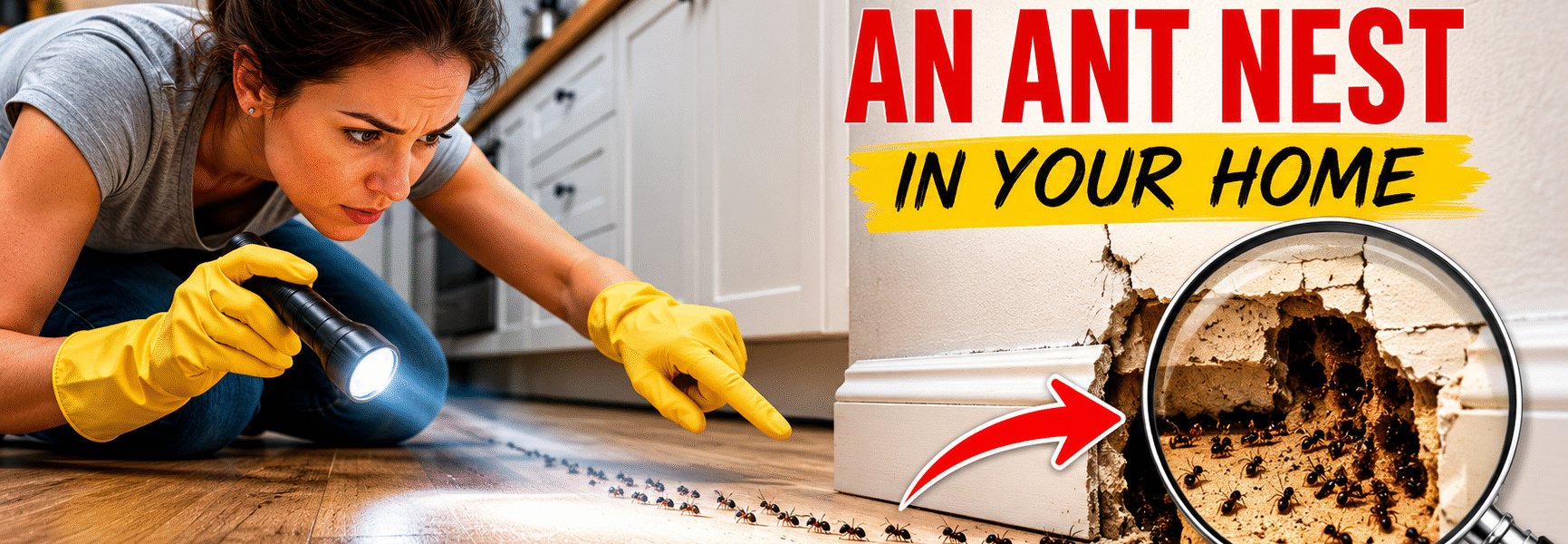
How to Find an Ant Nest in Your Home (or Locate Ant Colonies Inside Walls & Hidden Areas)

Ant infestations usually start small, but they grow quickly once a hidden colony settles inside your home. If you’re trying to find an ant nest in your home, the real challenge is that most colonies stay completely out of sight—inside walls, under floors, or even outside near the foundation.
Many homeowners search for answers like how to locate an ant colony in the home or wonder where are ants nesting inside my house when they keep seeing trails in kitchens or bathrooms. The key is not just killing visible ants, but tracing their movement back to the source.
In this guide, you’ll learn practical steps for ant nest removal after locating the colony, along with proven ways to track ants, identify hidden nesting areas, and stop them from returning.
How to Find an Ant Nest in Your Home (Step-by-Step Method)
If you’re seeing ants indoors, follow the ant trail back to its entry point. Most ant nests are hidden behind walls, under floors, inside cabinets, near plumbing pipes, or outside along the foundation. Watch where worker ants travel, inspect cracks and gaps, and use sweet bait to identify the colony’s location.
Affiliate Disclosure: This page contains affiliate links. If you buy through my links, I may earn a small commission at no extra cost to you.
As an Amazon Associate, I earn from qualifying purchases.
Quick Steps
✅ Follow visible ant trails
✅ Check kitchens and bathrooms
✅ Inspect wall cracks and outlets
✅ Look around windows and doors
✅ Search near the home’s foundation
✅ Use ant bait to track movement
Quick Comparison: Best Indoor Ant Control Products
Before searching for a nest, it helps to have effective ant control products ready. The following Amazon bestsellers and highly rated options are popular choices for indoor ant management.
| Product | Type | Best For | Child & Pet Friendly When Used As Directed | Rating |
|---|---|---|---|---|
| TERRO T300 Liquid Ant Baits | Liquid Bait | Sweet-eating ants | Yes | 4.7/5⭐⭐⭐⭐1/2 |
| TERRO T334 Multi-Surface Bait Stations | Bait Station | Indoor use | Yes | 4.7/5⭐⭐⭐⭐1/2 |
| Combat Max Ant Killing Bait Stations | Bait Station | Large infestations | Yes | 4.1/⭐⭐⭐⭐½ |
| Raid Ant Baits III | Bait Station | Fast colony control | Yes | 4.0⭐⭐⭐⭐½ |
| Ortho Home Defense Insect Killer | Barrier Spray | Indoor perimeter protection | Yes | 4.4⭐⭐⭐⭐½ |
| EcoRaider Ant & Crawling Insect Killer | Plant-Based Spray | Natural control | Yes | 4.0⭐⭐⭐⭐½ |
| Mighty Mint Insect & Pest Control Spray | Peppermint-Based Spray | Natural prevention | Yes | 4.2⭐⭐⭐⭐1/2 |
Why Finding the Ant Nest Matters
Many homeowners make the mistake of killing only the ants they can see. Unfortunately, this rarely solves the problem.
Worker ants are only a small part of the colony. The queen continues laying eggs inside the nest. As a result, more ants keep appearing.
Finding the nest allows you to:
- Eliminate the source of the infestation
- Prevent recurring ant problems
- Reduce food contamination risks
- Protect your home’s structure
- Save money on repeated treatments
Therefore, locating the nest should be your first goal.
Signs You Have An Ant Nest In Your Home
Before you start searching, look for these common warning signs.
1. Visible Ant Trails
One of the simplest signs to look for is a consistent trail of ants traveling back and forth between a food source and their nest.
You may notice trails:
- Along baseboards
- Around windows
- Near sinks
- Behind appliances
- Around pet food bowls
Follow these trails carefully.
2. Small Piles Of Dirt Or Debris
Some ant species push soil, insulation, or wood particles out of their nests.
Look for:
- Tiny dirt mounds
- Sawdust-like material
- Small piles near cracks
These often indicate nearby nesting activity.
3. Rustling Sounds Inside Walls
Large carpenter ant colonies sometimes create faint rustling sounds.
Although uncommon, you may hear activity inside wall voids during quiet hours.
4. Winged Ants Indoors
Flying ants are the colony’s reproductive ants, responsible for leaving the nest to mate and start new colonies elsewhere.
If you see them inside your home, a mature nest may be located nearby.
Where Are Ants Nesting Inside My House?
If you’re asking yourself where are ants nesting inside my house, the answer depends on the species and conditions in your home. Most indoor ants prefer hidden, warm, and moist environments that are close to food sources.
Common hidden nesting spots include wall voids, spaces under kitchen cabinets, and areas around plumbing lines. In many cases, homeowners only realize they need to locate an ant colony in the home after repeated trails keep appearing even after cleaning or spraying.
Understanding these nesting habits makes it much easier to track the colony instead of just reacting to visible ants.
How to Locate an Ant Colony in the Home
When you need to locate an ant colony in the home, the most effective approach is to observe behavior rather than guessing.
Start by avoiding sprays, since killing ants immediately can break the trail and make the nest harder to find. Instead, watch their movement patterns closely and look for repeated pathways.
Worker ants almost always travel between food sources and their nest. By following this path, you can often trace them back to hidden entry points such as cracks in walls, gaps near sinks, or openings around windows.
In some cases, the nest may not be inside your home at all. Instead, ants may be nesting outdoors and entering indoors to search for food, which still requires proper ant nest removal strategies to eliminate the source.
Use Sweet Bait To Track Ants
A small amount of honey or sugar water can help identify nest locations.
Place bait near active ant areas.
Then observe:
- Direction of travel
- Entry points
- Number of ants
Heavy traffic usually points toward a nearby nest.
Inspect The Kitchen
Kitchens are among the most common nesting areas.
Check:
- Under sinks
- Behind refrigerators
- Inside cabinets
- Near dishwashers
- Around plumbing pipes
Moisture attracts many ant species.
Examine Bathrooms
Bathrooms provide water and shelter.
Look around:
- Toilet bases
- Bathtubs
- Shower enclosures
- Pipe openings
- Vanity cabinets
Even small leaks can support colonies.
Check Wall Voids
Ants frequently nest inside walls.
Warning signs include:
- Ants emerging from outlets
- Activity around light switches
- Ants appearing through tiny cracks
If multiple ants enter the same wall area, a colony may be hidden inside.
Inspect Windows And Doors
Many infestations start near entry points.
Examine:
- Window frames
- Door thresholds
- Weather stripping
- Exterior cracks
These areas often provide direct access to nesting sites.
Search Attics And Crawl Spaces
Many homeowners overlook these areas.
Inspect for:
- Ant trails
- Moisture problems
- Wood damage
- Nesting debris
Some colonies establish themselves in undisturbed spaces.
Look Outside Near The Foundation
Sometimes the nest is outdoors, while workers enter the home for food.
Check:
- Foundation cracks
- Mulch beds
- Tree stumps
- Landscaping timbers
- Concrete gaps
Many household ant problems begin outside.
Common Places Ants Hide
Ant colonies can be surprisingly difficult to locate.
Popular nesting sites include:
- Behind drywall
- Under flooring
- Inside insulation
- Beneath concrete slabs
- Around plumbing lines
- Inside rotting wood
- Under kitchen cabinets
- Behind appliances
Therefore, patience is important during your search.
Ant Nest Removal: How to Eliminate the Source
When it comes to ant nest removal, targeting visible ants is never enough. The real goal is to eliminate the queen inside the colony so the infestation does not return.
Once you have located the nest or identified a likely entry point, the most effective approach is to use targeted treatments that workers carry back to the colony.
1. Use Ant Baits (Most Effective Method)
Ant baits are one of the most reliable ways to eliminate an entire colony.
Worker ants carry the bait back to the nest and share it with the queen and other ants. Over time, this destroys the colony from within.
Benefits of ant baits include:
- Colony-wide elimination
- Minimal disruption in the home
- Long-lasting results when used correctly
2. Apply Targeted Insecticides (When Needed)
If the nest is visible or accessible, targeted insecticide treatments can help speed up control.
Focus on areas such as:
- Wall voids
- Foundation cracks
- Exterior nesting sites
Always follow product label instructions carefully, especially in indoor environments.
3. Remove Food and Water Sources
Even after treatment, ants may return if conditions still attract them.
To prevent reinfestation:
- Store food in sealed containers
- Clean crumbs and spills immediately
- Remove pet food after feeding
- Fix leaking pipes or moisture issues
How To Prevent Ants From Returning
Prevention is always easier than dealing with another infestation.
Seal Entry Points
Use caulk around:
- Windows
- Doors
- Utility lines
- Foundation cracks
This blocks future access.
Fix Moisture Problems
Repair:
- Leaky faucets
- Pipe leaks
- Roof leaks
Ants need water to survive.
Store Food Properly
Keep food sealed and protected.
Don’t forget:
- Pet food
- Snacks
- Baking supplies
Even small crumbs attract scouts.
Clean Regularly
Vacuum frequently.
Wipe countertops daily.
Pay special attention to kitchens and dining areas.
Trim Vegetation
Branches touching your home act as ant highways.
Keep:
- Trees trimmed
- Shrubs away from walls
- Mulch several inches from the foundation
Detailed Product Reviews
1. TERRO T300 Liquid Ant Baits
Pros

- Extremely effective against sugar-feeding ants
- Easy to place
- Targets the entire colony
- Affordable
Cons
- Can initially attract more ants
- Not ideal for all ant species
Want fast colony elimination? TERRO T300 Liquid Ant Baits remain one of Amazon’s top-rated solutions for indoor ant infestations. Check today’s price and customer reviews on Amazon.
2. TERRO T334 Multi-Surface Bait Stations
Pros

- Flexible placement options
- Strong colony control
- Easy setup
Cons
- Requires patience
- May need multiple stations
If you’re dealing with ants in multiple rooms, TERRO T334 stations offer excellent coverage. See current Amazon pricing today.
3. Combat Max Ant Killing Bait Stations
Pros

- Long-lasting
- Works on large colonies
- Convenient design
Cons
- Slower than sprays
- Requires proper placement
Looking for dependable indoor ant control? Check out Combat Max and see why thousands of homeowners trust it.
4. Raid Ant Baits III
Pros

- Easy to use
- Effective colony elimination
- Widely available
Cons
- May take several days
- Requires ongoing monitoring
Need a simple bait station solution? Explore Raid Ant Baits III on Amazon and compare customer experiences.
5. Ortho Home Defense Insect Killer
Pros
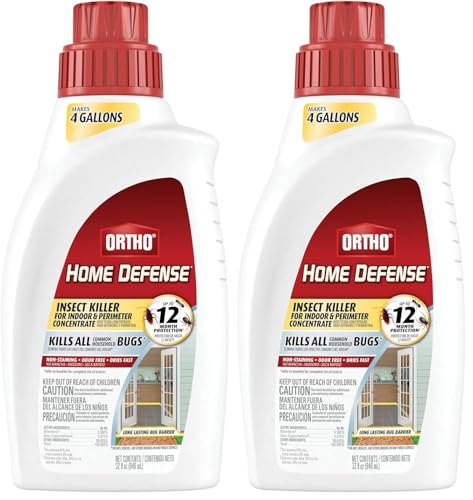
- Creates a protective barrier
- Long residual action
- Easy application wand
Cons
- Doesn’t directly target queens
- Best combined with baits
Protect your home’s perimeter with Ortho Home Defense. Check Amazon for current deals and ratings.
6. EcoRaider Ant & Crawling Insect Killer
Pros
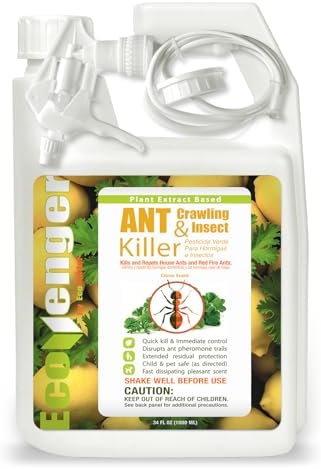
- Plant-based formula
- Pleasant odor
- Safe when used properly
Cons
- Requires repeat applications
- Less residual protection
Prefer a more natural approach? EcoRaider is a popular Amazon choice worth considering.
7. Mighty Mint Insect & Pest Control Spray
Pros

- Peppermint-based
- Fresh scent
- Useful for prevention
Cons
- May not eliminate large colonies alone
- Frequent application needed
For homeowners seeking a natural deterrent, Mighty Mint offers an easy preventative solution. View it on Amazon today.
Related Ant Guides
- Why Dead Ants Attract More Ants
How To Get Rid Of Ants Naturally
Signs Of A Carpenter Ant Infestation
Natural Ant Repellents That Actually Work - Best Indoor Ant Baits For Homeowners
Frequently Asked Questions
1. How do I know where ants are coming from?
Follow visible ant trails. They often lead directly to nest entrances or access points.
2. Can ants nest inside walls?
Yes. Many species build colonies inside wall voids where they are protected and difficult to detect.
3. What attracts ants into homes?
Food crumbs, sugary spills, moisture, and pet food are common attractants.
4. Should I kill ants when I see them?
Killing visible ants helps temporarily. However, eliminating the colony is the real solution.
5. How long does it take bait stations to work?
Most bait stations begin reducing activity within a few days, but complete colony elimination may take several weeks.
6. Are ant nests dangerous?
Most are nuisance pests. However, carpenter ants can damage wood over time.
7. Why do ants keep returning?
The nest may still be active, or food and water sources remain available.
8. Can I find an ant nest without seeing ants?
Sometimes. Look for dirt piles, wood debris, winged ants, and activity around cracks.
9. Are natural ant repellents effective?
Natural repellents can help deter ants but often work best alongside baiting strategies.
10. When should I call a professional?
Call a pest control professional if colonies are inside walls, difficult to access, or repeatedly return despite treatment.
Conclusion
Learning how to find an ant nest in your home is the first step toward lasting ant control. Instead of focusing only on the ants you see, track their trails, inspect common nesting areas, and identify the colony’s location. Once found, use effective bait products to target the queen and eliminate the source of the infestation.
At the same time, prevent future problems by sealing entry points, fixing moisture issues, storing food properly, and maintaining a clean home. By combining smart detection methods with proven prevention strategies, you can keep your home ant-free for the long term.
For the best results, consider using one of the highly rated Amazon ant control products listed above and start tackling the problem before the colony grows larger.