How to Get Rid of Phorid Flies (Complete Control Guide)
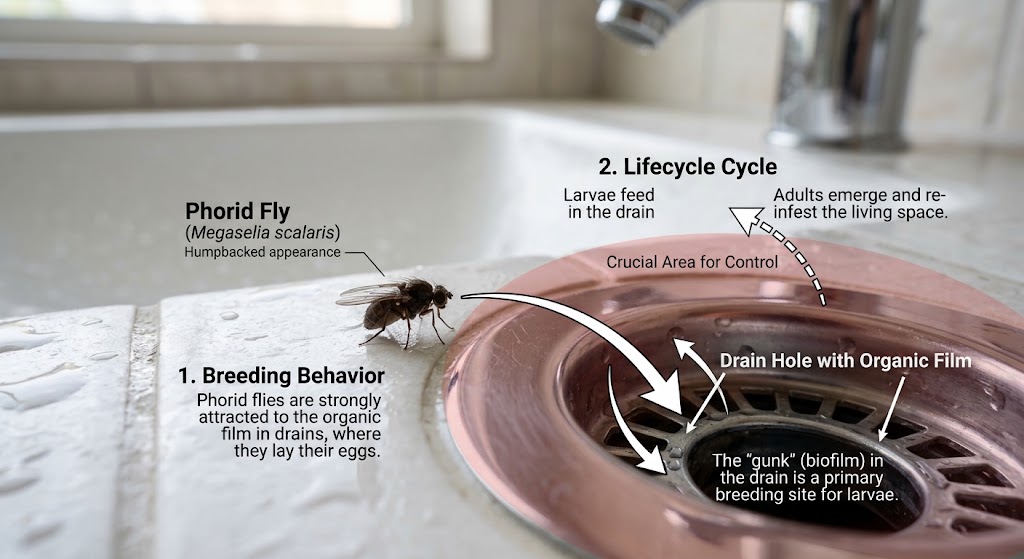
Tiny dark flies running across your kitchen counter, bathroom wall, or floor can be more than just annoying. If they have a slightly humpbacked body and seem to run across surfaces instead of immediately flying away, you may be dealing with phorid flies, also known as scuttle flies.
The important thing to know is that killing the adult flies is only part of the solution. Phorid flies can continue appearing when a hidden source of moisture and decaying organic material remains somewhere in or around the home.
The most effective approach is straightforward:
Find the breeding source → remove the organic buildup → eliminate moisture → control the remaining adults → prevent the problem from returning.
This complete guide explains how to identify phorid flies, find where they are breeding, clean the source, deal with persistent infestations, and keep them under control.
Quick Answer: How Do You Get Rid of Phorid Flies?
To get rid of phorid flies, first locate the damp, decaying organic material where they are breeding. Check drains, garbage, plumbing leaks, appliances, houseplants, floor drains, and other moist areas.
Once you find the source:
- Remove rotting food and organic debris.
- Scrub organic buildup from accessible drains.
- Use an appropriate enzyme, bacterial, or microbial drain treatment according to its label.
- Repair leaking plumbing and eliminate persistent moisture.
- Use sticky traps or suitable light traps to reduce adult flies.
- Investigate hidden plumbing or sewer problems if flies continue returning.
The key is to eliminate the breeding site rather than continually killing the adults.
Affiliate Disclosure
If you purchase through links on this page, BugOffControl.com may earn a commission at no additional cost to you. This helps support our pest-control guides and product research.
As an Amazon Associate I earn from qualifying purchases.
What Are Phorid Flies?
Phorid flies are very small flies belonging to the family Phoridae. They are commonly called scuttle flies because of their unusual habit of running rapidly across surfaces when disturbed.
They can be difficult to notice at first because of their small size, but their behavior and body shape can help distinguish them from other small flies commonly found indoors.
Phorid flies are generally:
- Very small
- Brown, black, or dark-colored
- Slightly humpbacked
- Relatively sturdy-looking for their size
- Fast runners when disturbed
They are often associated with moist environments containing decaying organic material.
That means finding the source is usually more important than simply treating the flies you can see.
How to Identify a Phorid Fly
Not every tiny fly in your home is a phorid fly.
Before beginning treatment, take a moment to compare what you’re seeing.
The Humpbacked Appearance
One of the easiest clues is the fly’s body shape.
Viewed closely, a phorid fly can have a noticeable hunched or humpbacked appearance, particularly around the thorax.
The “Run, Don’t Fly” Behavior
This is one of the characteristics that gives scuttle flies their common name. When disturbed, phorid flies may quickly run across countertops, walls, floors, or other surfaces rather than immediately taking flight. That behavior can help separate them from some other small indoor flies.
Small and Dark
Phorid flies are tiny and commonly appear dark brown to black. Because they are so small, they can easily be mistaken for other flies.
Phorid Fly vs. Drain Fly vs. Fruit Fly
If you’re treating the wrong pest, you can spend a lot of time cleaning and spraying without solving the actual problem.
Here’s a quick comparison:
Phorid Fly vs. Other Common Small Flies
Not every tiny fly around your home is a phorid fly. A quick comparison can help you narrow down what you’re seeing before choosing a control method.
| Fly | What It Looks Like | Typical Behavior | Where You May Find It |
|---|---|---|---|
| Phorid Fly | Tiny, dark, and slightly humpbacked | Often runs rapidly across surfaces when disturbed | Damp organic matter, drains, plumbing areas, and decaying material |
| Drain Fly | Small with fuzzy, moth-like wings | Usually makes short, weak flights | Slime and organic buildup inside drains |
| Fruit Fly | Tiny, smooth-bodied fly; often tan or brown | Frequently flies or hovers around food | Fermenting fruit, beverages, food scraps, and kitchen waste |
| Fungus Gnat | Small, slender, and mosquito-like | Often flies around plants and potting soil | Damp potting soil, decaying roots, and organic plant material |
Quick identification tip: If the tiny flies are dark, slightly humpbacked, and repeatedly scuttle across countertops, walls, or floors instead of immediately flying away, phorid flies are a strong possibility.
Identification doesn’t have to be perfect before you begin investigating the source, but recognizing the general appearance and behavior can point you toward the right places to inspect.
Where Do Phorid Flies Come From?
Phorid flies need suitable conditions to reproduce. The biggest clues are moisture and organic material. Potential breeding locations include:
- Kitchen drains
- Bathroom drains
- Shower drains
- Floor drains
- Utility drains
- Garbage cans
- Recycling containers
- Rotting produce
- Compost
- Damp soil
- Overwatered plants
- Leaking plumbing
- Wet areas underneath appliances
- Organic buildup around plumbing
- Hidden moisture beneath floors
- Damaged sewer or drain lines
The source isn’t always obvious. A kitchen may look spotless while a slow leak underneath a cabinet or buildup inside a drain is providing exactly what these flies need.
How to Find the Phorid Fly Breeding Source
Finding the source is the most important step. Instead of treating every room at once, start where you see the greatest number of flies.
1. Inspect Nearby Drains
Check every drain in the affected area. Don’t limit your inspection to the kitchen sink. Look at:
- Bathroom sinks
- Showers
- Bathtubs
- Kitchen sinks
- Utility sinks
- Laundry drains
- Floor drains
- Rarely used drains
Use a flashlight to look for slime, hair, food residue, standing water, or other organic material. Remember that the visible drain opening may appear clean even when buildup exists farther inside the pipe.
2. Use an Overnight Drain Test
If you suspect a drain but aren’t sure which one is responsible, test drains individually.
A simple approach is to cover a dry drain opening with clear tape or another suitable covering method overnight and check it the next morning for fly activity. Testing one drain at a time can help narrow down the source.
3. Check Beneath Sinks
Open the cabinets beneath kitchen and bathroom sinks. Look for:
- Slow leaks
- Damp cabinet floors
- Water stains
- Soft or damaged wood
- Wet insulation
- Leaking P-traps
- Moisture around pipe connections
A tiny leak that goes unnoticed for months can create a persistent damp environment.
4. Inspect Around Appliances
Don’t forget the hidden spaces around appliances. Check beneath and behind:
- Dishwashers
- Refrigerators
- Washing machines
- Ice machines
- Garbage disposals
- Air-conditioning equipment
Food residue, condensation, drain problems, and leaks can all create conditions worth investigating.
5. Check Garbage and Recycling
Inspect garbage containers and recycling bins carefully. Look for:
- Rotten vegetables
- Fruit scraps
- Food residue
- Wet cardboard
- Sticky liquids
- Leaking garbage bags
Remove the source and wash contaminated containers thoroughly.
6. Inspect Houseplants
If the flies are concentrated around indoor plants, check the growing medium. Look for excessively wet soil, poor drainage, dead plant material, and decaying roots.
However, don’t automatically assume every small fly around a plant is a phorid fly. Fungus gnats are also common around damp potting soil.
How to Get Rid of Phorid Flies Step by Step
Once you’ve found a likely source, it’s time to tackle it systematically.
Step 1: Remove the Breeding Material
Start by physically removing whatever organic material is supporting the infestation.
Dispose of:
- Rotten produce
- Food waste
- Decaying plant material
- Contaminated garbage
- Organic debris
- Other obvious sources
Cleaning the surrounding area is just as important as removing the material itself.
Step 2: Clean the Infested Drain
If a drain is involved, mechanical cleaning should be part of the process. Use an appropriate stiff drain brush to scrub accessible portions of the drain and loosen accumulated organic buildup. The objective is to physically remove the film and debris rather than simply rinse over it.
Step 3: Use an Appropriate Microbial or Enzyme Drain Treatment
After mechanical cleaning, an appropriate enzyme, bacterial, or microbial drain product can be used according to the manufacturer’s instructions. Some professional drain gels are designed to cling to the inside of pipes and work gradually on organic buildup. Follow the product label for:
- Amount
- Application frequency
- Contact time
- Safety precautions
- Repeat applications
Don’t assume one application will remove a long-established buildup.
Step 4: Eliminate the Moisture
Now address the reason the breeding site developed in the first place.
Repair:
- Leaking pipes
- Dripping faucets
- Faulty drain connections
- Appliance leaks
- Condensation problems
- Other plumbing problems
Allow wet areas to dry thoroughly. Improve ventilation in persistently damp rooms and use appropriate fans or dehumidification when necessary.
Helpful Products for Phorid Fly Control
The right product depends on where the phorid flies are coming from. If a drain is the suspected breeding site, focus first on removing the organic buildup. Traps and sprays can then help reduce the adult flies that remain.
| Product Type | What It Does | Best Use |
|---|---|---|
| Microbial or Enzyme Drain Gel | Helps break down organic buildup inside drains | Best for suspected drain breeding sites |
| Drain Cleaning Brush | Physically scrubs away slime and debris | Best for cleaning accessible drains |
| Sticky Fly Traps | Captures adult flies that land on the adhesive surface | Best for kitchens, bathrooms, and utility areas |
| Indoor Light Trap | Attracts and captures flying adult flies | Best for persistent adult activity indoors |
| Labeled Contact Fly Spray | Provides quick knockdown of exposed adult flies | Best for occasional adult control |
Important: Products that catch or kill adult flies can provide useful short-term control, but they won’t eliminate a hidden breeding site. For a lasting solution, find the source, remove the organic buildup, and correct the moisture problem first.
A properly labeled indoor insecticide can provide quick knockdown of exposed adult flies when used according to the label. However, spraying should not replace source elimination. If the breeding site remains, new adults can continue appearing.
Why Killing the Adult Flies Isn’t Enough
This is one of the biggest mistakes people make with phorid flies. You may kill dozens of adults and still see new flies the next day. That’s because the adults you see are only the visible part of the infestation. If larvae are developing in damp organic material somewhere nearby, additional adults can continue emerging. Think of it like mowing weeds without removing the underlying problem. You may temporarily improve what you see, but the source remains. That’s why source control should come before heavy reliance on sprays.
What About Bleach and Boiling Water?
Bleach and very hot water are often suggested as quick household solutions for fly problems. The problem is that simply flushing or disinfecting a drain may not physically remove the organic material where fly larvae are developing. For a persistent infestation, mechanical cleaning and appropriate drain treatment are more useful parts of a source-control strategy.
Most importantly, never mix bleach with other drain cleaners or household chemicals. Dangerous chemical reactions and fumes can occur. Always follow product labels.
What If the Flies Keep Coming Back?
Persistent phorid flies deserve closer attention. If you have repeatedly cleaned the obvious drains, removed food waste, corrected visible leaks, and still have substantial fly activity, start thinking beyond the sink. A hidden source could include:
- A leaking drain pipe
- Damaged plumbing
- A concealed floor drain
- Moisture underneath flooring
- Damp material beneath a structure
- A sewer or drain-line problem
- Organic material in an inaccessible location
This is particularly important when flies appear in rooms that don’t have an obvious food or drain source. In these situations, a pest professional or qualified plumber may need to investigate the structure or plumbing system.
A Persistent Infestation Can Be a Plumbing Clue
Phorid flies are sometimes associated with difficult-to-find plumbing and sewage-related sources. That doesn’t mean every phorid fly infestation indicates a broken sewer pipe. But if the infestation is persistent and no ordinary breeding site can be found, don’t keep spraying the adults indefinitely. Investigating the underlying moisture or plumbing problem may be the more productive next step.
How to Keep Phorid Flies From Coming Back
Once you’ve eliminated the source, prevention becomes much easier.
Keep Drains Free of Heavy Organic Buildup
Regularly clean drains and prevent food debris, hair, grease, and other organic material from accumulating. Where appropriate, use a maintenance drain product according to its label.
Fix Small Leaks Quickly
Don’t wait for a major plumbing failure.
Even a slow leak can keep an enclosed area damp for a long time.
Keep Garbage Containers Clean
Empty garbage regularly and clean the inside of the container when food residue or liquid accumulates.
Keep Wet Areas Dry
Don’t allow wet mop heads, standing water, or damp cleaning materials to sit for long periods.
Check areas around appliances for condensation and leaks.
Maintain Houseplants Properly
Avoid keeping plants constantly saturated.
Make sure containers drain properly and remove dead plant material before it begins decomposing.
Check Rarely Used Drains
Infrequently used drains deserve occasional attention because stagnant conditions and organic buildup can develop when water isn’t regularly flowing through them.
A Simple 5-Step Phorid Fly Control Plan
If you want the entire process simplified, follow this order:
1. Identify
Confirm that the flies have the small, dark, humpbacked appearance and characteristic scuttling behavior associated with phorid flies.
2. Investigate
Check drains, garbage, plumbing, appliances, plants, and damp hidden areas.
3. Eliminate
Remove decaying organic material and physically clean affected drains.
4. Dry
Repair leaks and eliminate persistent moisture.
5. Monitor
Use traps to reduce remaining adults and continue checking the area until fly activity disappears.
Don’t skip Step 2.
Finding the source is often the difference between temporary relief and lasting control.
Phorid Fly Control Checklist
Use this checklist when inspecting your home:
- Check kitchen drains
- Check bathroom drains
- Check floor and utility drains
- Inspect underneath sinks
- Look for plumbing leaks
- Check behind appliances
- Inspect garbage and recycling
- Remove rotting produce
- Check damp houseplants
- Inspect hidden moisture
- Scrub organic buildup from affected drains
- Apply an appropriate drain treatment according to its label
- Repair leaks
- Dry damp areas
- Use traps for remaining adults
- Investigate persistent infestations
Frequently Asked Questions About Phorid Flies
1. What is the main cause of phorid flies in a house?
Phorid flies are associated with moist environments containing decaying organic material. Drains, plumbing leaks, garbage, damp soil, and concealed moisture are among the areas worth investigating.
2. How can I tell if I have phorid flies?
Look for tiny dark flies with a somewhat humpbacked appearance. When disturbed, they often run rapidly across surfaces rather than immediately flying away.
3. Do phorid flies come from drains?
They can. Drains containing organic buildup and moisture can provide suitable breeding conditions, so drains should be among the first places you inspect.
4. Can phorid flies come from a sewer pipe?
A persistent infestation can sometimes be associated with hidden plumbing or sewage-related sources. If obvious breeding sites have been eliminated but the flies continue returning, professional plumbing or pest inspection may be appropriate.
5. Why do phorid flies keep coming back after I spray them?
Spraying adult flies does not necessarily eliminate the breeding site. If larvae are developing in damp organic material, new adults can continue emerging.
6. Will cleaning the drain get rid of phorid flies?
If that drain is the actual breeding source, thorough cleaning can be an important part of eliminating the infestation. However, other breeding sites should also be investigated if flies continue appearing.
7. Are phorid flies the same as drain flies?
No. Both can be associated with drains, but they are different types of flies. Drain flies typically have fuzzy, moth-like wings, while phorid flies are small, dark, and characteristically humpbacked.
8. Can phorid flies breed in garbage?
Yes, damp garbage and decaying organic material can provide suitable conditions. Remove the waste and thoroughly clean contaminated garbage containers.
9. Can phorid flies come from houseplants?
Damp, decaying organic material around plants can potentially support phorid flies, although fungus gnats are another common small fly associated with wet potting soil. Identification is important before choosing a treatment.
10. How long does it take to get rid of phorid flies?
It depends on the size of the infestation and, most importantly, whether the breeding source has been completely eliminated. You may continue seeing adults for a while after correcting the source.
11. Should I use insecticide for phorid flies?
An appropriately labeled insecticide can help provide quick control of exposed adults, but it should generally be considered a supplemental measure. Eliminating the breeding source is the foundation of lasting control.
12. When should I call a pest control professional?
Consider professional help if the infestation is persistent, unusually heavy, or appears to originate from an inaccessible location. A plumber may also be appropriate when a hidden drain, sewer, or plumbing problem is suspected.
Final Thoughts: Find the Source and Break the Cycle
Phorid flies can be frustrating because the adults are small, fast, and surprisingly persistent. But repeatedly killing the flies you see isn’t the whole solution. The better strategy is to follow the flies back to their breeding source.
Start with drains and other obvious damp areas. Then inspect under sinks, around appliances, garbage containers, houseplants, plumbing connections, and hidden moisture. Once you locate the source, remove the decaying material, clean affected drains, correct leaks, and use an appropriate microbial or enzyme treatment when needed.
Traps can help reduce the remaining adults while the problem is being corrected. And if the flies continue returning after the obvious sources have been eliminated, don’t simply keep spraying. Persistent activity may mean there is a hidden moisture or plumbing source that needs further investigation.
Find it. Clean it. Dry it. Monitor it.
That’s the practical path to getting phorid flies under control and keeping them from becoming a recurring household problem.