Best Squirrel Trap for Backyard: 5 Humane Live Traps to Consider
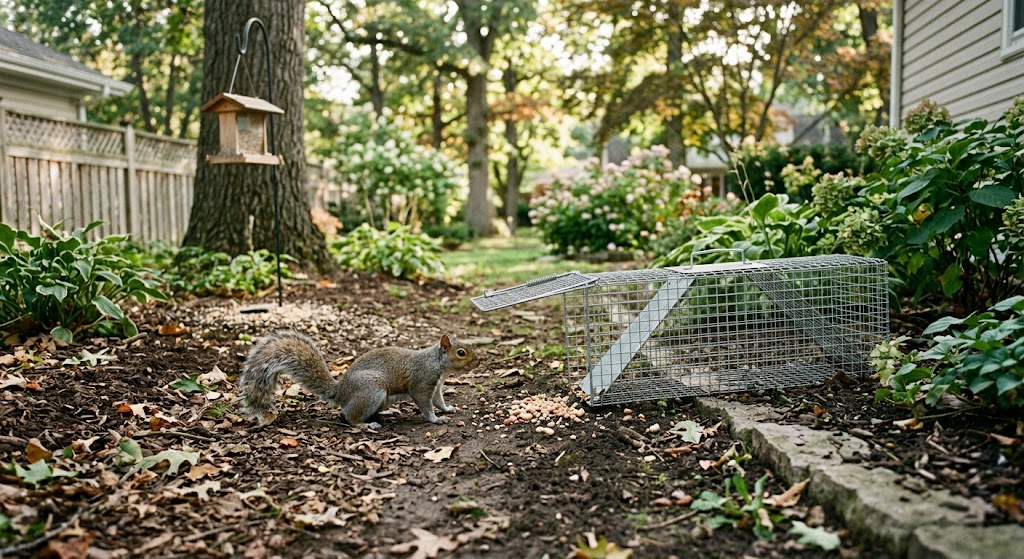
Squirrels can be fun to watch when they’re chasing each other through the trees, but they can quickly become a headache when they start digging up flower beds, raiding bird feeders, chewing on outdoor items, or making themselves too comfortable around your home.
If squirrels keep returning to the same part of your backyard, a live-capture trap may be worth considering. Unlike repellents, which try to make an area less appealing, a live trap is designed to capture the animal so you can deal with the problem directly.
The tricky part is choosing a trap that is large enough for the animal, sturdy enough for repeated outdoor use, and easy enough to set and handle without becoming a hassle.
That’s why we compared five live-animal traps that can be considered for squirrel-control situations: Human Live Squirrel Cage Trap, Rugged Ranch Squirrelinator, Havahart Large 1-Door Live Animal Trap, SZHLUX 32″ Live Animal Cage Trap, and Havahart 1-Door Model 1083.
Each trap has a slightly different design and use case. Some are more specifically suited to squirrels, while others are larger multi-animal traps that may make more sense if your backyard attracts different types of wildlife.
Important: We have not personally tested these traps. Our recommendations are based on the product type, listed design characteristics, intended uses, size, trap format, and the kinds of backyard wildlife problems each trap may be suited to. Trap performance can vary depending on placement, bait, animal behavior, and local conditions. Always follow the manufacturer’s instructions and check your local wildlife regulations before trapping or relocating squirrels.
Amazon Associate Disclosure: As an Amazon Associate, BugOffControl.com may earn from qualifying purchases made through links on this page at no extra cost to you.
Before You Trap a Squirrel: Important Safety, Legal & Placement Tips
Before setting a live squirrel trap in your backyard, there are a few important things to understand. Squirrels are wild animals, not pets, and trapping one comes with responsibilities for both the animal and the person handling the trap.
A live trap may seem simple to use, but an improperly placed or unattended trap can put a squirrel, your pets, children, or even you at risk. The rules surrounding wildlife trapping and relocation can also vary from one area to another.
Check Your Local Wildlife Laws First
Don’t set a live squirrel trap until you’ve checked the wildlife laws in your district, state, province, territory, or country.
Regulations can determine whether you are allowed to trap squirrels on your property, what types of traps are permitted, how often traps must be checked, and what you’re legally allowed to do with an animal after it has been captured.
Some areas may restrict or prohibit relocating wildlife, while others may have specific requirements for releasing or handling trapped animals.
Before purchasing or setting a trap, contact your local wildlife agency, animal-control department, conservation authority, or other appropriate government wildlife office and ask about the current rules in your area.
This isn’t just about protecting yourself from potential fines or other problems. Wildlife regulations are also designed to help protect native animals and prevent unnecessary suffering or improper relocation.
Protect Yourself, Your Family, and Your Pets
A frightened squirrel may behave very differently from the squirrels you normally see running around the yard.
Never assume a trapped squirrel will remain calm simply because it is small.
Keep live traps:
- Away from children and pets
- Out of areas where people regularly walk
- Away from dogs or cats that may try to investigate
- On stable, level ground
- Protected from unnecessary exposure to extreme weather
- In a location where the trap can be monitored safely
Never attempt to pick up a trapped squirrel with your bare hands.
If the animal appears injured, unusually aggressive, sick, or otherwise abnormal, don’t attempt to handle it yourself. Contact the appropriate wildlife or animal-control authority for guidance.
Where Should You Place a Squirrel Trap?
Trap placement can make a big difference.
Rather than putting the trap in the middle of your backyard, first watch where the squirrels are actually spending their time.
Good Areas to Consider
A live squirrel trap may be positioned near:
Bird feeders:
If squirrels repeatedly climb onto your feeders or feed beneath them, the area may be a natural location to consider.
Garden beds:
If squirrels are regularly digging in a particular flower bed or vegetable garden, placing the trap near their established activity area may make more sense than placing it elsewhere.
Squirrel travel routes:
Watch for paths squirrels regularly use between trees, fences, gardens, sheds, and other parts of the property.
Areas with visible squirrel activity:
Look for places where you regularly notice digging, feeding, climbing, or other squirrel activity.
Near—but not inside—protected areas:
The trap should be positioned where the squirrel can safely approach it without creating additional hazards.
Avoid These Locations
Don’t place a trap:
- In areas accessible to young children
- Where pets can reach it
- Directly beside busy walkways
- In locations exposed to severe weather when the animal cannot be adequately protected
- Where the trap could tip over
- Near roads or other dangerous areas
- In a location where you cannot safely monitor it
Think About the Squirrel’s Natural Behavior
Don’t rely entirely on guesswork when choosing a location.
Spend some time observing the backyard first.
Ask yourself:
Where does the squirrel enter the yard?
Where does it feed?
Which garden bed does it keep digging?
Which tree or fence does it use as a travel route?
Where does it spend the most time?
These observations can help you choose a more logical trap location.
A trap sitting in a quiet corner of the yard may not accomplish much if the squirrel spends most of its time on the opposite side of the property.
Don’t Leave a Live Trap Unchecked
A live trap is not something you should set and forget.
A captured squirrel can become stressed, frightened, overheated, dehydrated, or vulnerable to other dangers if the trap is left unattended.
Check the trap according to the manufacturer’s instructions and your local wildlife regulations.
If your local regulations require traps to be inspected at specific intervals, follow those requirements exactly.
Before setting the trap, make sure you already know what you are legally required to do if an animal is captured.
What Should You Do If a Squirrel Is Caught?
Don’t immediately open the trap or attempt to move it without knowing what is permitted in your area.
First, keep people and pets away from the trap and avoid unnecessary handling.
Then follow the instructions provided by the trap manufacturer and the requirements of your local wildlife authority.
Do not assume that you can simply drive the squirrel somewhere else and release it.
Wildlife relocation rules vary, and moving squirrels to another location may be restricted or prohibited in some areas.
If you’re unsure what to do, contact your local wildlife agency or a qualified wildlife-control professional before taking further action.
What If You Accidentally Catch Another Animal?
This is another reason to monitor your trap carefully.
A general-purpose live trap may attract more than squirrels. Depending on where you live and where the trap is placed, you could potentially encounter other wildlife or even a neighbor’s pet.
If you capture an animal you weren’t targeting, don’t assume the same rules that apply to squirrels automatically apply to that animal.
Keep your distance and contact the appropriate local authority or wildlife professional for guidance.
A Trap Shouldn’t Be the Only Part of Your Squirrel-Control Plan
Even if you successfully remove one squirrel, another may eventually discover the same food or shelter.
That’s why it’s smart to address whatever is attracting squirrels in the first place.
Consider:
- Securing bird feeders
- Cleaning up spilled bird seed
- Removing fallen fruit
- Protecting gardens with suitable barriers
- Securing garbage and food sources
- Blocking appropriate entry points into buildings once you’re certain no animals are inside
- Removing easy sources of shelter where practical
Think of it as:
Observe → Check local laws → Choose the right trap → Place it safely → Monitor it → Handle the captured animal responsibly → Remove the attraction
This approach is much safer and more responsible than simply setting a trap and hoping for the best.
One More Important Warning
If you suspect squirrels are living inside your attic, roof, chimney, walls, or another enclosed part of your home, don’t immediately seal the opening or trap the animal inside.
There could be young squirrels inside, and blocking an active entry point can create a much bigger problem.
In these situations, professional wildlife assistance may be the safest option.
The Bottom Line
A live squirrel trap can be a useful tool, but the goal should be responsible wildlife management—not simply getting rid of an animal as quickly as possible.
Before you trap, check the laws in your area, choose a safe location, keep children and pets away, monitor the trap properly, and know what you’re legally allowed to do if a squirrel is captured.
The best trap is only part of the solution. Using it safely, legally, and humanely is just as important as choosing the right product.
Our Top Squirrel Trap Picks
Best Overall: Rugged Ranch Squirrelinator
Best Dedicated Squirrel Trap: Human Live Squirrel Cage Trap
Best for Larger Wildlife: Havahart Large 1-Door Live Animal Trap
Best Large Cage-Style Option: SZHLUX 32″ Live Animal Cage Trap
Best Havahart Alternative: Havahart 1-Door Model 1083
Best Overall Squirrel Trap — Rugged Ranch Squirrelinator 4.2  ☆
☆
Check Current Price & Reviews on Amazon — Rugged Ranch Squirrelinator

If squirrels are repeatedly causing problems around your backyard, the Rugged Ranch Squirrelinator is one of the first traps worth looking at.
Its biggest advantage is that it is designed with squirrel control in mind rather than being a general-purpose cage intended primarily for much larger animals.
That makes it an interesting choice for homeowners who want a trap specifically suited to dealing with persistent squirrel activity.
A dedicated squirrel trap can also be easier to match to the size and behavior of the animal you’re trying to capture. As with any live trap, though, placement and bait selection can make a big difference.
Why Consider the Rugged Ranch Squirrelinator?
The main reason is its squirrel-focused design.
If squirrels are repeatedly visiting a bird feeder, garden, patio, shed area, or another part of your backyard, a purpose-built squirrel trap may be more practical than using a very large cage trap.
It can also be a good option for homeowners who expect to deal primarily with squirrels rather than a wide range of nuisance wildlife.
Pros
- Designed specifically around squirrel trapping
- More targeted than many general-purpose animal traps
- Suitable for backyard squirrel-control situations
- Live-capture approach
- Can be useful when squirrels repeatedly return to the same area
Cons
- Primarily intended for squirrel-related problems
- Placement can strongly affect results
- Trapped animals require proper handling
- May not be the right size for larger wildlife
- Local trapping and relocation rules should be checked before use
Best For
Homeowners looking for a squirrel-focused live trap for recurring backyard activity.
Check the current price and availability on Amazon
2. Humane Live Squirrel Cage Trap Review 4.3 ☆
Check Current Price & Reviews on Amazon- Best Humane Live Squirrel Cage Trap

If squirrels are getting into your garden, bird feeders, shed, or other outdoor spaces, a humane live squirrel cage trap can provide a practical way to capture them without using lethal methods.
The main advantage of this type of trap is its straightforward design. A squirrel enters the cage to reach the bait, activates the trigger mechanism, and the door closes behind it. This allows you to address a squirrel problem while avoiding poisons or kill traps.
Why Consider a Humane Live Squirrel Cage Trap?
A live cage trap can be a useful choice when you want a targeted solution for squirrels that repeatedly visit the same area.
Its cage-style construction allows you to monitor the captured animal and deal with it responsibly. For backyard use, placement is especially important. Positioning the trap along a squirrel’s regular travel route or near an area where it has been feeding can improve your chances of getting results.
Bait selection also matters. Foods such as nuts, seeds, or peanut butter may help attract squirrels, although the best option can depend on what the animals are already eating in your yard.
Pros
- Humane live-capture approach
- Designed for non-lethal squirrel removal
- Cage design makes the captured squirrel easy to monitor
- Suitable for gardens, yards, sheds, and other outdoor areas
- Reusable for recurring squirrel problems
- No poison or lethal bait required
Cons
- Requires careful placement for effective results
- Captured squirrels need prompt and responsible handling
- May not be suitable for larger wildlife
- Outdoor exposure can eventually affect the trap
- Local laws may restrict trapping or relocation of squirrels
- Requires regular checking while set
Best For
Homeowners looking for a humane live-capture solution for squirrels around gardens, yards, bird feeders, sheds, and similar outdoor areas.
Check the current price and availability on Amazon
3. Best for Larger Wildlife — Havahart Large 1-Door Live Animal Trap 4.4 ☆
Check Current Price & Reviews on Amazon — Havahart Large 1-Door Live Animal Trap

If squirrels aren’t the only unwanted visitors in your backyard, a larger live animal trap may be worth considering.
The Havahart Large 1-Door Live Animal Trap is designed for larger animals than a typical squirrel-specific trap, making it an option for homeowners who may need more versatility.
The product is marketed for animals such as raccoons, cats, bobcats, beavers, and other larger wildlife. Because of that, it may be more trap than you need if squirrels are your only concern.
Still, that extra capacity can be useful when you’re dealing with a variety of backyard wildlife.
Why Consider the Havahart Large 1-Door Trap?
Versatility is the biggest attraction.
If your backyard has squirrels today but also attracts raccoons, stray cats, or other larger animals, a larger live trap may offer more flexibility.
The one-door design also provides a familiar cage-trap format for homeowners who prefer a traditional live-capture setup.
However, larger does not automatically mean better for squirrels. A trap should be appropriate for the target animal, and you should always follow the manufacturer’s instructions.
Pros
- Larger live-animal trap design
- Suitable for a wider range of animal sizes
- One-door cage format
- Established wildlife-trapping brand
- Useful for homeowners dealing with more than squirrels
Cons
- Larger than necessary for some squirrel problems
- Can be less convenient to position in tight backyard areas
- Requires appropriate bait and placement
- Not every wildlife situation is suitable for trapping
- Local wildlife rules should be checked before use
Best For
Homeowners who want a larger live trap that can potentially handle squirrels and other nuisance wildlife.
Check the current price and availability on Amazon
4. Best Large Cage-Style Option — SZHLUX 32″ Live Animal Cage Trap 4.2☆
Check Current Price & Reviews on Amazon — SZHLUX 32″ Live Animal Cage Trap

The SZHLUX 32″ Live Animal Cage Trap is another option to consider if you prefer a larger cage-style trap.
Its larger format makes it particularly interesting for homeowners who don’t want a small squirrel-only trap and may be dealing with several types of wildlife around the property.
The product is marketed for animals including stray cats, raccoons, squirrels, skunks, moles, groundhogs, armadillos, and rabbits.
That broad intended use makes it more of a general wildlife trap than a dedicated squirrel trap.
Why Consider the SZHLUX 32″ Trap?
The main advantage is versatility.
If you’re dealing with squirrels but occasionally see other nuisance animals around your backyard, having a larger cage trap can provide more flexibility.
It’s also worth considering if you prefer a longer cage-style design for larger animals.
For squirrels alone, however, a dedicated squirrel trap may be easier to position and more appropriately sized.
Pros
- Large cage-style design
- Intended for multiple types of animals
- Can accommodate larger wildlife than squirrel-only traps
- Useful for homeowners with varied backyard wildlife
- Live-capture approach
Cons
- May be larger than necessary for squirrels
- Requires more space for placement
- General-purpose design may not be ideal for every squirrel problem
- Captured animals require responsible handling
- Always check local laws before trapping wildlife
Best For
Homeowners looking for a versatile live cage trap for squirrels and other backyard wildlife.
Check the current price and availability on Amazon
5. Best Havahart Alternative — Havahart 1-Door Model 1083 4.3 ☆
Check Current Price & Reviews on Amazon — Havahart 1-Door Model 1083

The Havahart 1-Door Model 1083 is another live-trap option to consider when you prefer the traditional Havahart cage-trap design.
A one-door live trap can be useful for targeted wildlife capture because it provides a straightforward setup and familiar cage-style format.
Depending on the animal and situation, the Model 1083 may be worth comparing with the larger Havahart trap above before making a purchase.
One important point: product names, dimensions, and intended animal sizes can vary between listings and versions, so check the current manufacturer or retailer specifications carefully before ordering.
Why Consider the Havahart Model 1083?
The main reason is the combination of a traditional live-trap design and Havahart’s long-standing presence in the animal-trap category.
For homeowners who prefer a one-door cage trap, this model is worth putting on the comparison list.
It’s especially important to match the trap size to the animal you’re trying to capture rather than automatically choosing the largest option available.
Pros
- Traditional one-door live-trap design
- Suitable for targeted wildlife-control situations
- Established Havahart trap line
- Reusable cage-style format
- Can be considered alongside other Havahart models
Cons
- May not be the ideal size for every squirrel situation
- Placement affects the likelihood of capture
- Requires proper handling after capture
- Specifications should be verified before purchasing
- Wildlife regulations vary by location
Best For
Homeowners who prefer a traditional Havahart one-door live trap and want an alternative to the larger models.
Check the current price and availability on Amazon
Squirrel Traps Compared
Here’s a quick comparison of the five traps to help you narrow down your options.
| Product | Best For | Trap Type | Main Reason to Consider |
|---|---|---|---|
| Rugged Ranch Squirrelinator | Best Overall | Squirrel-focused live trap | Targeted option for recurring squirrel problems |
| Human Live Squirrel Cage Trap | Best Dedicated Squirrel Trap | Live squirrel trap | Designed specifically around squirrel capture |
| Havahart Large 1-Door Live Animal Trap | Best for Larger Wildlife | Large cage trap | More versatile for squirrels and larger animals |
| SZHLUX 32″ Live Animal Cage Trap | Best Large Cage Option | Large live cage | Broad intended use for multiple nuisance animals |
| Havahart 1-Door Model 1083 | Best Havahart Alternative | One-door live trap | Traditional cage-trap format from Havahart |
Note: Product dimensions, animal recommendations, package contents, prices, and availability can change. Always verify the current listing and manufacturer specifications before purchasing.
Which Squirrel Trap Is Right for Your Backyard?
You don’t necessarily need the biggest trap you can find.
The better approach is to choose a trap based on the size of the animal, where squirrels are active, and whether you’re dealing with squirrels alone or several types of wildlife.
If You Want a Squirrel-Focused Trap
Start by comparing the Rugged Ranch Squirrelinator.
Its biggest advantage is that it is specifically oriented toward squirrel control rather than being a general-purpose trap for much larger animals.
If You Want a Simple Dedicated Squirrel Option
The Human Live Squirrel Cage Trap is worth considering.
It may make more sense when squirrels are the clear problem and you don’t need a large trap designed for raccoons or other bigger animals.
If You Need a Larger Wildlife Trap
Take a closer look at the Havahart Large 1-Door Live Animal Trap.
This is a better direction if squirrels are only one of several types of animals causing problems around your property.
If You Want a Large Cage Trap
The SZHLUX 32″ Live Animal Cage Trap offers another broad-use option.
Its larger cage format may be useful for homeowners who want more flexibility than a squirrel-specific trap provides.
If You Prefer Havahart
The Havahart 1-Door Model 1083 is another model to compare.
Before buying, check the current dimensions and intended animal sizes to make sure the model is appropriate for your particular situation.
How to Use a Squirrel Trap More Effectively
Buying a live trap is only part of the process.
Where you put it and how you manage the surrounding area can make a significant difference.
1. Identify Where Squirrels Are Active
Don’t simply place the trap in the middle of your yard.
Look for signs such as:
- Regular squirrel traffic
- Digging around garden beds
- Bird-seed spills
- Chewed objects
- Squirrel activity around trees
- Entry points near sheds or other structures
A trap is more likely to be useful when it is positioned near an area squirrels already visit.
2. Choose Appropriate Bait
Squirrels are attracted to food, but that doesn’t mean every bait will work equally well.
Common squirrel food sources include nuts, seeds, and other foods they naturally seek.
Follow the trap manufacturer’s recommendations and avoid using anything that could harm the animal.
3. Keep the Trap Stable
A trap that moves, tips, or feels unstable may be less appealing to an animal.
Place it on a stable surface and make sure the surrounding area doesn’t interfere with the door or trigger mechanism.
4. Check the Trap Frequently
A live trap should never be treated as something you can simply set and forget.
Check it according to the manufacturer’s guidance and applicable local requirements.
Leaving a trapped animal exposed for extended periods can cause unnecessary stress and create welfare problems.
5. Keep Children and Pets Away
Live traps can present a risk to curious children and pets.
Place the trap somewhere secure and inaccessible to pets or children while still allowing the target animal to reach it.
6. Handle Captured Wildlife Carefully
A squirrel that is trapped is likely to be frightened and defensive.
Don’t attempt to handle the animal directly.
Follow the manufacturer’s instructions and applicable wildlife regulations for what to do after capture.
What Should You Put in a Squirrel Trap?
Bait selection can be important, particularly when squirrels have plenty of alternative food available.
Squirrels naturally eat foods such as nuts and seeds, which is why these types of foods are commonly considered when baiting squirrel traps.
The important thing is to use bait safely and according to the trap’s instructions.
You should also think about where the bait is placed.
The goal isn’t to create a giant pile of food around the trap. Instead, the bait should encourage the squirrel to enter the trap and interact with the trigger mechanism.
If the squirrel has a preferred food source in your backyard, that can also provide a useful clue about what may attract it into the trap.
Where Should You Place a Squirrel Trap?
Location can be just as important as the trap itself.
Look for areas where squirrels are already spending time.
Good places to evaluate may include:
- Near frequently visited bird feeders
- Along regular squirrel travel routes
- Near garden beds being dug up
- Close to trees squirrels frequently climb
- Near sheds or outdoor structures
- Around areas where food is regularly found
Avoid placing a trap somewhere that squirrels rarely visit simply because it looks convenient.
Observe the backyard first and let the animal’s behavior guide your placement.
Should You Use a Squirrel Trap Near a Bird Feeder?
You can consider the area around a bird feeder because bird seed is often an attractive food source for squirrels.
However, don’t overlook the feeder itself.
A better long-term strategy may involve combining trapping with:
Squirrel-resistant feeder + reduced seed spillage + proper feeder placement + removal of other food sources
If squirrels can easily return to the same feeder after being removed, the underlying attraction hasn’t really disappeared.
What If Squirrels Are Digging Up Your Garden?
A trap can potentially address individual squirrels, but it isn’t the only tool available.
If squirrels are digging through flower beds, freshly planted soil, or vegetable gardens, physical barriers may provide a more direct solution.
Consider appropriate:
You can also reduce attractants by cleaning up fallen fruit and spilled bird seed.
The goal is to make the garden harder to access rather than relying entirely on trapping.
What If Squirrels Are Getting Into the Attic?
This is a different situation from ordinary backyard squirrel activity.
If squirrels have entered an attic, roof, soffit, or another part of your home, a backyard trap isn’t necessarily the best first step.
The priority should be identifying how the squirrels are getting inside and addressing the entry point safely.
Look around areas such as:
- Roof vents
- Soffits
- Fascia
- Roof edges
- Chimneys
- Damaged roofing
- Gaps around utility penetrations
Don’t seal an opening if squirrels may still be inside.
Doing so can trap an animal inside the structure and create a much more serious problem.
For squirrels inside a building, consider contacting a qualified wildlife-control professional and follow applicable local wildlife laws.
Live Trapping vs. Squirrel Repellents
Live traps and repellents take very different approaches.
A repellent attempts to make an area less attractive to squirrels.
A live trap attempts to capture an individual animal.
Neither approach automatically solves every squirrel problem.
If squirrels are repeatedly visiting because of bird seed, garden produce, or easy shelter, removing those attractants can be just as important as choosing the right product.
For a persistent backyard problem, a combination of:
Attractant removal + physical barriers + appropriate deterrence + responsible trapping
may make more sense than relying on a single method.
Important Things to Know Before Trapping Squirrels
Before setting a live trap, check the rules where you live.
Wildlife regulations can determine:
- Whether squirrels can legally be trapped
- Which trap types are permitted
- When trapping is allowed
- How captured animals must be handled
- Whether relocation is permitted
- Where animals can legally be released
These rules vary considerably by location.
Also remember that trapping a squirrel doesn’t necessarily prevent another squirrel from moving into the same area if the food and shelter that attracted the animal remain available.
That’s why addressing the reason squirrels are visiting is so important.
10 Frequently Asked Questions About Squirrel Traps
1. What is the best squirrel trap for a backyard?
There isn’t one trap that is perfect for every backyard.
The Rugged Ranch Squirrelinator is a strong option to compare if you want a squirrel-focused trap, while the Human Live Squirrel Cage Trap is another dedicated choice.
For larger or mixed wildlife problems, a trap such as the Havahart Large 1-Door Live Animal Trap or SZHLUX 32″ Live Animal Cage Trap may make more sense.
2. Are live traps safe for squirrels?
Live traps are designed to capture animals without killing them, but that doesn’t mean an animal cannot become stressed or injured.
Proper trap size, placement, monitoring, and handling are important.
Always follow the manufacturer’s instructions and applicable wildlife regulations.
3. What is the best bait for a squirrel trap?
Squirrels naturally seek foods such as nuts and seeds, so these can be considered when selecting bait.
Use the bait according to the trap manufacturer’s recommendations and avoid anything that could be harmful to the animal.
4. Where should I put a squirrel trap?
Place the trap near an area where squirrels are already active.
Look for travel paths, bird feeders, gardens, trees, sheds, and locations where you’ve noticed repeated squirrel activity.
5. How often should I check a live squirrel trap?
Follow the manufacturer’s instructions and local wildlife requirements.
Because the trap contains a live animal, it should not be left unattended for long periods.
Regular monitoring is an important part of responsible live trapping.
6. Will trapping squirrels keep them out of my yard?
Not necessarily.
Removing one squirrel doesn’t eliminate the food, shelter, or other attraction that brought it there.
For longer-term control, combine trapping with removing food sources and protecting vulnerable areas.
7. Can I use a large raccoon trap for squirrels?
Some larger live-animal traps may be marketed for multiple species, including squirrels.
However, bigger isn’t automatically better.
Choose a trap appropriate for the target animal and follow the manufacturer’s recommendations.
8. Should I trap squirrels that are in my attic?
If squirrels have entered your home, the situation is more complicated than ordinary backyard activity.
The focus should be safe exclusion and identifying the entry point.
If you’re unsure whether young squirrels or other animals are present, consider getting help from a qualified wildlife-control professional before sealing openings.
9. Can I relocate a trapped squirrel?
Don’t assume that relocation is legal or appropriate.
Wildlife laws vary by location, and moving an animal can also create welfare and ecological concerns.
Check your local regulations before trapping or relocating squirrels.
10. What is better: a squirrel trap or squirrel repellent?
It depends on the problem.
A trap is intended to capture an individual animal, while a repellent is intended to discourage animals from using an area.
If squirrels are repeatedly attracted by bird seed, garden produce, or shelter, addressing those attractants should be part of the solution regardless of which method you choose.
Final Verdict: Which Squirrel Trap Should You Buy?
The best squirrel trap for your backyard depends on how serious the problem is, where squirrels are active, and whether you’re dealing with squirrels alone or several types of wildlife.
Best Overall: Rugged Ranch Squirrelinator
If your main problem is recurring squirrel activity, the Rugged Ranch Squirrelinator is the first option I’d compare because of its squirrel-focused design.
Best Dedicated Squirrel Trap: Human Live Squirrel Cage Trap
Choose the Human Live Squirrel Cage Trap if you want a straightforward trap specifically aimed at squirrel-sized wildlife.
Best for Larger Wildlife: Havahart Large 1-Door Live Animal Trap
The Havahart Large 1-Door Live Animal Trap makes more sense if squirrels aren’t the only nuisance animals visiting your property.
Best Large Cage Option: SZHLUX 32″ Live Animal Cage Trap
Consider the SZHLUX 32″ Live Animal Cage Trap if you prefer a larger, versatile cage-style trap that can be used for different types of backyard wildlife.
Best Havahart Alternative: Havahart 1-Door Model 1083
The Havahart 1-Door Model 1083 is worth comparing if you prefer a traditional one-door live-trap design from Havahart.
The Bottom Line
Squirrels don’t have to turn your backyard into their personal playground.
If they’re digging through your garden, raiding your bird feeder, or repeatedly returning to the same area, a live trap may be one tool worth considering.
For a squirrel-focused option, start by comparing the Rugged Ranch Squirrelinator.
For another dedicated squirrel trap, look at the Human Live Squirrel Cage Trap.
If you want a larger wildlife trap, the Havahart Large 1-Door Live Animal Trap is worth considering.
For a large cage-style option, compare the SZHLUX 32″ Live Animal Cage Trap.
And if you prefer Havahart’s traditional one-door design, take a look at the Model 1083.
Most importantly, don’t treat trapping as the entire solution.
Secure bird feeders, clean up spilled seed, remove easily accessible food, protect vulnerable garden areas, and address possible entry points around sheds or your home.
And before trapping any wildlife, always check your local regulations and make sure you understand what you’re legally required to do after an animal is captured.
Product dimensions, materials, prices, availability, intended animal sizes, and manufacturer instructions can change. Verify the current product listing and read the manufacturer’s instructions before purchasing or using any live trap.