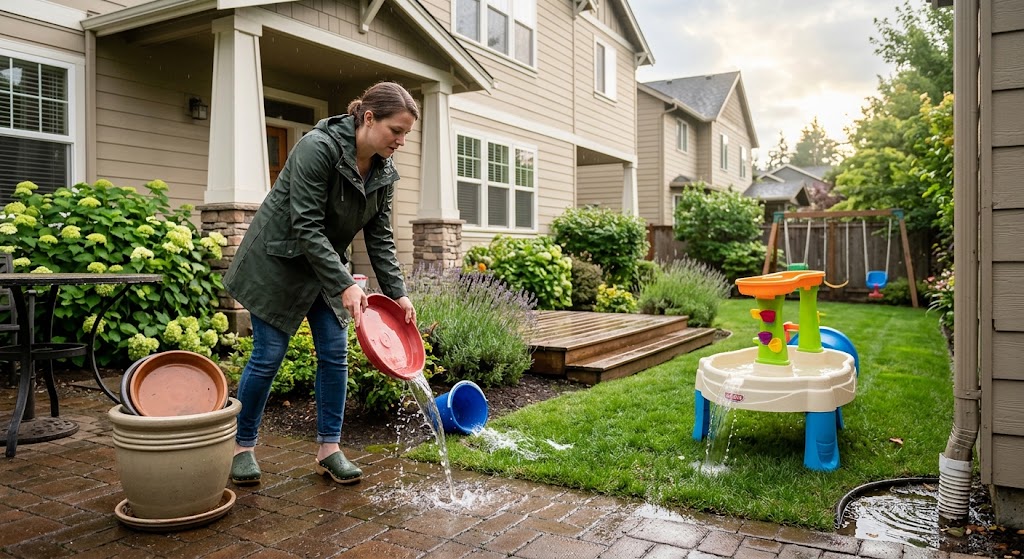
How to Prevent Standing Water Around Your Home

Standing water around your home can become a mosquito breeding site surprisingly quickly. A small amount of water left in a plant saucer, clogged gutter, bucket, children’s toy, or other outdoor container may be enough for mosquitoes to lay eggs.
The good news is that preventing standing water is one of the simplest ways to reduce mosquito activity around your property. You don’t need to eliminate every drop of water outdoors. Instead, focus on places where water collects and remains undisturbed for several days.
This guide explains how to prevent standing water around your home, where to look, and what to do with common mosquito breeding spots.
Why Is Standing Water a Problem?
Mosquitoes need water to complete their life cycle. Female mosquitoes lay eggs in or near water, and the developing larvae remain in water until they mature into adult mosquitoes.
Even small amounts of stagnant water can become a breeding site.
Affiliate Disclosure: This page contains affiliate links. If you buy through my links, I may earn a small commission at no extra cost to you.
As an Amazon Associate, I earn from qualifying purchases.
Common examples include:
- Plant saucers
- Clogged gutters
- Buckets and containers
- Birdbaths
- Children’s toys
- Wheelbarrows
- Pool covers
- Trash cans
- Pet bowls
- Flowerpots
- Rain barrels
- Low areas in the lawn
- Outdoor furniture that collects rainwater
- Drainage areas
- Unused garden containers
Regularly checking these areas can help break the mosquito breeding cycle before it becomes a larger problem.
How to Prevent Standing Water Around Your Home
The most effective approach is simple: empty, remove, cover, clean, or improve drainage wherever water collects.
1. Clean Your Gutters
Clogged gutters are one of the easiest places for rainwater to accumulate.
Leaves, twigs, and other debris can block the flow of water and create small pools that remain wet long after rainfall ends.
Check your gutters regularly and:
- Remove leaves and debris.
- Make sure downspouts are flowing freely.
- Repair leaking or damaged sections.
- Make sure water drains away from the home’s foundation.
- Consider installing gutter guards if appropriate for your property.
Don’t forget to check areas where downspouts discharge water. Poor drainage can create puddles around the foundation or in the yard.
2. Empty Plant Saucers
Plant saucers underneath outdoor pots can hold water for days after rain.
After watering plants or following rainfall, empty excess water from the saucers. If possible, choose containers that drain efficiently or place pots where water can flow away instead of collecting underneath them.
This is especially important around patios, porches, and areas where many potted plants are grouped together.
3. Remove Water From Children’s Toys
Outdoor toys can become unexpected mosquito breeding sites.
Buckets, toy trucks, inflatable toys, plastic slides, and other objects may collect rainwater.
After rainfall:
- Turn toys upside down.
- Empty water from containers.
- Store toys somewhere covered when possible.
- Check toys that have hollow sections where water can become trapped.
A single forgotten toy can collect enough water to become a problem.
4. Empty Buckets and Unused Containers
Never leave buckets, cans, bins, plant containers, or other open vessels outside with water in them.
Store them upside down or under cover when they’re not being used.
If you regularly use outdoor containers for gardening or cleaning, empty them frequently and avoid leaving water sitting in them unnecessarily.
5. Maintain Birdbaths
Birdbaths can provide valuable water for birds, but they can also become mosquito breeding sites if the water is left undisturbed.
Change the water regularly and clean the basin to remove organic debris.
Keeping the water fresh and preventing buildup can make the birdbath less suitable for mosquito development.
6. Check Wheelbarrows and Garden Equipment
Wheelbarrows are easy to overlook because their shape allows rainwater to collect inside.
Store wheelbarrows upside down when possible.
Also check:
- Garden carts
- Watering cans
- Plant trays
- Gardening buckets
- Tarps
- Empty pots
- Unused equipment
Turn anything that can collect rainwater upside down or move it under cover.
7. Keep Pool Covers Free of Water
A swimming pool itself is usually maintained with filtration and sanitation systems, but a pool cover can collect rainwater.
Inspect the cover after storms and remove accumulated water according to the manufacturer’s instructions.
Also check nearby pool equipment, toys, and containers for trapped water.
8. Keep Trash Cans Covered
Rainwater can collect inside uncovered trash cans and recycling containers.
Keep lids securely closed and check the inside of containers if they have been left outdoors.
If a trash can does collect water, empty it and allow it to dry before replacing the lid.
9. Don’t Leave Pet Bowls Full of Stale Water Outdoors
Outdoor pet bowls should be cleaned and refilled regularly.
While mosquitoes generally prefer more stagnant breeding sites, any outdoor container holding water for extended periods deserves attention.
Keep pet water fresh and clean the bowl regularly.
10. Check Low Areas in Your Yard
Some standing water isn’t caused by containers. It can collect naturally in low areas of the lawn.
Walk around your property after heavy rain and look for:
- Persistent puddles
- Depressions in the lawn
- Poorly draining areas
- Water collecting near landscaping
- Areas beneath outdoor structures
If water repeatedly collects in the same location, improving drainage or regrading the area may help prevent it from returning.
11. Keep Tarps and Outdoor Covers Tight
Tarps can easily form pockets that collect rainwater.
Don’t allow loose tarps to sag between supports. Remove accumulated water and adjust the tarp so rain can drain away.
Check covers used for:
- Boats
- Firewood
- Outdoor furniture
- Equipment
- Building materials
- Pools
12. Check Drains and Drainage Areas
Outdoor drains can become blocked by leaves, soil, and debris.
Inspect drainage areas regularly and clear obstructions so water can move away efficiently.
Pay particular attention after storms when large amounts of debris may have entered drains.
Don’t Forget Small Amounts of Water
One of the biggest mistakes homeowners make is looking only for large puddles.
Mosquitoes can use surprisingly small amounts of water.
Check objects such as:
- Bottle caps
- Plant trays
- Small containers
- Toys
- Yard decorations
- Clogged drains
- Folding chairs
- Outdoor equipment
Turn over or remove anything that consistently collects rainwater.
How Often Should You Check for Standing Water?
A quick inspection after rainfall is one of the easiest habits you can develop.
During periods of frequent rain, walk around your property at least once a week and check common water-collection areas.
After heavy storms, perform another inspection as soon as it is practical.
The goal isn’t to spend hours searching your property. A quick 10-minute mosquito yard check can identify many of the most common breeding sites.
What If You Can’t Eliminate the Water?
Some water sources cannot simply be emptied.
For example, you may have:
- A rain barrel
- An ornamental pond
- A drainage basin
- A birdbath
- A water feature
In these situations, follow appropriate maintenance practices for the specific water feature.
Keep water circulating where the feature is designed for circulation, maintain the feature according to manufacturer or local guidance, and use only mosquito-control products that are specifically labeled for that type of water.
Never add a pesticide or mosquito treatment to water unless the product label specifically permits that use.
Standing Water Prevention After Heavy Rain
Heavy rain can create new mosquito breeding sites throughout your property.
After a major storm, inspect your yard for:
- Flooded containers
- Clogged gutters
- Puddles
- Pool-cover water
- Water-filled toys
- Blocked drains
- Fallen branches or debris that trap water
- Containers that have tipped over
- Low areas of the lawn
- Water collecting around outdoor equipment
Storm cleanup provides an excellent opportunity to remove breeding sites before mosquito populations increase.
What About Natural Mosquito Prevention?
Removing standing water should be your first step because it addresses one of the conditions mosquitoes need to reproduce.
You can also reduce mosquito activity by:
- Keeping grass and vegetation maintained.
- Using screens on doors and windows.
- Removing unnecessary outdoor containers.
- Keeping outdoor areas clean.
- Using appropriate mosquito repellents when spending time outside.
- Considering traps or other mosquito-control products when appropriate.
No single method eliminates every mosquito. A combination of source reduction, personal protection, and targeted mosquito control is usually more practical.
A 10-Minute Standing Water Checklist
You can use this quick checklist after rain:
☐ Check gutters and downspouts
☐ Empty plant saucers
☐ Turn over buckets and containers
☐ Check children’s toys
☐ Inspect birdbaths
☐ Empty wheelbarrows
☐ Check pool covers
☐ Look inside trash cans
☐ Refresh outdoor pet water
☐ Check low spots in the lawn
☐ Remove water from tarps and covers
☐ Inspect drains and drainage areas
If you make this a regular habit, you can catch many potential mosquito breeding sites before they become established.
When Standing Water Keeps Coming Back
If the same area repeatedly fills with water, simply dumping it out may not solve the underlying problem.
Persistent water may indicate:
- Poor yard grading
- Blocked drainage
- A damaged gutter or downspout
- Soil that drains poorly
- A leaking outdoor fixture
- Water runoff from another part of the property
In these situations, focus on correcting the source of the water rather than repeatedly treating the symptom.
For larger drainage problems, a qualified landscaping or drainage professional may be able to recommend a permanent solution.
Frequently Asked Questions
How long does standing water need to sit before mosquitoes can breed?
Some mosquito species can complete their early development in relatively small amounts of standing water. Because development time varies with species and environmental conditions, it’s best not to let outdoor water remain stagnant unnecessarily.
Does rainwater attract mosquitoes?
Rainwater itself doesn’t necessarily attract mosquitoes, but containers and other areas that collect rainwater can provide suitable breeding habitat.
Can mosquitoes breed in small amounts of water?
Yes. Mosquitoes don’t need a large pond to reproduce. Small containers and pockets of water can provide enough habitat for some species.
How do I prevent mosquitoes after heavy rain?
Walk around your property after rainfall and empty or remove water from containers, toys, gutters, pool covers, plant saucers, tarps, and other objects. Also check the lawn and drainage areas for persistent puddles.
What is the best way to prevent mosquito breeding around a house?
The best first step is to regularly eliminate or manage standing water. Combine this with good yard maintenance, screens, personal protection, and targeted mosquito-control measures when needed.
How often should I check my yard for standing water?
Check your yard at least once a week during periods of warm or rainy weather. It’s also a good idea to inspect the property after heavy rainfall because new containers, puddles, and drainage areas may collect water.
What are the most common places for standing water around a house?
Common areas include clogged gutters, plant saucers, buckets, children’s toys, birdbaths, wheelbarrows, pool covers, trash cans, tarps, pet bowls, and low spots in the lawn. Check both obvious containers and areas where water tends to drain poorly.
How do I get rid of standing water that keeps coming back?
If the same area repeatedly collects water, look for the underlying cause. Poor drainage, low spots in the yard, clogged gutters, damaged downspouts, or runoff from another area may be responsible. Correcting the drainage problem can provide a longer-term solution.
Can standing water attract other pests besides mosquitoes?
Yes. Standing water can contribute to conditions that attract or support other pests, while damp areas around a home can also encourage certain insects and other unwanted organisms. Removing unnecessary water helps keep the area cleaner and less favorable to pests.
What should I do with standing water I cannot remove?
For water that cannot be emptied, such as certain rain barrels, ponds, or water features, use appropriate maintenance practices for that specific feature. Keep water moving when the feature is designed for circulation, and only use mosquito-control products that are specifically labeled for that type of water.
Final Thoughts
Learning how to prevent standing water around your home is one of the simplest ways to make your property less attractive to breeding mosquitoes.
You don’t have to inspect every inch of your yard every day. Instead, focus on the places where water commonly collects and make a quick inspection part of your normal outdoor maintenance routine.
Start with the basics: clean the gutters, empty containers, remove water from toys and equipment, maintain drainage, and check your property after heavy rain.
A few minutes of prevention can eliminate many of the small water sources mosquitoes need to reproduce.