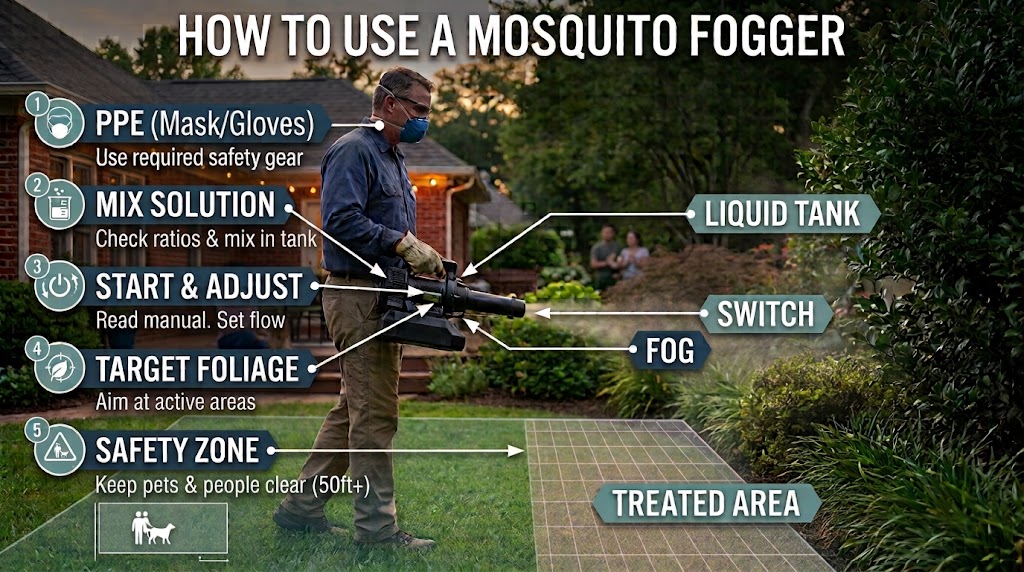
How to Fog for Mosquitoes: Complete Guide to Using a Mosquito Fogger
Mosquitoes can quickly turn a backyard, patio, or outdoor gathering area into an uncomfortable place to be. When mosquito numbers are high, a mosquito fogger can provide temporary knockdown of adult mosquitoes by dispersing a fine insecticide mist through areas where they rest and become active. But fogging works best when it is part of a larger mosquito-control plan. Removing standing water, managing vegetation, repairing screens, and reducing mosquito entry points can all help improve long-term control.
In this guide, we’ll explain how to fog for mosquitoes, how to use a mosquito fogger, when to fog, the difference between thermal and ULV foggers, common mistakes to avoid, and how to combine fogging with other mosquito-control methods.
Important: Always read and follow the current pesticide label and the fogger manufacturer’s instructions before mixing or applying any insecticide. The label determines where, how, and how often a particular product may legally be used.
Quick Answer: How Do You Fog for Mosquitoes?
To fog for mosquitoes, first identify where mosquitoes are active and remove people and pets from the treatment area. Select an insecticide specifically labeled for mosquito control and compatible with your fogging equipment. Prepare and operate the fogger according to its manufacturer’s instructions, directing the application toward appropriate mosquito resting areas rather than randomly fogging the entire property.
Fog during suitable weather conditions, follow the labeled application rate, and keep everyone away from treated areas for the required time.
Most importantly, fogging controls adult mosquitoes temporarily; it does not remove mosquito breeding sites. For better long-term control, eliminate standing water and address areas where mosquitoes are developing.
Affiliate Disclosure
If you purchase through links on this page, BugOffControl.com may earn a commission at no additional cost to you. This helps support our pest-control guides and product research.
As an Amazon Associate I earn from qualifying purchases.
What Is a Mosquito Fogger?
A mosquito fogger is equipment designed to disperse a pesticide as very small droplets or particles into outdoor air and vegetation.
Depending on the equipment, foggers generally fall into two broad categories:
Thermal Foggers
Thermal foggers use heat to create a visible fog from a suitable liquid formulation. The resulting cloud can move through vegetation and other outdoor areas where adult mosquitoes may be resting.
ULV or Cold Foggers
ULV stands for ultra-low volume. These machines use mechanical methods rather than heat to produce very small droplets.
ULV equipment is commonly used for mosquito-control applications because the droplets can be carried through targeted outdoor areas when applied correctly.
The important point is that not every insecticide is suitable for every fogger. The pesticide label and equipment instructions must specifically support the intended application.
Does Mosquito Fogging Work?
Mosquito fogging can reduce adult mosquito activity when the appropriate pesticide and equipment are used correctly. However, fogging should not be viewed as a permanent solution.
Adult mosquitoes that are present during treatment may be controlled, but mosquitoes can return from untreated areas or emerge from breeding sites later.
Several factors can affect results, including:
- Mosquito species
- Weather conditions
- Wind
- Rain
- Vegetation
- Property layout
- Nearby breeding sites
- Application technique
- The insecticide being used
This is why a good mosquito-control program addresses both adult mosquitoes and the conditions allowing new mosquitoes to develop.
When Is the Best Time to Fog for Mosquitoes?
The best timing depends on the mosquito species, product label, and local conditions. Many mosquitoes are more active during the cooler parts of the day, including early morning or evening. However, mosquito behavior varies, so don’t assume that one time is appropriate everywhere.
More important than simply choosing a clock time is choosing suitable application conditions.
Avoid fogging when:
- Strong winds could carry the application away
- Rain is occurring or expected to interfere with the application
- People or pets are present in the treatment area
- Conditions could cause pesticide drift into sensitive areas
- The pesticide label prohibits application under the conditions present
Always follow the pesticide label for weather restrictions.
How to Use a Mosquito Fogger
The exact operation of a mosquito fogger varies by model, so the manufacturer’s instructions should always take priority. The following provides a general framework rather than replacing those instructions.
Step 1: Inspect the Property
Before starting, walk around the property and identify areas where mosquitoes are likely to rest.
Look around:
- Dense shrubs
- Shaded landscaping
- Tall vegetation
- Under decks
- Around fences
- Around outdoor structures
- Cool, sheltered areas
- Other locations where mosquitoes are repeatedly observed
This helps you focus control efforts instead of automatically treating every part of the property.
Step 2: Find and Eliminate Standing Water
Fogging should not be the first and only step. Check the property for containers or areas holding water. Common examples include:
- Buckets
- Plant saucers
- Toys
- Wheelbarrows
- Clogged gutters
- Pool covers
- Outdoor containers
- Unused equipment
- Drainage areas
Empty or remove unnecessary standing water whenever possible. If water cannot be eliminated, use an appropriately labeled mosquito larvicide where permitted and follow its instructions.
Step 3: Read the Pesticide Label
Before putting anything into the fogger, read the entire label.
Confirm that the product:
- Is labeled for mosquito control
- Is approved for the intended location
- Is compatible with the fogging equipment
- Provides the correct mixing instructions
- Lists the required application rate
- Provides appropriate safety precautions
Never guess the mixing ratio.
Do not assume that two mosquito insecticides can be mixed together unless the product labels specifically allow it.
Protective Gear for Mosquito Fogging
Because mosquito fogging involves handling and applying pesticides, the right protective equipment is an important part of the job. However, there isn’t one universal set of gear that every fogging application requires. The pesticide label determines what personal protective equipment (PPE) must be worn.
Before mixing, loading, or applying the product, check the label’s PPE instructions carefully.
Depending on the product, application method, and label requirements, protective equipment may include:
| Protective Equipment | Why It May Be Needed |
|---|---|
| Chemical-resistant gloves | Help protect hands when handling pesticide concentrates or during other label-specified tasks. |
| Long-sleeved shirt and long pants | Help reduce skin exposure during outdoor pesticide applications when specified by the label. |
| Chemical-resistant footwear | Helps protect feet from pesticide contact when required by the label. |
| Protective eyewear | Helps prevent splashes or spray from reaching the eyes when specified. |
| Protective clothing or coveralls | May provide additional protection during certain pesticide-handling applications. |
| Respiratory protection | Required only when the pesticide label calls for it and when the specified respirator can be used safely and correctly. |
A Few Important PPE Rules
Follow the pesticide label—not a generic checklist. Some products require only basic protection, while others have additional PPE requirements.
Do not assume that a household dust mask, ordinary sunglasses, or regular work gloves provide the protection required by a pesticide label.
Also:
- Put on required PPE before handling the pesticide.
- Check gloves, clothing, and other protective equipment for damage before use.
- Do not eat, drink, or smoke while handling pesticides.
- Avoid touching your face while wearing contaminated gloves.
- Follow the label’s instructions for removing and cleaning reusable PPE.
- Wash exposed skin thoroughly after completing the application.
- Keep contaminated clothing separate from ordinary laundry and wash it according to the pesticide label.
- Replace damaged or worn protective equipment.
- Never reuse disposable PPE unless the manufacturer and pesticide label specifically permit it.
What About a Respirator?
A respirator should not automatically be added simply because you are using a mosquito fogger.
If the pesticide label requires respiratory protection, use the specific type and cartridge or filter combination identified by the label and follow the respirator manufacturer’s instructions. Proper fit and maintenance are important.
If the label does not require a respirator, don’t assume that wearing a random mask provides meaningful pesticide protection.
The label is the final authority on required PPE for the specific insecticide being used.
Step 4: Prepare the Fogger
Inspect the equipment before use.
Check for:
- Damaged hoses
- Leaking connections
- Blocked nozzles
- Damaged components
- Adequate fuel or battery power
- Correct operating settings
If something appears damaged or doesn’t operate correctly, don’t improvise a repair while handling pesticide. Follow the manufacturer’s instructions.
Step 5: Keep People and Pets Away
Remove people and pets from the treatment area before application.
Pay particular attention to:
- Children
- Dogs
- Cats
- Birds
- Fish ponds
- Aquariums
- Food
- Drinking water
Follow all label instructions concerning sensitive areas, animals, and re-entry.
Step 6: Start the Fogger Correctly
Start and operate the machine according to the manufacturer’s instructions.
- Do not modify the fogger to increase output.
- Do not remove safety components.
Do not use an insecticide formulation that isn’t approved for that particular equipment.
Step 7: Treat Appropriate Mosquito Areas
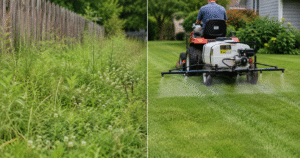
Apply the fog according to the pesticide label and equipment instructions. Focus on appropriate mosquito resting areas rather than simply creating as much visible fog as possible. Dense vegetation and sheltered areas may harbor adult mosquitoes, but the product label determines exactly where the insecticide may be applied.
Avoid directing the application toward:
- People
- Pets
- Food
- Drinking water
- Occupied areas
- Sensitive locations restricted by the label
Step 8: Finish the Application and Leave the Area
After completing the application, stop the equipment according to the manufacturer’s instructions. Leave the treated area for the period required by the pesticide label. Don’t assume that an area is safe simply because the visible fog has disappeared. Follow the label’s re-entry requirements.
How Much Insecticide Should You Put in a Mosquito Fogger?
There is no universal amount that applies to every mosquito fogger or insecticide. The correct amount depends on the specific pesticide formulation, equipment, application method, and labeled application rate. Always use the product’s current label to determine:
- Dilution rate
- Application rate
- Maximum amount permitted
- Approved application areas
- Application frequency
Using a stronger mixture does not automatically provide better mosquito control and can increase pesticide exposure or create other risks.
How Long Does Mosquito Fogging Last?
Fogging generally provides temporary adult mosquito control.
The duration of control can vary considerably depending on:
- Insecticide formulation
- Mosquito species
- Weather
- Rain
- Sun exposure
- Wind
- Vegetation
- Nearby mosquito breeding sites
- Property conditions
A new population can appear after treatment if mosquitoes continue developing nearby. That’s why repeatedly fogging without addressing the source may provide only short-lived relief.
Does Fogging Kill Mosquito Eggs and Larvae?
Generally, mosquito fogging is aimed primarily at adult mosquitoes. Mosquito eggs and larvae are associated with water and require a different control approach. If you find mosquito larvae in standing water, the appropriate response may involve:
- Removing the water when possible
- Eliminating the container
- Correcting drainage problems
- Using an appropriately labeled larvicide when the water cannot be removed
This is one reason adult mosquito fogging and breeding-site control work better together than fogging alone.
Fogging vs. Mosquito Spraying
Mosquito fogging and mosquito spraying are not necessarily the same thing. A fogger produces very small droplets designed for a particular type of application. A conventional sprayer may produce larger droplets intended for different applications, depending on the equipment and pesticide label. The correct method depends on the pesticide formulation, equipment, application site, and label.
Never assume that a product labeled for one application method can automatically be used with another.
Fogging vs. Mosquito Misting Systems
A mosquito fogger is generally used for manual applications, while a mosquito misting system uses fixed nozzles and equipment to deliver pesticide according to a programmed or controlled system.
BugOffControl has a separate guide covering mosquito misting systems if you’re considering a more permanent outdoor mosquito-control setup:
Related guide: Best Mosquito Misting Systems
A misting system does not eliminate the need to manage standing water, and the same pesticide-label principles apply.
Common Mosquito Fogging Mistakes
Fogging Without Reading the Label
The pesticide label is not optional reading. It contains the directions and restrictions for that product.
Using Too Much Insecticide
More pesticide does not necessarily mean better results. Follow the labeled rate exactly.
Fogging in Strong Wind
Wind can move the application away from the intended treatment area and increase the possibility of drift.
Fogging During Rain
Rain can interfere with an application and reduce its usefulness depending on the product. Follow the label’s weather restrictions.
Ignoring Standing Water
This is one of the biggest mistakes. You can reduce adult mosquitoes today and still have new mosquitoes emerging from untreated water later.
Treating People or Pets
- Mosquito fogging is not a method for treating people or animals.
- Keep them away from the application area according to the pesticide label.
Treating Every Plant Indiscriminately
More coverage is not automatically better. Only treat locations permitted by the pesticide label and equipment instructions.
Increasing Application Frequency on Your Own
If mosquitoes return quickly, don’t simply increase the frequency or concentration. Instead, investigate potential breeding sites, entry points, vegetation, weather conditions, and other sources of mosquito activity.
How to Get Better Mosquito Control After Fogging
Fogging is more useful when combined with source reduction and physical prevention.
1. Remove Standing Water
Inspect your property regularly. Even relatively small containers can collect water and become mosquito breeding sites.
2. Maintain Gutters
Blocked gutters can hold water for extended periods. Keep them clear and make sure water can drain properly.
3. Manage Dense Vegetation
Keep vegetation maintained around frequently used outdoor areas. Mosquitoes often seek cool, shaded locations for resting.
4. Repair Screens
Damaged window, door, and patio screens can provide mosquitoes with easy access to the home.
5. Reduce Entry Points
Pay attention to gaps around doors and other openings. For homes where mosquitoes are entering near doors, BugOffControl also has a related guide:
Related guide: How to Stop Mosquitoes at Entryway Doors
6. Use Personal Protection
When spending time outdoors, appropriately labeled mosquito repellents can provide an additional layer of protection.
When Should You Not Use a Mosquito Fogger?
A fogger may not be the right solution for every mosquito problem.
Consider another approach when:
- Mosquito activity is caused by an obvious breeding site that can be eliminated
- You are uncomfortable handling pesticides
- The product isn’t labeled for your intended application
- Weather conditions aren’t suitable
- People or pets cannot be kept away from the treatment area
- You cannot follow the equipment or pesticide instructions
- You are dealing with a sensitive environmental area
- The mosquito problem is better addressed by repairing screens or removing standing water
For larger or complicated properties, professional pest-management assistance may be appropriate.
Mosquito Fogging Safety Checklist
Before fogging:
- Read the complete pesticide label
- Read the fogger manufacturer’s instructions
- Confirm the pesticide is approved for the intended application
- Confirm the pesticide is compatible with the equipment
- Check the weather
- Remove people and pets
- Protect food and drinking water
- Identify sensitive areas
- Wear the required PPE
- Check the equipment for leaks or damage
- Measure pesticide according to the label
After fogging:
- Follow the required re-entry period
- Store pesticide according to the label
- Clean equipment as instructed
- Wash protective clothing as appropriate
- Keep pesticides securely stored
- Monitor mosquito activity
- Continue checking for standing water
How to Know If Fogging Is Actually Helping
Don’t judge mosquito control solely by how much visible fog you produce. Instead, pay attention to mosquito activity in the areas where people actually spend time. If mosquitoes remain abundant after treatment, investigate:
- Standing water
- Dense vegetation
- Nearby properties
- Drainage problems
- Entry points
- Weather conditions
- Incorrect application
- Untreated resting areas
Persistent mosquito activity doesn’t necessarily mean that more pesticide is needed.
It may indicate that the source of the problem hasn’t been addressed.
Mosquito Fogging for Large Yards
Large properties require more planning than small yards. Don’t simply increase pesticide quantities because the property is larger. Consider:
- The total area
- Where mosquitoes are actually active
- Vegetation density
- Property boundaries
- Wind direction
- Nearby homes
- Water features
- Equipment limitations
- Product label requirements
For larger outdoor spaces, BugOffControl also covers other mosquito-control equipment and treatment approaches.
Related guide: Best Mosquito Fogger for Backyard After Rain
Mosquito Fogging After Rain
Rain can have two very different effects on mosquito problems.
It may temporarily affect adult mosquito activity, but it can also create new standing-water breeding sites.
After rainfall, inspect:
- Buckets
- Toys
- Plant containers
- Gutters
- Pool covers
- Low areas
- Outdoor furniture
- Other objects that collect water
Don’t automatically assume that fogging is the first step after rain.
Find and remove the water first whenever possible.
Frequently Asked Questions
1. How does mosquito fogging work?
Mosquito fogging disperses a suitable insecticide as very small droplets into an outdoor treatment area. When the application contacts susceptible adult mosquitoes, it can provide temporary knockdown or control depending on the product and application.
2. Does mosquito fogging get rid of mosquitoes permanently?
No. Fogging primarily provides temporary control of adult mosquitoes. New mosquitoes can appear from nearby breeding sites or untreated areas.
3. What is the best time to fog for mosquitoes?
The appropriate time depends on mosquito activity, weather, the pesticide label, and local conditions. Early morning or evening may coincide with activity for some mosquitoes, but the product label should determine when and under what conditions the application can be made.
4. Can I use any insecticide in a mosquito fogger?
No. Only use an insecticide that is labeled for the intended mosquito-control application and compatible with the specific fogging equipment.
5. How much insecticide should I put in a mosquito fogger?
There is no universal amount. Follow the exact dilution and application instructions on the pesticide label for your specific product and equipment.
6. Does mosquito fogging kill mosquito larvae?
Fogging is generally intended for adult mosquito control. Larvae developing in water require source reduction or an appropriately labeled larvicide.
7. How long should people stay away after mosquito fogging?
The required re-entry period depends on the pesticide product and its label. Follow the current label rather than relying on a general number of minutes or hours.
8. Can I fog mosquitoes around my house?
Only where the pesticide label specifically permits the application. Residential outdoor applications can have specific restrictions involving structures, vegetation, people, pets, food, water, and other sensitive areas.
9. Why do mosquitoes come back after fogging?
Mosquitoes can return from untreated areas, emerge from breeding sites, or enter the property from nearby locations. Fogging does not eliminate every mosquito source.
10. Is mosquito fogging better than removing standing water?
They address different parts of the mosquito problem. Fogging can target adult mosquitoes, while removing standing water eliminates potential breeding sites. Combining source reduction with appropriate adult-mosquito control can provide a more complete approach.
Related Mosquito Control Guides
If you’re dealing with persistent mosquito activity, these BugOffControl guides can help you work through the problem from different angles:
- Best Mosquito Misting Systems — Explore automated outdoor mosquito-control systems for properties that need a more permanent setup.
- Backyard Treatment for Mosquitoes — Learn about broader mosquito-control strategies for outdoor living areas.
- Best Mosquito Trap for Large Backyard — Explore trapping as another approach to reducing mosquito activity.
- Best Mosquito Repellent — Consider personal protection when spending time outdoors.
- Best Mosquito Fogger for Backyard After Rain — A more product-focused guide for readers specifically looking for fogging equipment.
- How to Stop Mosquitoes at Entryway Doors — Focus on preventing mosquitoes from getting inside the home.
Final Thoughts
A mosquito fogger can be a useful tool when adult mosquitoes are making an outdoor area difficult to enjoy, but it should not be treated as a permanent cure. Successful mosquito management starts with understanding where mosquitoes are coming from and then combining appropriate control methods.
Start by removing standing water and addressing obvious breeding areas. If adult mosquitoes remain a problem, a properly selected and correctly used fogging treatment may provide temporary relief. Keep people and pets away from treated areas, use only products approved for the equipment and application, and always follow the current pesticide label.
The goal isn’t simply to create more fog. The goal is to reduce mosquito activity while addressing the conditions that allow mosquitoes to keep coming back.