
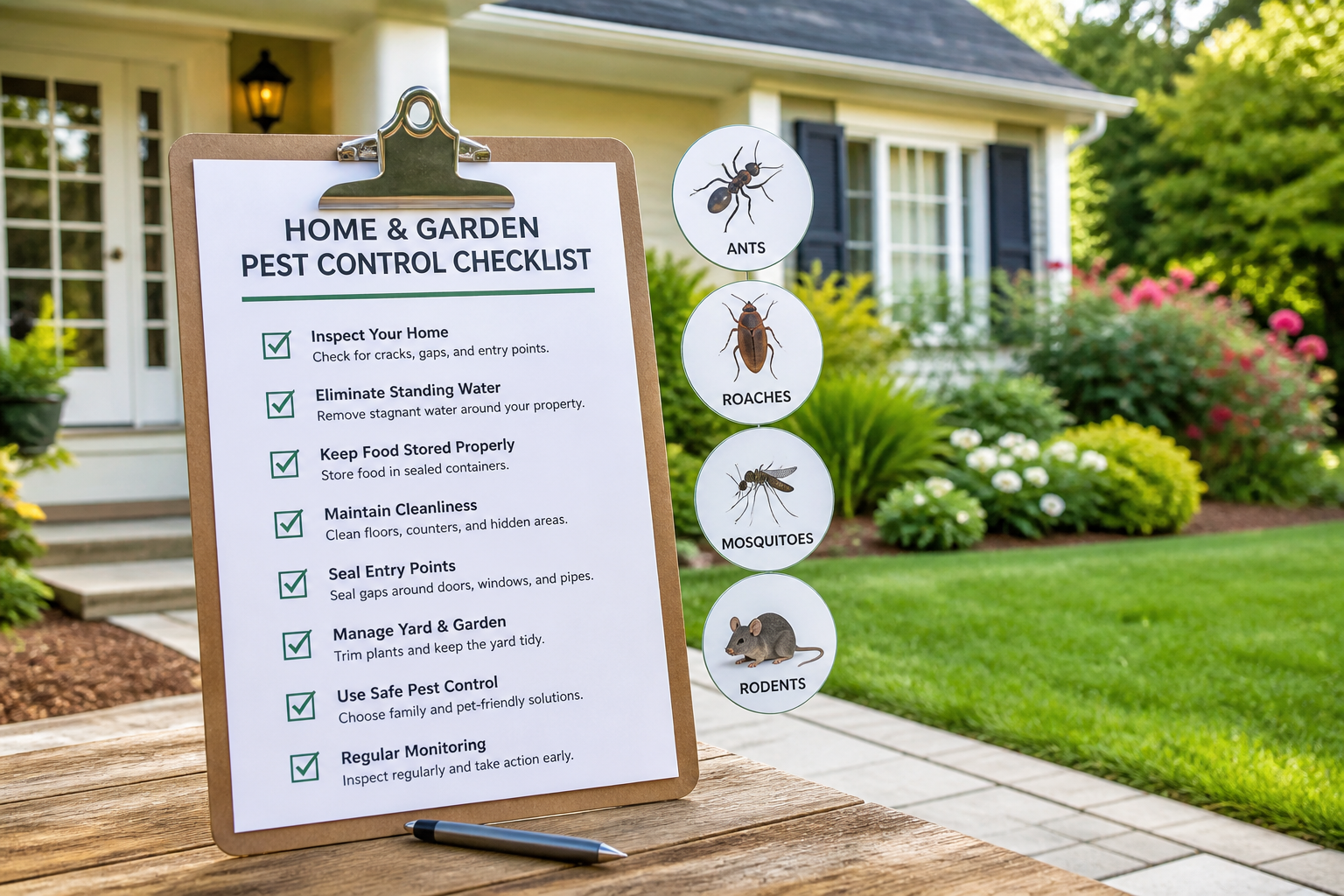
Home & Garden Pest Control Checklist (Free Printable Guide)
If you’ve ever dealt with ants in the kitchen, mosquitoes in the yard, or the sudden surprise of rodents sneaking around your home, you already know how frustrating pest problems can be. The worst part? Most people don’t know where to start—or they try random solutions that don’t actually fix the root issue.
That’s exactly why this FREE Home & Garden Pest Control Checklist was created.
Instead of guessing, this guide gives you a simple, step-by-step way to identify, treat, and prevent the most common pests around your home and garden. Whether you’re dealing with something small like fruit flies or something more serious like rodents, this checklist helps you stay organized and take action with confidence.
Why You Need a Pest Control Checklist
Pest control isn’t just about spraying something and hoping it works. Most infestations happen because small warning signs are missed early on.
This checklist helps you:
- Spot pest problems before they grow out of control
- Identify what type of pest you’re dealing with
- Take quick action using safe and practical methods
- Prevent pests from coming back in the future
Think of it like a simple roadmap for keeping your home and garden protected all year round.
Section 1: Quick Pest Identification Checklist
Before you can solve a pest problem, you need to know what you’re dealing with.
Use this quick guide:
Ants
- Small trails near kitchen counters or windows
- Attracted to sugar and crumbs
Roaches
- Found in dark, damp areas like under sinks
- Droppings that look like coffee grounds
Mosquitoes
- Frequent bites, especially in evenings
- Standing water around the yard
Rodents
- Droppings in cupboards or corners
- Scratching sounds in walls or ceilings
If you notice any of these signs, it’s time to move to the next step.
Section 2: Home Pest Control Action Steps
Once you identify the pest, follow these simple steps:
Step 1: Clean the affected area
Pests are always looking for food and shelter. Start by removing anything that attracts them.
Step 2: Seal entry points
Check doors, windows, vents, and cracks. Even small openings can invite pests inside.
Step 3: Use targeted treatment
Choose the right solution for the specific pest instead of using random sprays.
Step 4: Monitor results
Check the area daily for signs of improvement or continued activity.
Section 3: Garden Pest Control Checklist
Your garden can be a major entry point for pests. Here’s what to watch for:
- Overwatered soil attracting mosquitoes
- Leaf damage from insects
- Burrows or tunnels near plants
- Fruit or vegetable damage
Garden protection steps:
- Remove standing water
- Trim overgrown plants
- Use natural repellents where possible
- Inspect plants weekly
Section 4: Prevention Checklist (Most Important Part)
Prevention saves time, money, and stress. Here’s how to keep pests away long-term:
✔ Keep food sealed and stored properly
✔ Take out trash regularly
✔ Fix leaks and reduce moisture
✔ Keep your yard clean and trimmed
✔ Close gaps and cracks around your home
Small habits make a big difference when it comes to pest control.
Section 5: Safe Pest Control Tips for Families
If you have kids or pets, safety is a priority.
Here are safer approaches:
- Use natural repellents like vinegar or essential oils
- Avoid harsh chemicals indoors when possible
- Store pest control products out of reach
- Focus on prevention instead of heavy treatments
Safe homes can still be pest-free homes—you just need the right approach.
Section 6: When to Call a Professional
Sometimes DIY methods aren’t enough. Consider professional help if:
- Infestation keeps coming back
- You see structural damage
- Rodents are active inside walls
- Pest activity spreads quickly
Early action can prevent bigger damage later.
FREE Home & Garden Pest Control Checklist Summary
Here’s a quick recap you can use anytime:
✔ Identify the pest correctly
✔ Clean and remove food sources
✔ Seal entry points
✔ Treat with targeted solutions
✔ Prevent future infestations
Simple steps—but very effective when done consistently.
Frequently Asked Questions (FAQ)
1. What is the purpose of a pest control checklist?
It helps you identify, treat, and prevent pest problems in a structured way so you don’t miss important steps.
2. Is this checklist safe for homes with pets?
Yes. It focuses on safe prevention methods and encourages careful use of any treatments.
3. Can I use this checklist for outdoor pests too?
Absolutely. It includes both home and garden pest control steps.
4. How often should I check for pests?
At least once a week for early detection, especially in warmer months.
5. What is the most common household pest?
Ants and roaches are among the most common, especially in kitchens.
6. Do I need chemicals to get rid of pests?
Not always. Many pest problems can be controlled with cleaning, sealing entry points, and prevention.
7. Why do pests keep coming back?
Usually because food, water, or shelter sources are still available.
8. Can gardens attract pests to my home?
Yes, especially if there is standing water or overgrown vegetation.
9. What should I do first when I see pests?
Identify the pest and remove anything that attracts it immediately.
10. Is professional pest control always necessary?
No, but it may be needed for severe or recurring infestations.
Conclusion
Pest problems can feel overwhelming, but they don’t have to be. With the right system in place, you can stay ahead of infestations instead of constantly reacting to them.
This free Home & Garden Pest Control Checklist is here to help you stay organized, follow a clear plan, and feel confident tackling pest problems in your home and garden. Instead of guessing what to do next, you now have a simple path to follow—whether you’re dealing with ants in the kitchen, mosquitoes in the yard, or something more serious.
The key is consistency. Small daily habits like cleaning, sealing entry points, and checking for early signs can make a huge difference over time.
Use this checklist as your go-to guide whenever pest problems show up, and you’ll be much better prepared to handle them quickly and effectively.