
How to Get Bugs Out of Christmas Decorations (And Keep Them Out)
Quick Answer: How Do You Get Bugs Out of Christmas Decorations?
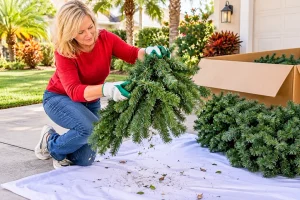
If you find bugs in your Christmas decorations, do not immediately bring the affected box into your living room. Move it to a suitable outdoor or well-ventilated area, open it carefully and inspect the contents for insects, webs, egg sacs, droppings and signs of damage.
Remove loose debris using an appropriate vacuum attachment, clean washable decorations according to their care instructions, and wipe suitable hard surfaces with mild soapy water. Keep water, rubbing alcohol and insecticides away from electrical decorations.
If you find mouse droppings or urine, take extra precautions: never sweep or vacuum dry rodent waste. Use an appropriate disinfectant and follow public-health guidance.
Once everything is clean and completely dry, store decorations in sturdy plastic containers with secure, well-fitting lids. Keep the storage area dry, remove food-based decorations and inspect the containers periodically.
These simple steps can help protect your Christmas decorations from spiders, silverfish, cockroaches, ants, fabric pests and rodents.
Affiliate Disclosure
As an Amazon Associate, BugOffControl.com earns from qualifying purchases. This means we may receive a small commission when you purchase through qualifying Amazon links, at no additional cost to you.
Best Products to Keep Bugs Out of Christmas Decorations
Protecting Christmas decorations from insects and rodents starts with proper storage, regular cleaning, and early detection. You do not need to fill your storage space with pesticides. Instead, choose durable, well-sealed containers and practical inspection tools that help keep decorations clean, organized, and protected between holiday seasons.
Recommended Christmas Decoration Storage and Pest-Prevention Products
| Product Type | Best For | Key Features to Look For |
|---|---|---|
| Gasket-Sealed Storage Bins | Christmas ornaments, lights, wreaths, and smaller decorations | Tight-fitting lids, secure latches, and continuous rubber gaskets |
| Christmas Ornament Storage Organizers | Fragile glass ornaments and delicate decorations | Individual compartments, padded dividers, and sturdy construction |
| Artificial Christmas Tree Storage Bags | Artificial trees, garlands, and seasonal greenery | Durable material, strong zippers, adequate capacity, and convenient handles |
| Stackable Storage Containers | General holiday decorations and seasonal accessories | Strong construction, secure-fitting lids, and space-saving designs |
| Sticky Insect Monitoring Traps | Monitoring for crawling insects in storage areas | Enclosed or covered designs where appropriate, clear placement instructions, and safe positioning away from children and pets |
| Flashlights and Vacuum Attachments | Inspecting and cleaning stored decorations | Bright illumination, suitable attachments, and effective access to hard-to-reach areas |
What Should You Buy First?
If you are starting from scratch, prioritize gasket-sealed storage bins. They help reduce access by crawling pests when properly closed and undamaged. Add compartmentalized ornament organizers to protect fragile decorations, and use suitable insect monitors to check for pest activity in storage areas.
Remember that no storage container is completely pest-proof. Inspect decorations before packing them away, keep containers clean and dry, and check the storage area periodically.
BugOffControl Recommended: Start With Better Storage
For most homeowners, a sturdy plastic storage container with a well-fitting gasket and secure locking latches is a sensible starting point.
It can help reduce access by crawling insects and protect decorations from dust and accidental moisture exposure. However, no ordinary plastic storage bin should be considered completely rodent-proof.
Check Latest Price & Availability on Amazon: Shop Christmas storage containers and organizers
You can also compare:
- Gasket-sealed plastic storage bins
- Christmas ornament storage organizers
- Artificial Christmas tree storage bags
- Covered insect monitoring traps
Product availability, prices and features vary. Check the product description and dimensions before purchasing.
Introduction: Christmas Decorations Should Bring Cheer, Not Unwanted Guests!
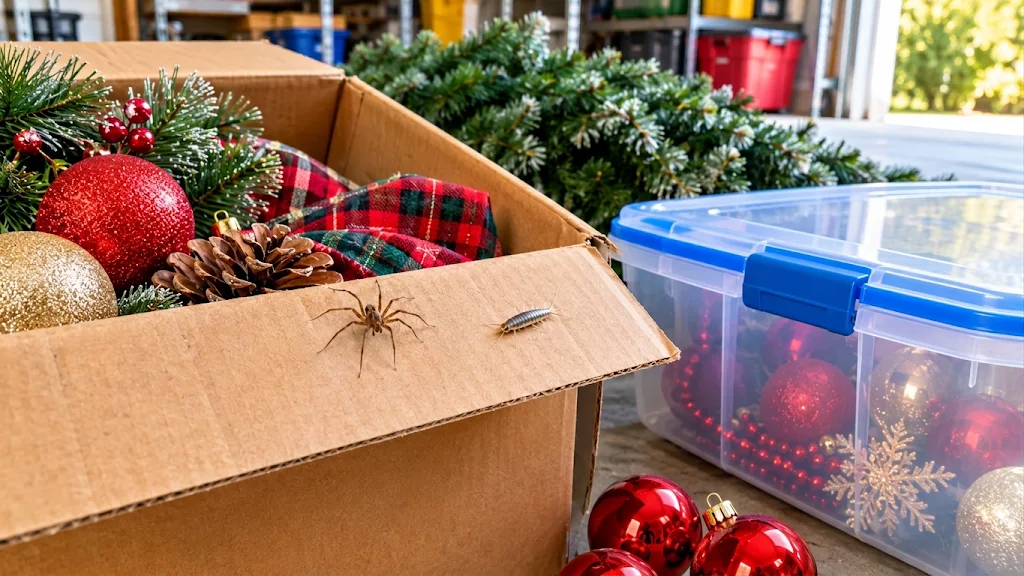
There is something special about opening your Christmas decoration boxes for the first time each year. The familiar ornaments, sparkling lights, artificial trees and festive wreaths bring back memories and signal that the holiday season has arrived.
But sometimes, the excitement disappears when you lift the lid and discover a spider crawling across an ornament, tiny insects hiding between the branches or suspicious droppings at the bottom of a storage box.
It is certainly an unpleasant surprise, but it does not necessarily mean your decorations are ruined.
Christmas decorations often spend most of the year packed away in attics, garages, closets, sheds and other storage spaces. During those months, insects and rodents may find shelter among cardboard, fabric, paper, dust and other stored materials.
The good news is that many decorations can be cleaned and saved if you deal with the problem carefully.
Whether you have discovered spiders in an artificial Christmas tree, silverfish in a cardboard box or signs of mice around your holiday decorations, this guide will help you understand what to look for and what to do next.
We will cover how to inspect decorations as you unpack them, identify common household pests, remove unwanted visitors safely, choose better storage containers and prevent future problems.
Let’s get your decorations ready for Christmas!
1. Why Do Bugs Hide in Christmas Decorations?
Christmas decorations are not necessarily attractive to pests because they are festive. It is the materials, storage conditions and lack of disturbance that can make them appealing. Here are some common reasons insects and rodents move into holiday storage.
Dark, Undisturbed Storage Areas
Attics, garages, closets, sheds and storage rooms can provide quiet hiding places. Decorations that remain untouched for months may give spiders, cockroaches and other insects an opportunity to shelter in small spaces between branches, ornaments and packaging.
Cardboard Boxes Provide Hiding Places
Cardboard boxes have folds, seams and corrugated spaces where small insects can hide. Some pests, including silverfish and cockroaches, may feed on materials associated with paper products, adhesives and stored debris. Rodents can also chew cardboard and use shredded pieces for nesting.
Fabric Decorations Can Attract Certain Pests
Christmas stockings, felt ornaments, fabric tree skirts, ribbons and other textiles can collect dust and provide sheltered spaces for insects. Clothes moth larvae and carpet beetle larvae can damage certain natural or animal-based fabrics.
Food Residue Attracts Unwanted Visitors
Popcorn garlands, gingerbread decorations, candy canes, dried fruit and other edible decorations can attract ants, cockroaches, rodents and stored-product insects. Even small crumbs or sticky residue can create an unnecessary pest attraction.
Moisture Encourages Insect Activity
Damp storage areas can attract moisture-loving pests such as silverfish and some cockroach species. Moisture can also damage decorations, encourage mold growth and make cardboard containers deteriorate. Keeping storage areas clean and dry is an important part of prevention.
2. Common Bugs and Pests Found in Christmas Storage Boxes
Before cleaning your decorations, it helps to recognize the signs of pest activity. Not every insect found in a storage box is dangerous, but identifying the pest can help you decide what to do next.
Spiders
Spiders may build webs inside artificial trees, wreaths, garlands and the corners of storage containers.
Look for:
- Webbing between branches.
- Small egg sacs attached to sheltered surfaces.
- Spiders hiding inside hollow sections or folded decorations.
Most spiders are using the boxes as shelter rather than feeding on the decorations. Avoid handling unfamiliar spiders with bare hands.
Silverfish
Silverfish are small, wingless insects with tapered bodies and a silvery appearance. They prefer humid, sheltered environments and may feed on paper, glue, cardboard and other materials containing starches.
Look for:
- Irregular damage to paper decorations.
- Small holes in paper products.
- Shed skins.
- Fast-moving, silvery insects when the box is disturbed.
Reducing moisture and replacing damaged cardboard storage boxes can help.
Cockroaches
Cockroaches may hide in cardboard boxes, storage containers and nearby cracks or crevices.
Signs include:
- Dark droppings.
- Egg cases.
- Shed skins.
- An unpleasant, musty odor when activity is substantial.
If you discover several signs of cockroach activity, inspect the storage area itself rather than concentrating only on the decorations.
Clothes Moths and Carpet Beetles
These fabric pests can damage certain natural fibers and stored textiles.
Look for:
- Small holes in susceptible fabrics.
- Larvae or shed larval skins.
- Fine webbing associated with clothes moth larvae.
- Small beetles or hairy larvae associated with carpet beetles.
Inspect nearby stored clothing and textiles as well. The problem may extend beyond your Christmas decorations.
Ants
Ants may enter storage boxes when food residue, moisture or nesting opportunities are present.
Look for:
- Trails of ants.
- Small piles of debris.
- Activity around shelving, walls or container openings.
Clean away food residue and investigate where the ants are entering.
Mice and Rats
Rodents can cause significant damage to Christmas decorations. They may chew cardboard, shred tissue paper, damage electrical wiring and contaminate stored items with urine and droppings.
Watch for:
- Chewed box corners.
- Shredded fabric or paper.
- Dark droppings.
- Urine stains.
- Nesting material.
- Gnaw marks around storage areas.
Important: Rodent droppings and urine can pose health risks. Never sweep or vacuum dry rodent waste. Follow the cleanup precautions in Section 5.
3. How to Inspect Christmas Decorations When Unpacking
Before carrying every decoration into your living room, take a few minutes to inspect the boxes. A little preparation can prevent unwanted pests from spreading into your home.
Step 1: Choose a Suitable Unpacking Area
Whenever practical, unpack decorations outdoors, on a covered porch or in a well-ventilated garage. Choose a clean, dry area with enough space to spread out the decorations. If you must unpack indoors, use a clear area that is easy to clean.
Step 2: Put Down a Light-Colored Sheet
Place a white sheet or light-colored drop cloth beneath the decorations.
This makes it easier to notice:
- Small crawling insects.
- Droppings.
- Shed insect skins.
- Webbing and loose debris.
It also helps keep your decorations off a dirty floor.
Step 3: Inspect the Storage Boxes
Check the inside and outside of each container.
Pay particular attention to:
- Corners and seams.
- Cardboard folds and flaps.
- Damaged lids.
- Signs of chewing.
- Droppings or unusual odors.
- Dampness or mold.
If a cardboard box shows signs of infestation, remove it from the storage area. Handle any rodent contamination carefully before disposal.
Step 4: Examine Artificial Trees and Wreaths
Artificial trees have many small spaces where spiders and other insects can hide. Inspect the branches, center pole, hinges, storage bag and base.
Check wreaths and garlands for webbing, egg sacs, insects and debris.
Step 5: Check Ornaments and Fabric Decorations
Look carefully at ornament hooks, ribbons, fabric seams, tree skirts and stockings. Open decorative containers and inspect any hollow sections. Set aside anything showing signs of infestation or contamination until you can clean it or decide whether it should be discarded.
Step 6: Separate Suspected Infested Items
Do not immediately mix questionable decorations with clean ones. Place affected items in a separate container or designated area while you decide whether they can be cleaned, treated appropriately or need to be discarded.
4. How to Remove Bugs from Christmas Decorations Safely
The correct cleaning method depends on the material. Some decorations can be washed, while others require gentle dusting or vacuuming.
Artificial Christmas Trees
Artificial trees can collect dust, webs and insects between their branches.
To clean one:
- Unplug the tree if it is pre-lit.
- Take it outdoors if practical.
- Separate the sections according to the manufacturer’s instructions.
- Shake each section gently to dislodge loose debris.
- Use a suitable vacuum attachment to remove visible webs and loose dirt.
- Inspect the trunk, branches and base before bringing the tree indoors.
Avoid soaking artificial trees or applying insecticides directly to them.
Christmas Wreaths and Garlands
Artificial wreaths and garlands have plenty of small hiding spaces. Gently shake them outdoors and inspect the leaves, branches, ribbons and decorative attachments. Use a soft brush or vacuum attachment where the material permits.
For natural wreaths, check for insects before bringing them indoors. If you discover significant pest activity, consider disposing of the wreath rather than introducing the pests into your home.
Glass and Plastic Ornaments
Many sturdy, non-electrical ornaments can be cleaned with warm water and mild dish soap.
- Check the manufacturer’s cleaning instructions.
- Remove hooks or detachable parts where practical.
- Wipe or wash the ornament gently.
- Rinse if appropriate.
- Allow it to dry completely before storing or displaying it.
Avoid soaking ornaments with glued decorations, delicate finishes or painted surfaces that may be damaged by water.
Delicate and Vintage Decorations
Family heirlooms, painted ornaments and delicate decorations need extra care. Use a soft, dry brush or microfiber cloth to remove loose dust and webs.
Do not immerse delicate decorations in water or use solvents unless the manufacturer or a qualified restoration professional confirms they are suitable.
Christmas Stockings and Fabric Decorations
Washable fabric items should be cleaned according to their care labels.
Pay particular attention to:
Make sure fabrics are completely dry before packing them away. For valuable or delicate textiles, professional cleaning may be the safer option.
Pre-Lit Trees and Electrical Decorations
Electrical decorations require special care.
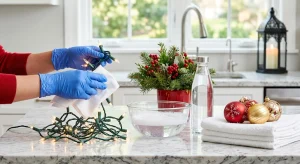
Never spray water, rubbing alcohol, insecticides or other liquids onto electrical components, plugs, sockets or wiring.
Instead:
- Unplug the decoration.
- Inspect the wiring for chewing, cracks or exposed conductors.
- Remove loose dust and webs with a dry microfiber cloth or suitable dry brush.
- Follow the manufacturer’s cleaning instructions.
- Do not reconnect the decoration until it is clean, dry and confirmed to be in safe working condition.
Discard electrical decorations with damaged wiring rather than attempting to hide or cover the damage.
5. What to Do If You Find Mouse Droppings in Christmas Decorations
Discovering mouse droppings in a storage box is more serious than finding an occasional spider. Rodents can contaminate decorations with urine and droppings, and their nesting materials may carry additional contamination.
Take these precautions:
- Keep children and pets away from the affected area.
- Avoid touching droppings or nesting material with bare hands.
- Do not sweep or vacuum dry droppings.
- Wear disposable gloves.
- Apply an appropriate disinfectant according to its label and public-health guidance.
- Allow the required contact time before wiping up the waste.
- Dispose of contaminated cleaning materials safely.
- Wash your hands thoroughly after removing gloves.
Do not mix cleaning chemicals, particularly bleach and ammonia-based products. Hard, nonporous decorations may be salvageable if they can be thoroughly cleaned and disinfected using a compatible product. Porous decorations, cardboard, fabric and plush items that are heavily contaminated may need to be discarded. If you find extensive rodent contamination, consider professional cleanup rather than attempting to handle it yourself. For further rodent prevention advice, see our guide: How to Keep Mice Out This Fall.
6. What About Bugs on Live Christmas Trees and Natural Wreaths?
Artificial decorations are not the only items that can bring insects indoors. Fresh Christmas trees, branches and natural wreaths may carry small insects or other arthropods.
These can include:
- Aphids.
- Spiders.
- Bark beetles.
- Other small insects associated with evergreen plants.
Most insects associated with outdoor trees are not adapted to living inside homes, but they can become active when brought into a warm indoor environment.
Before bringing a live tree or natural wreath inside:
- Inspect the branches and trunk outdoors.
- Shake the tree gently to dislodge loose insects and debris.
- Look for visible egg masses, webbing or unusual clusters of insects.
- Remove loose debris before moving the tree indoors.
- Avoid spraying household insecticides on the tree.
Do not assume every small insect on a live tree is a household pest. If you are unsure what you have found, photograph it for identification before deciding how to treat it.
7. Best Storage Containers to Keep Bugs Out of Christmas Decorations
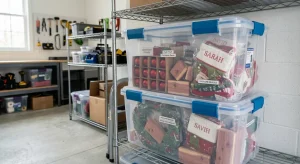
Once your decorations are clean, dry and ready to be displayed, it is worth thinking about how to protect them when the holidays are over. The right storage containers can help reduce pest access and protect decorations from dust and accidental moisture exposure.
Gasket-Sealed Plastic Storage Bins
These are useful for ornaments, lights, ribbons and smaller decorations.
Look for:
- Durable plastic construction.
- Secure locking latches.
- A continuous gasket around the lid.
- A lid that fits evenly.
- A size suitable for the items being stored.
Remember that the contents must be clean and dry before sealing the container.
Clear Ornament Storage Containers
Clear containers with individual compartments make it easier to organize fragile ornaments. They also let you see what is inside without repeatedly opening the box.
Choose sturdy designs with secure lids and enough room to avoid crushing decorations.
Artificial Christmas Tree Storage Bags
A suitable tree storage bag protects artificial trees from dust and loose debris.
Look for:
- Strong fabric.
- Durable zippers.
- Reinforced handles.
- Enough capacity for your tree.
- A design that keeps the tree securely enclosed.
A fabric bag is not necessarily rodent-proof, so store it in a clean area and inspect it periodically.
Stackable Storage Organizers
Stackable organizers help keep decorations off the floor and make it easier to maintain a tidy storage space. Choose designs with secure lids and avoid overloading them.
Shopping tip: Compare storage capacity, lid design, material quality and customer feedback before buying. A well-fitting lid is more important for pest prevention than decorative features.
8. How to Keep Bugs Out of Christmas Decorations All Year
Cleaning your decorations before displaying them is only half the job.You also want to make sure they remain protected when it is time to pack them away. Here are practical habits that can help.
Remove Edible Decorations
Do not store popcorn garlands, candy canes, gingerbread ornaments or dried fruit with your reusable decorations. Even small food remnants can attract unwanted pests. Dispose of edible decorations after the holidays.
Clean Decorations Before Packing
Remove dust, crumbs, artificial snow residue and other debris. Check all decorations for insects and signs of activity before placing them into storage.
Replace Damaged Cardboard Boxes
Cardboard boxes can become damaged, damp and attractive hiding places for pests. Consider replacing them with sturdy plastic containers that have secure lids.
Keep Fabric Decorations Clean and Dry
Wash or clean fabric decorations according to their care instructions. Make sure they are completely dry before storing them. Where appropriate, use clean fabric storage bags inside a larger sealed container.
Keep Storage Areas Dry
Moisture can attract silverfish and other pests while damaging your holiday decorations. Look for leaks, condensation and damp walls. Improve ventilation where possible and address moisture problems rather than simply placing decorations in a sealed box.
Elevate Storage Containers
Store containers on sturdy shelving rather than directly on the floor. This helps protect them from floor-level moisture and makes it easier to inspect the surrounding area. Remember that shelving alone will not prevent mice or insects from reaching containers.
Seal Gaps Around Storage Areas
Inspect doors, windows, vents and openings around garages, attics and storage rooms. Seal suitable gaps and repair damaged screens. For rodent prevention, pay particular attention to openings around pipes, utility lines and door thresholds.
Inspect Stored Decorations Periodically
Do not wait until next Christmas to discover a pest problem. Check storage areas periodically for damaged containers, droppings, insect activity, moisture and signs of nesting.
9. Should You Use Cedar Blocks, Peppermint Oil or Mothballs?
Many homeowners look for natural or chemical products to keep pests away from stored decorations. However, it is important to understand their limitations.
Cedar Blocks
Cedar products are commonly marketed for protecting stored fabrics from moths. They may provide a pleasant scent, but they should not be treated as a dependable way to eliminate insects or prevent a general pest infestation. Clean fabrics, suitable storage and regular inspections are more reliable prevention measures.
Peppermint Oil
Peppermint oil is often promoted as a natural mouse and insect repellent. However, its effectiveness as a long-term pest barrier is not reliably established. Do not depend on peppermint oil to prevent mice from entering storage areas or chewing through containers. Essential oils can also irritate people and may be harmful to pets. Follow product directions and keep them away from children and animals.
Mothballs
Mothballs contain pesticide ingredients that release vapors to control certain fabric pests. They are not general-purpose insect repellents.
Use them only for the specific purpose and in the manner permitted by their product labels. They must not be scattered around rooms, placed casually in storage boxes or used where children and pets can access them. For most Christmas decorations, clean and dry storage in suitable containers is a simpler approach.
10. How to Deal With Different Levels of Pest Activity
Not every discovery requires the same response.
Light Pest Activity
Examples:
- One spider.
- A small amount of webbing.
- A few dead insects.
- No signs of nesting or contamination.
What to do: Remove the insect or web safely, inspect the decoration, clean it using a suitable method and check the storage container.
Moderate Pest Activity
Examples:
- Several live insects.
- Repeated insect activity in one box.
- Small amounts of insect debris.
- Signs of silverfish or fabric pest damage.
What to do: Separate affected items, inspect nearby decorations, clean or launder suitable materials and investigate the storage area for moisture or entry points. Consider appropriate pest monitoring.
Heavy Pest Activity
Examples:
- Numerous cockroaches.
- Extensive insect activity.
- Mouse or rat droppings.
- Nesting material.
- Widespread contamination or damaged electrical wiring.
What to do: Keep children and pets away, avoid disturbing contaminated material and seek professional pest-control or cleanup assistance where necessary. Discard heavily contaminated porous decorations and damaged electrical items when they cannot be safely restored.
11. Post-Christmas Packing Checklist: Prepare for Next Year
When the holiday season ends, a little extra effort can save time and frustration next November.
-
Use this checklist before putting your decorations away.
Remove candy, popcorn garlands and other edible decorations.
-
Clean ornaments, wreaths, artificial trees and garlands as appropriate.
-
Inspect decorations for insects, webs and egg sacs.
-
Check for rodent droppings, chewing and nesting material.
-
Wash fabric decorations according to their care instructions.
-
Allow all decorations to dry completely.
-
Check electrical decorations for damaged wiring.
-
Replace damaged cardboard boxes with suitable plastic containers.
-
Organize fragile ornaments in protective compartments.
-
Secure storage lids properly.
-
Place containers on sturdy shelving.
-
Clean the storage area and address moisture problems.
-
Inspect stored decorations periodically.
Following these steps can make unpacking next Christmas much easier.
Frequently Asked Questions
1. Why are there bugs in my Christmas decoration boxes?
Christmas decorations are often stored for months in quiet, dark spaces. Cardboard, fabric, dust, food residue and moisture can provide shelter or attract insects and rodents.
2. What bugs are commonly found in Christmas decorations?
Spiders, silverfish, cockroaches, ants, clothes moths and carpet beetles may be found in stored decorations. Mice and rats can also damage storage boxes and contaminate their contents.
3. How do I get spiders out of an artificial Christmas tree?
Unplug the tree if it is pre-lit, take it outside when practical and inspect its branches and center pole. Gently shake the sections and use a suitable vacuum attachment to remove loose webs and debris. Avoid applying insecticides directly to the tree.
4. Can bugs live inside sealed plastic Christmas storage boxes?
Some insects may already be inside when a container is sealed. A well-fitting lid and gasket can reduce the chance of additional pests entering, but cleaning decorations before storage is still essential.
5. Should I spray bug spray inside Christmas decoration boxes?
No. Do not spray insecticides directly onto decorations or into sealed storage containers unless the product label specifically permits that use. Chemical residues may damage materials or expose people and pets.
6. Are cardboard Christmas storage boxes bad for pest prevention?
Cardboard is not ideal for long-term pest protection because it can become damp, damaged or provide hiding spaces for insects and rodents. Sturdy plastic containers with secure lids are generally a better choice.
7. Do cedar blocks keep bugs out of Christmas decorations?
Cedar blocks are marketed for stored-fabric protection, particularly against clothes moths, but they should not be relied upon to control a broad range of pests. Proper cleaning and secure storage are more important.
8. What should I do if I find mouse droppings in my Christmas decorations?
Keep children and pets away. Do not sweep or vacuum dry droppings. Wear gloves and use an appropriate disinfectant according to its label and public-health guidance. Heavily contaminated porous items may need to be discarded.
9. Can I use mothballs in Christmas storage boxes?
Mothballs are pesticides intended for specific labeled uses against certain fabric pests. They should never be used casually in ordinary storage boxes or around people and pets. Always follow the product label.
10. Where is the best place to store Christmas decorations?
A clean, dry indoor closet or storage room is generally preferable. If you must use a garage, attic or shed, choose suitable secure containers, elevate them on shelving and inspect the area periodically for moisture and pest activity.
Final Thoughts: Make Next Christmas Easier and Pest-Free
Finding bugs in your Christmas decorations can put a damper on the holiday spirit, but it does not mean you have to throw everything away.
The best approach is to inspect decorations before bringing them into your home, clean each item using a suitable method and deal with any pest activity before it spreads.
When the holidays are over, pack everything away clean and dry, use sturdy storage containers with secure lids and keep your storage area free from moisture, food debris and pest entry points.
A little preparation now can save you from unpleasant surprises when you open those Christmas boxes next year.
At BugOffControl.com, we believe the best pest control starts with prevention.
Related BugOffControl Guides
For more practical pest-prevention advice, explore: